
Qardus Insights
Expert analysis and practical guidance on ethical finance and investing.


Introduction
Zakat is the third pillar in Islam and plays a significant role in the way Muslims live and conduct their financial affairs. The recipients of zakat are a very specific group of people as outlined in the Quran, and there is a specific calculation involved.
Our online zakat calculator assists with calculating the amount of zakat that is owing.
Understanding Zakat And Its Obligations
WHAT IS ZAKAT?
The word zakat means growth and purification in Arabic and refers to the mandatory obligation to give a portion of wealth accrued to charity. Zakat is a fundamental obligation for all Muslims who meet the criteria, and its purpose is to purify wealth and create economic equality and enhance social welfare.
According to Islamic teachings, zakat is a fundamental act of worship. The Quran (2:110) states: 'Establish prayer and give zakat'
WHO NEEDS TO PAY ZAKAT?
Muslims who are required to pay zakat must first understand if they have accrued the minimum amount of wealth required before they become eligible to pay zakat. This is known as nisab and this is worked out based on the equivalent of 85 grams of gold or 595 grams of silver.
Those eligible to pay zakat include the following:
- Adults who have reached puberty and have wealth over the nisab threshold.
- Adults who have full mental capacity.
WHAT ASSETS COUNT TOWARDS ZAKAT?
Zakat is payable on different types of wealth:
- cash
- silver
- gold
- business assets
- investment income
- agricultural produce.
When And How Much Zakat To Pay
Zakat is due on wealth that you have been in possession of for one lunar year. It's also important to note that you can deduct immediate debts from zakatable wealth (see below).
You can pay zakat at any time of the year through instalments or in one lump sum.
Calculating Zakat Step-By-Step Using A Zakat Calculator
Muslims are expected to pay 2.5% of their zakatable wealth every year. Follow these steps to work out how much zakat you need to pay:
- Determine your zakatable wealth total by adding up your assets and deducting immediate debts.
- Ensure that you meet/exceed the nisab threshold
- Apply the 2.5% rule
- Use the online zakat calculator to work out what you need to pay
Always visit a reliable zakat calculator website.
Deductions And Liabilities
There are certain debts and liabilities that be deducted when making your zakat calculation.
The following deductions are allowed:
- short term debts such as credit card balances and small loans that become due in the zakat year.
- for long term debts such as mortgages you can only deduct the payment owing in that zakat year.
- living expenses including bills, rent, good costs, transport.
- unpaid wages to employees.
- business liabilities for the zakat year.
Please note that future debts and expenses are not deductible.
Zakat Payment And Its Impact
Zakat is more than a financial payment, it goes beyond wealth distribution into the realms of spiritual growth, economic justice and fulfilling an important religious obligation.
Paying zakat on time fulfils an essential Islamic obligation and strengthens the relationship with Allah.
Timely payment of zakat leads to increase in blessings and purification of our wealth.
How To Pay Your Zakat
Zakat can be paid in different ways. You can pay zakat direct to individuals who are eligible to receive zakat. Zakat can also be paid to charities and global zakat funds.
Many Muslims choose to pay zakat online by utilising online zakat calculators.
Receiving Zakat
There are eight groups of people to whom zakat can be given:
The needy (this includes people whose earnings fail to cover basic needs such as food, home, water, clothing)
Those in poverty (who have little to no personal belongings and no means of earning a living)
Those employed to administer zakat monies
The wayfarer
People whose hearts have been reconciled to the faith In the cause of Allah (SWT)
People in debt
People in bondage
Recipients of zakat should not be members of your immediate family such as your spouse, parents or children. Other non-immediate relatives can be recipients of your zakat payments.
Many people give to charity throughout the year, for any donation to qualify as fulfilment of the zakat obligation, then there must be an intention to give the money as zakat.
Common Questions And Expert Advice
WHAT IS NISAB?
Nisab is the minimum amount of wealth you need to have before you become eligible to pay zakat. Typically nisab is the equivalent of 595 grams of solver or 85 grams of gold.
DO I PAY ZAKAT ON MY HOME?
Zakat is not payable on your primary home. If you have rental properties then zakat is payable on the income generated.
CAN I GIVE ZAKAT TO MY FAMILY?
You cannot give zakat to immediate family, ie those already dependant on you such as your partner and children. You can pay zakat to extended family members if they are eligible.
ARE ONLINE ZAKAT CALCULATORS ACCURATE?
Yes, as long as you insert the correct information based on your personal circumstances then zakat calculators are an excellent way to calculate your zakat.
IS ZAKAT PAYABLE ON MY RETIREMENT SAVINGS?
If you have full access to these savings and you meet the nisab threshold then zakat is payable.
WHAT IF I FORGET TO PAY ZAKAT?
Use an online zakat calculator to calculate what you owe and pay your zakat as soon as you can.
IS ZAKAT PAYABLE ON STOCKS AND SHARES?
Yes, if the value exceeds the nisab threshold then zakat is payable.
SHOULD NISAB BE CALCULATED ON GOLD OR SILVER VALUES?
In the United Kingdom you can use either the gold or silver value. Many scholars believe that using the value of silver is preferable as it means the amount of zakat increases. If you have assets that mainly consist of gold then it is sensible to use the gold nisab.
WHAT IS THE ZAKAT YEAR?
The zakat year begins on the date on which you first possessed the wealth that took you over the nisab threshold. This will be the start of your zakat year. The zakat payment will therefore become due when the year has elapsed.
HOW DOES ZAKAT APPLY TO YOUR INVESTMENTS ON THE WARDUS PLATFORM?
For all of you that pay zakat, it would be on the total outstanding amount payable to you from your investments via Qardus. The investment is based on a financing arrangement which involves the buying and selling of commodities, and therefore, we believe that these assets are zakatable in nature. Therefore, investors who pay zakat would use the capital plus the profit due to them to calculate the amount of Zakat payable.
Please note that Qardus does not provide tax or other financial advice and that if advice is needed, you should consult an appropriately qualified professional.
Conclusion
Calculating zakat accurately and paying it in a timely manner ensures that it reaches the most vulnerable in society. Paying zakat fulfils one of the core pillars of Islam.
Using an online zakat calculator not only ensures the payment you make is calculated accurately, it saves you time and helps you to make the sometimes complex set of calculations.
Zakat calculators also guide you to eligible recipients and make it easier for you to track your zakat payment history and accountability. The calculations eradicate errors and provide an audit trail. If you have any specific questions about your zakat payment, always remembers to consult with expert scholars.
Use the Qardus zakat calculator here.
Please note that the prices information and values mentioned above are for example purposes only. For an accurate figure of the zakat you are liable to pay then it is always best to use the zakat calculator, and also conduct your own research and obtain qualified advice where required.
Qardus do not offer financial or tax advice and if advice is needed, this should be sought from a qualified professional.
CAN MUSLIMS INVEST IN GOLD?
The Accounting and Auditing Organisation for Islamic Financial Institutions (AAOIFI) is widely recognised as a global leader of maintaining Islamic finance standards.
The rulings of the AAOIFI are accepted across Islamic markets. the AAOFI has led to many Islamic finance and Sharia-compliant gold products and services including investment options and accounts, EFTs, gold saving plans, and spot contracts.
IS INVESTING IN GOLD HARAM IN ISLAM?
According to the AAOIFI, there are certain standards that should be met when any Muslim considers investing in gold. These include the following:
- Gold should be traded on a hand to hand basis
- Gold can be jointly owned
- Gold ownership can be constructive or physical
- In each case, the gold should be completely allocated (with no ambiguity re ownership)
- Allocation can take place through settlement, certification, confirmation, or receipts.
Under Sharia rules, gold trading is haram if the following criteria are not met:
- the exchange of any metal including silver for silver and gold for gold must ensure that they are of equal weight and worth
- there must be an on the spot cash payment (no future options)
It is also very important to note that there can be no element of interest (riba) in the trade. When it comes to futures and options riba can sometimes occur in the deferment of the delivery or in the payment structure. To ensure riba is avoided, make sure the deal or transaction takes place and completes on the spot
WHEN IS GOLD TRADING NOT HALAL?
It is important to remember that whilst gold trading is deemed to be halal, speculative trading or gambling of any nature is not permissible in Islam.
For example, gold trading that involves futures and options contracts which usually involve elements of speculation could be deemed to be haram.
Under Sharia rules, a key component of compliance when it comes to investment and trading is that the asset should be physically backed. This is easy to achieve with gold as it is a real physical asset.
However, Muslims need to be aware of the Islamic finance rules relating to investment and trading, and the fact that gold is deemed to be a rabawi item.
This means that gold in itself cannot be traded for speculative purposes or future profit. It is halal to use gold as medium of exchange and a form of cash. Also, it is permissible to own gold as jewellery.
HOW CAN I INVEST IN GOLD IN A SHARIA COMPLIANT WAY?
To invest in a Sharia-compliant way you need to make sure that you comply with Islamic finance investment principles. You have to ensure that any investment portfolio is secured and managed in the correct way. Consult knowledgeable experts and ensure you understand Islamic finance rules.
Make sure of the following:
- Use a credible and acceptable form of payment. This could include bank transfer, bankers draft, cash, coin, or Sharia-compliant credit.
- The gold must be physical in the form of jewellery, gold coins, or bars.
- delivery and completion of the transaction and finance should occur on the spot
- Work with reputable agents who have verified transactions and parties and can validate the Sharia compliancy. In the UK and worldwide there are many banks and agents who are certified to work within the Islamic finance market.
- Whether you are a seller or a buyer, make sure you undertake your own due diligence and the terms of any investment are clear before you sign up to deal.
Managing and investing wealth in a Sharia-compliant way is the responsibility of all Muslims. It is imperative that Muslims ensure that as customers, sellers, investors, and buyers they are working towards compliance with Islamic rules and learning information about gold trading.
ARE GOLD CHAINS ALLOWED IN ISLAM?
Muslim men are not permitted to wear gold jewellery or adorn themselves in gold in any form. They are allowed to wear silver jewellery or jewellery made using stones.
Muslim women, however, are permitted to wear gold chains and jewellery.
When it comes to white gold, the ruling is the same. It is not permissible for men to wear white gold. This is due to the fact that white gold has high percentages of gold within it. This also applies to gold plated jewellery or any design or jewellery that contains gold as its main component. For Muslim men, it is best to stay away from gold jewellery.
HADITH RELATING TO GOLD?
One of the well-known hadiths relating to gold in Islam is the one relating to the Prophet Muhammad (PBUH) where he states that:
"Gold for gold, silver for silver.... like for like, equal for equal and hand to hand, then you may sell as you wish..'.
This hadith sets out some guidelines for transacting on gold and silver.
IS IT A GOOD IDEA TO INVEST IN GOLD?
There are many a website and platforms available that can provide you with information relating to investments and trading.
Gold trading is halal in Islam, and with gold prices increasing at high rates in the last few years alone, it is always a good idea to invest in gold. When it comes to the actual investment, there are many different options for Muslims looking to invest in a way that is Sharia-compliant and also yields a good return on investment.
Investing In Gold - Tips
There are various ways you can start to invest in gold today:
- look for reputable companies and agencies to use
- hold bullions or coins (or even shares)
- buy gold jewellery
- research and review EFTs and how they work
- avoid any form of riba
- focus on investing in physical gold
- diversify your investments
- consult Islamic scholars
Make sure you understand and make plans for the storage of any gold you buy. It is difficult and risky to store large amounts of gold (or any asset) at home so seek out storage companies who can help you.
HOW PROFITABLE IS GOLD TRADING AND IS GOLD TRADING HALAL?
Gold trading has always been profitable. Whether you trade in person or online, you need to understand that gold is expensive, and so trading and investment in it comes with its own costs. For example, spot price for gold can range between 5-10% so bear this in mind.
The easiest way to invest in gold is to actually buy it. Another great form of gold investment is EFTs. There are a wide range of Sharia-compliant EFTs on the market in the UK, USA and worldwide.
If you are looking at buying bullion and bars then this can be done via companies that can hold the gold asset for you.
IS LEVERAGE TRADING HALAL?
Leverage trading refers to borrowing funds in order the increase or amplify the potential return on any investment. As with any kind of trading, it is deemed to be halal as long as it conforms to Islamic rules about trading.
When you leverage trade you are borrowing cash to exchange with. This comes with greater risk than not borrowing. Is Islam, leverage trading would be deemed to be haram if interest is charged, or if the dealer of the leverage is using it for speculative activities.
As long as you use a halal broker who understand the Islamic finance rules, then leverage trading can be halal. In recent years the Islamic finance sector has created Sharia-compliant services that offer leverage trading or services similar to it.

For Muslims living in the UK, they are bound by the rules and laws relating to inheritance tax and wills. These rules are not based on Sharia law or Islam but are the rules of the country in which you reside. Whilst Sharia rules include provisions relating to managing the estate on the death of someone, the rules in the UK are more stringent and need to be understood.
Islamic Sharia law states that Muslims need to ensure that their assets are distributed according to Islamic rules on their death. Sharia rules outline how assets should be divided amongst surviving relatives.
For Muslims living in Muslim countries, the laws relating to inheritance and intestacy are based on Sharia rules so this makes things easier when it comes to the division of assets. However, for Muslims living in non-Muslim countries such as the UK, if they die without a will then their assets will be distributed in accordance with the domestic laws and not Sharia law.
WHAT IS INHERITANCE TAX?
Inheritance tax is essentially a tax applied on the estate of someone who dies. This tax is paid on the property and assets of the deceased above the inheritance tax threshold.
The aim of inheritance tax is to generate revenue for the government and to implement broader policies. For those wanting specific information about their tax liability they should speak to professionals who are experts in the field of tax and estate planning/ decision making.
HOW MUCH IS TAX FREE ON INHERITANCE?
Currently, in the UK inheritance tax is charged on 40% on all assets that exceed what is known as the nil rate band of £325,000.
No inheritance tax is payable on the first £325,000 of the estate. Above that, 40% inheritance tax is charged. This amount is lower if leaving your home to direct descendants.
ARE MUSLIMS EXEMPT FROM INHERITANCE TAX?
Muslims in the UK are not exempt from paying inheritance tax. However, there are some rules in the UK tax regime that can accommodate cultural or religious practices. These include:
- Charitable donations: zakat and sadqa payments and charitable bequests in wills made to qualifying charities can benefit from exemptions.
- Spouse exemptions: Normally, the transfer of assets between spousal beneficiaries is exempt from inheritance tax.
- Business relief: there are also some exemptions and reliefs that apply to businesses and agricultural assets.
DO MUSLIMS IN THE UK PAY INHERITANCE TAX?
Yes, Muslims in the UK are subject to the laws and rules relating to inheritance tax.
Inheritance tax in the UK is not based on religion but on the actual value of the estate and the rules of the country you live in.
HOW TO LEGALLY AVOID PAYING INHERITANCE TAX?
There are some strategies you can use legally to reduce your inheritance tax bill.
- Create a tax efficient Islamic will
- Effectively utilise the nil rate band
- Speak to professionals and experts for advice on managing your assets
- Use the spouse exemption
- Invest in business or agricultural property
- Set up tax efficient trusts
- Make use of charitable donations
- Gift your assets in a tax efficient way
Always speak to Sharia tax experts when planning your will and estate distribution.
WHO IS EXEMPT FROM PAYING INHERITANCE TAX IN THE UK?
There are some people and assets that are exempt from inheritance tax including spouses and direct dependents. The general rule is that if your estate exceeds the £325,000 threshold you need to start thinking about estate planning.
Exemptions under the tax rules are subject to conditions and criteria, so always speak to experts before making any decision.
WHAT ARE THE RULES ABOUT INHERITANCE IN ISLAM?
Islam sets out some clear provisions when it comes to inheritance and death. The first step is to ensure you have a legally valid will in place.Islam sets out the order or priority when it comes to the distribution of funds. The order of payments is as follows:
- funeral costs and expenses
- Outstanding debts
- Bequests to be honoured (but not where the value exceeds one third of the value of the estate/remaining assets
- distribution of remaining assets to family
Whilst Islam predetermines how our estate is divided on our death, it is still important to ensure we have a will in place.
WHAT HAPPENS IF YOU HAVE MORE THAN ONE WIFE?
In the UK as the inheritance tax rules are not based on religion, this means that if Islamically you have more than one wife the tax rules will be applied as per UK laws.
Only the legal marriage (as per UK rules) will be recognised for the purposes of determining inheritance tax responsibilities and liabilities.
CAN HALF-BROTHERS INHERIT IN ISLAM?
The rights of the half brothers inheritance depends on many factors including the presence of other heirs in the family, and the proportion of shares (see above) and order or priority.
Half brothers and sisters can inherit if there are no full brothers and sisters.
RIGHTS OF DAUGHTERS IN ISLAM?
Islam focuses on the equality of gender when it comes to inheritance rights. Daughters are entitled to inherit from parents who are deceased alongside other relatives.
Islam states that daughters are allocated a share in accordance with the principles outlined below.
As primary heirs, daughters will take priority over distant relatives.
The Division Of Jewellery In Islam
When it comes to jewellery, Islam provides guidelines for the distribution of the estate of the deceased and these guidelines include jewellery. Those distributing the estate should be mindful of the fixed shares for the different categories of heirs as stipulated by Islamic rules.
Jewellery is considered part of the estate of the deceased and is subject to Islamic rules of asset division. Of course, the deceased can leave specific bequests in their will when it comes to jewellery and it is expected that the other heirs honour the wishes of the deceased and consent to the bequests.
Islamic Rules Relating To Wills And And Payment To Heirs
Sharia law states that you can distribute up to one third of your estate however you want to on your death. This applies as long as the third share is passed on to someone that is not already entitled to a fixed share of the estate.How is the remaining inheritance divided in Islam?The remaining two thirds of the estate on death should be distributed as follows:
- the surviving wife is entitled to receive one eighth of the husband's estate. If there are no children from the marriage then the wife receives one quarter of the estate.
- the surviving husband will be entitled to a quarter of his deceased wife's estate. If there are no children of the marriage then the husband received one half.
- depending on what the entitlement of the surviving spouse is, the mother of the deceased is entitled to one sixth of the estate. This figure is one third in the event that the deceased had no children.
- If the deceased's father is alive, then the mother is entitled to one quarter of the estate (where there are no children).
- If the deceased does not have a spouse, children or father, then the mother will inherit one half of the estate.
- If the deceased leaves behind no children, the father of the deceased will receive the surplus after distribution.
- If the deceased leaves behind one (or more) son, then the father is entitled to one sixth of the estate (but no entitlement to any surplus).
- If the deceased is survived by a spouse and daughters, then the father of the deceased will receive one sixth of the estate. In addition, the father will receive one sixth of any remaining surplus once the division of the estate has completed.
- surviving children are entitled to the surplus of the estate once the remaining spouse and parents have received their share.
- male grandchildren and children are entitled to over 50% of the estate when compared to the female children and grandchildren.
- If there are two plus surviving daughters then they will share two thirds of the estate equally between themselves (as long as there are no other surviving relatives).
CAN YOU REFUSE INHERITANCE IN ISLAM?
The simple answer to this is yes, you can refuse inheritance. However, any voluntary refusal should be made after careful consideration.
WHICH COUNTRIES HAVE NO INHERITANCE TAX?
There are many countries across the globe that do not have inheritance tax regimes. These include:
- UAE
- Saudi Arabia
- Qatar
- Oman
- Bahrain
- Monaco
- Brunei
- Slovakia

Cryptocurrency, as it is known today, started with Bitcoin as the first decentralised cryptocurrency in the modern world. The first Bitcoin transaction took place as far back as 2009 and ever since Bitcoin has grown into a global phenomenon bypassing traditional finance systems and banks. Islamic cryptocurrency, also known widely as Islamic coin, began to emerge in the late 2010s as the demand for Sharia-compliant digital assets grew.
Islamic coin is Sharia-compliant cryptocurrency that adheres to Islamic finance rules relating to financial transactions and exchange. This article will examine the benefits of Islamic coins and their relevance in the modern world of finance.
Cryptocurrency And Islamic Finance
Over the years Islamic finance and the world of cryptocurrency exchange and platforms have become increasingly interconnected. Islamic coin merges the traditional with the modern, uniting decentralised currencies with Sharia principles.
Not only does the Islamic coin stand as a testament to the thriving impact of Islamic finance on the modern world, but it also offers Muslims an alternative and innovative way of managing their money.
Two notable initiatives relating to Islamic coin are the First Islamic Crypto Exchange (FICE) and project Onegram. Project Onegram is a project that aims to create an Islamic cryptocurrency coin that is backed by gold reserves. Users of the coin are able to store their coins in a digital wallet and transact securely.
FICE is an Islamic initiative aiming to provide an Islamic digital platform for cryptocurrency transactions that are fully compliant with Islamic finance rules.
The main features of FICE are:
- it employs ethical screening
- it incorporates community governance within its structure and operations
- it offers Sharia-compliant trading
FICE and Onegram are both efforts to bridge the gap between Islamic finance and blockchain technology. The aim is to offer Sharia compliant solutions to Muslim investors in the realm of digital and decentralised finance.
Main Features Of Islamic Cryptocurrency
There are some key features that differentiate Islamic coin from other cryptocurrencies:
- Asset backing - Islamic coin is based on a system of asset backing. This not only provides intrinsic value but also stability in line with Sharia rules. Often the digital coin is pegged to assets that are tangible such as gold, real estate, silver, and commodities.
- Transparency: Islamic coin transactions must be transparent if they are to comply with Islamic finance rules. This means any trade, investment, platform being used, sales, prices, return, market, service, and exchange involved must be halal and transparent.
- Sharia law: Islamic coin must be Sharia compliant. This means the coin itself cannot be involved in any form of interest, uncertainty, or speculation.
- Governance: the governance relating to Islamic coins is usually decentralised. This is looked upon favourably by Islamic finance as it means there is more scope for the community to be actively engaged in the governance structures and processes.
- Regulation: Islamic coins, whether in the UK or abroad, must comply with regulatory frameworks that govern digital assets and finance. Digital assets are seen as a valuable commodity and many countries already have robust regulatory frameworks in place.
WHAT IS AN ISLAMIC COIN?
Islamic coins are essentially a form of cryptocurrency that is Sharia compliant. Muslims have an incentive to partake in Islamic coin trades and investment as they can be reassured that the coin is fully halal.
Of course, this means the coin must be certified as Sharia-compliant by experts with knowledge of Sharia law and rules.
For example, Islamic coin cannot be aligned or involved with any industry or market that is prohibited in Islam such as the gambling or alcohol industry. There is also a requirement that Islamic coin investment considers social benefit and social purpose as per Islamic finance rules. The ethics of the management and investment of Islamic coin are also important for adherence with Islamic finance.
WHAT ARE THE BENEFITS OF ISLAMIC COIN?
Islamic coin offers many benefits to its users:
- It is Sharia-compliant and aligns with Islamic principles
- It is transparent
- It is stable
- It facilitates the creation of strategic partnerships and ethical investment
- It provides innovative financial solutions
- It supports marginalised communities
- It uses ethical investment criteria
- It facilitates and enables financial inclusion
- It enables cross-border transactions
- It operates on a profit and loss sharing arrangement
- The HAQQ platform screens for Sharia compliancy
Islamic coins offer many benefits to Muslim participants and investors looking for halal ways to invest and trade. As the cryptocurrency financial ecosystem continues to evolve, Islamic coin will play a key role in shaping the future of Islamic cryptocurrency and digital assets.
WHAT IS THE DIFFERENCE BETWEEN ISLAMIC COIN AND BITCOIN?
When considering cryptocurrency, the question always arises about the difference between Bitcoin and Islamic coin. The main difference is that Islamic coin adheres to Islamic finance principles. The very existence of Islamic coin is to ensure that Sharia rules are complied with and there is no such obligation on Bitcoin.
Whilst both coins operate on decentralised platforms, Islamic coin should incorporate more transparent structures of governance leading to greater accountability and proof of adherence.
In addition, another key difference is that Islamic coin needs to follow ethical investment screening and criteria in order to the compliant with Islamic finance. Islamic coins operate on the HAQQ blockchain.
Whilst there are similarities in the nature of both Bitcoin and Islamic coin, the main difference is that Islamic coin adheres to a different set of values and principles. Users of Islamic coin will therefore seek assurance of compliance with Islamic rules relating to finances.
WHAT IS THE FUTURE OF ISLAMIC COIN?
More and more Muslims are looking to invest in and trade in Islamic coin. The Sharia Authority which was formed for the purpose of making decisions on the validity of cryptocurrency has stated that Islamic coin is a financial asset that can be traded whether that is by sale and purchase, or traded for goods and services.
Islamic coin holds great potential in the crypto world. As the crypto ecosystem and infrastructure continue to evolve there are some trends that suggest Islamic coin will see great growth in the coming years:
- Global financial inclusion: Islamic coin is playing a central role in making sure underserved Muslim-majority regions are able to partake in digital currencies. The demand is already there and is growing.
- Islamic finance growth: as the Sharia compliant finance industry grows so too does the demand for the accompanying digital ecosystem.
- Evolving markets: as the dynamics of markets in the world continue to grow and develop, Islamic coin is predicted to grow alongside them. Collaboration and innovations are already being seen across many different regions.
- Adoption: increased adoption of Islamic coins will lead to greater liquidity, market development, and acceptance.
WHAT ARE OTHER HALAL COINS TO INVEST IN?
Whilst the list of halal cryptocurrencies is growing, it is important to note that cryptocurrencies as digital assets are not deemed to be automatically compliant. They need to be screened by experts against Sharia principles. Some coins that have been deemed to be halal include:
- ZRX
- ELF
- Aion
- Alchemy Pay
- ASTA
- BEAM
- Cardano ADA
- Chainlink
There are many other coins that are deemed to be Sharia-compliant, but in each case you must do your own research and satisfy yourself.
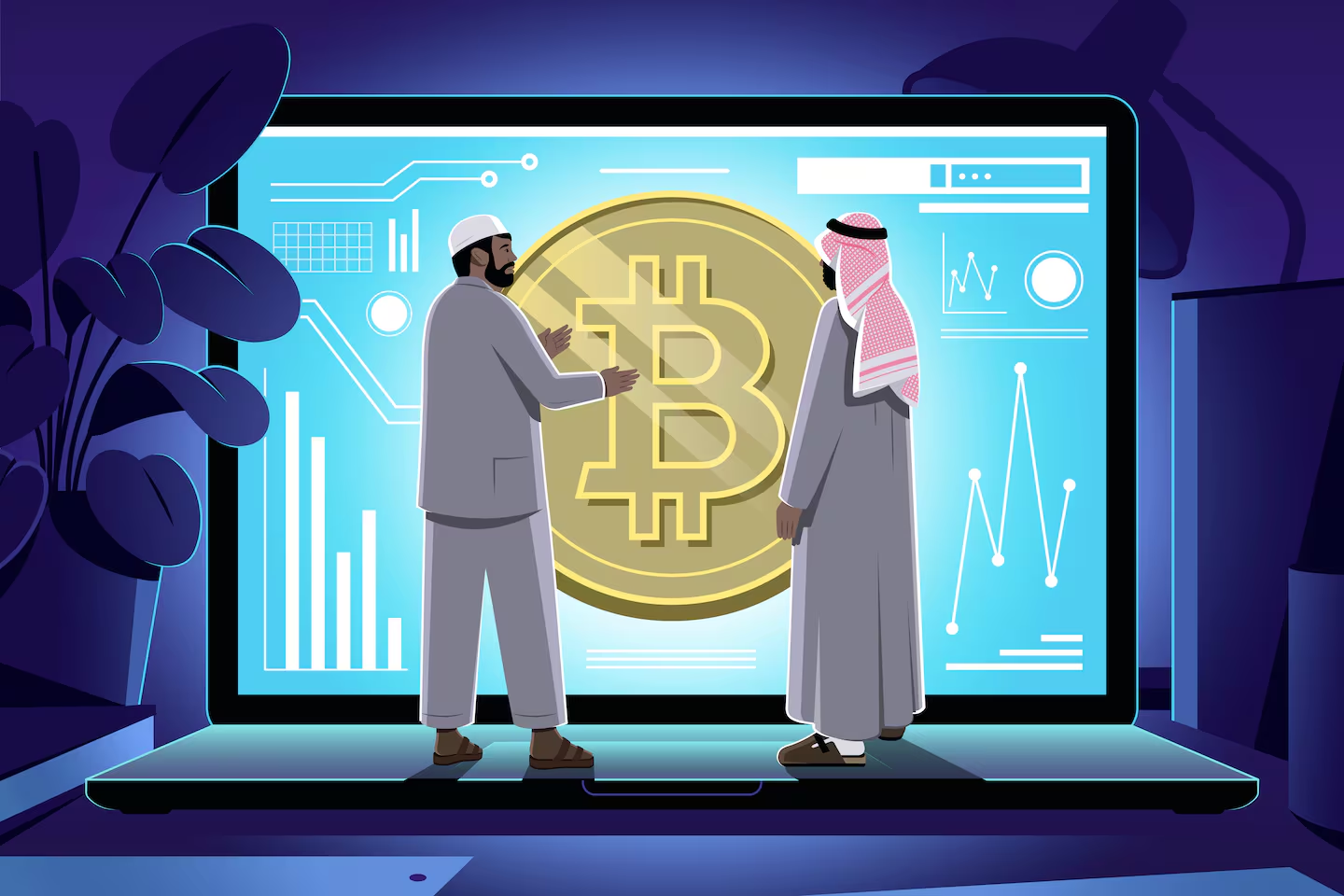
In the fast-paced and dynamic world of cryptocurrency and blockchain, staking is emerging as a popular way to earn passive income. This has led to discussions and debate about whether staking crypto is halal.
This article will examine the concept of staking and the considerations relating to whether it can be deemed to be halal.
WHAT IS STAKING IN CRYPTOCURRENCY?
In cryptocurrency staking occurs when investors lock cryptocurrency for a specific period of time. This is done to support the blockchain operation. The investor will lock in their digital tokens to a specific blockchain network and in return, they will earn rewards.
For the blockchain network, it means that transactions can be validated and for investors and individuals it means they can earn rewards without having to sell their crypto.
In comparison, bitcoin and staking are not linked. Bitcoin tends not to use the staking mechanism. Instead, it uses the proof of work mechanism where miners compete with each other to problem solve maths puzzles to validate transactions.
Any locked up cryptocurrency acts as collateral to support the blockchain network. This means that it is no longer available for use and therefore staking reduces the liquidity of the asset that has been staked for any given project.
HOW DOES STAKING WORK?
Crypto staking is a consensus-based mechanism. It enables token owners to validate a crypto chain by adding blocks. Using existing crypto to validate holdings as proof of stake on a blockchain.
Any newer blocks are also validated using the proof of stake mechanism. As the crypto funds are effectively locked in for a period of time this supports the activity of the blockchain. For the investor or asset owner who are using the blockchain platform, they earn staking rewards which are similar to earning dividends on their assets.
There are two main forms of staking:
- Independent staking : this method is used when an individual deposits their crypto token as a single and sole validator on a blockchain. There is usually a minimum token threshold. For investors using this form of staking they aim to benefit from being the sole beneficiary of rewards earned.
- Staking pools: staking pools are when there are a group of people who effectively pool their crypto tokens. This is the preferred method for newcomers to staking who want to share the risk with others.
Staking involves contractual terms that identify the obligations and the rights of the parties in the staking process. These terms can vary depending on the nature of the staking.
Sharia Compliance And Staking Crypto
Islamic finance provides the conceptual and foundational basis for operating financial transactions in line with Islamic rules. Operating in an Islamic finance framework means you use your finances to ensure you manage funds in an ethical and socially responsible way.
When considering crypto staking, it is important that you do all your due diligence. Investors or those staking their crypto need to understand the mechanism of staking and screen it for Sharia compliance. You need to fully understand what happens once you deposit your crypto onto a blockchain network.
In a proof-of-stake system, any crypto being staked is used to strengthen the consensus based network and improve the integrity of it. The profit is made from the rewards you receive for investing in the blockchain's sustainability.
Always make sure you understand the level of risk involved, the projects involved and the legitimacy of the network before staking your assets. A problem could arise if the blockchain itself is deemed halal but further down the line it starts to become involved in haram industries. Management of your crypto wallet should follow the same Islamic principles as your physical wallet. This requires ongoing due diligence.
Considerations
As a starting point, you need to ensure that the blockchain is not associated with any haram industries such as gambling, alcohol and pork. Look for morally sound initiatives and well-researched projects that have already been screened.
Another important point to consider is riba / interest. Whilst earning rewards via staking is not considered to be riba, examine the structure and payment of the rewards you will be generating. For many, staking a deposit is not seen as a loan so interest cannot therefore be generated. The reward is seen as the benefit of a joint endeavour, as more people join the blockchain, more rewards are achieved. The purpose of the stake is to improve the legitimacy of the network and to maintain it.
Another consideration is the governance and the values of the blockchain platform. Make sure that the governing values are ethically sound.
IS STAKING HALAL?
Consider all the advice in this article, but in particular, if you want to determine if any staking activity is halal you need to evaluate the halal status by ensuring:
- there is no interest / riba involved in the staking or the investment of any capital
- There is no excessive uncertainty or ambiguity - the terms required must be clear
- look for ethical compliance
- focus on asset backed transactions and stay away from gambling
- seek an expert opinion
- review the market the blockchain might be linked to and evaluate it for Sharia compliance
- review the other users of the blockchain
- make sure any incentive being offered is halal
- check the governance, infrastructure, platform and protocols being used
- learn all you can about your stake and the price
Staking in its traditional form does not currently involve any kind of loan or interest. There is no borrowing of money or any interest payment. Essentially, the software involved generates tokens as rewards. These rewards do not impact or come from any other users currency so there is no exploitation of others via investment or trading.
Practical Steps For Muslims Considering Staking
For anyone looking to stake crypto, it is essential that you seek guidance from scholars who are fully aware of Islamic finance concepts and principles when it comes to money matters. Look for blockchain platforms that are already established within Islamic networks.
Some of the benefits of crypto staking include having the opportunity to earn additional tokens (passive income). Also, as you are contributing to the security and efficiency of the blockchain network this could be seen as strengthening the decentralized platform for others.

The emergence and growth of blockchain and Sharia-compliant finance has led to a debate about whether blockchain is Sharia-compliant. Both Sharia-compliant finance and blockchain are based on the same central components of fairness, transparency, accessibility and decentralisation. These similarities have led to an uptake in blockchain from Muslim markets and businesses.
What is of critical importance for those wanting Sharia-compliant finance options, is that blockchain is compliant with the rules of Islamic finance and financial transactions.
WHAT IS BLOCKCHAIN?
Blockchain is a decentralised system where records of cryptocurrency transactions are maintained and linked. This form of digital ledger technology enables transparent and secure transactions across computers.
The ledger, or digital database, acts as a growing list of records (blocks) that are all linked together. Since Bitcoin and Ethereum became known worldwide, so too has recognition of blockchain platforms and their purpose.
Blockchain - Key Features
The key features of blockchain are:
- decentralised databases: no single entity controls the data and this means it is resistant to manipulation, fraud, and censorship
- Immutability: once a transaction is logged onto the blockchain it cannot be deleted or changed.
- Transparency: all the transactions that are recorded on the blockchain are visible and transparent to all the participants in the network. This enhances transparency and authenticity.
- Secure: as each digital transaction is verified by participants being they are added to the ledger this prevents fraud and unauthorised transactions.
- Smart contracts: blockchain includes smart contracts that self-execute and automatically enforce terms. This means the room for error or fraud is massively reduced when compared to traditional contracts.
Sharia Rules And Blockchain
For Muslims looking for Sharia-compliant financial solutions, blockchain is becoming a viable option. Blockchain technology offers Sharia-compliant finance that offers transparent and secure alternatives that are compliant with Islamic rules relating to financial transactions.
According to Islamic finance rules, blockchain technology is considered to be a fairly neutral database tool that stores records in a transparent and secure way.
Sharia rules as they relate to financial transactions require adherence to Islamic finance principles that relate to ethical conduct and social responsibility. Key elements of prohibition include a ban on interest, speculation and investment in haram industries and practices.
Blockchain technology, as a secure and decentralised ledger system, certainly meets the Islamic finance standards of transparency and security. However, when assessing if any technology is truly compliant with Sharia rules several factors should be considered including the nature of the financial transaction taking place, the underlying assets, and the consensus mechanisms.
WHAT MAKES BLOCKCHAIN SHARIA-COMPLIANT?
Sharia-compliant finance revolves around fairness, equity, transparency, and risk sharing. Any blockchain technology or service needs to comply with these principles and be free from interest and speculation.
The development of currencies that are Sharia-compliant and based on blockchain technology is fast-moving. For Muslims looking for adherence to Islamic rules, blockchain is quickly able to verify transactions with a clear and traceable ledger.
It is important to note that not every blockchain transaction will be Sharia-compliant. This is in the same way that not every bank, project, return, investment, platform, and digital asset will be Sharia compliant. The compliancy will lie in the type of transaction and nature of the deal.
Islamic Finance And Blockchain
The interplay of blockchain and Islamic finance is interesting. Not only does it present opportunities to transform and innovate the industry, but it also means that blockchain-based solutions can now facilitate Sharia-compliant transactions.
Blockchain facilitates fractional ownership, asset management, and efficient cross-jurisdictional and cross-border transactions. The transparent ownership and financial records and real-time settlement blockchain offers is compliant with Sharia rules.
Put very simply, blockchain technology and platforms support Islamic finance initiatives and businesses. This means Muslims can use blockchain to invest and transact.
Zakat And Blockchain Potential
For Muslims who want to comply with one of the five pillars of Islam, zakat, blockchain technology has a great deal of potential in enhancing and facilitating compliance with this pillar. Not only can blockchain enhance the administration of zakat money, but it can also help and provide value in the administration of zakat.
Blockchain technology streamlines the distribution of payments ensuring that zakat transactions are fast and transparent. By recording zakat on immutable ledgers that are visible to all participants, blockchain is being used more and more by Muslims across the globe.
People are easily able to trace and audit their payments and zakat transactions, tracing the flow of their funds. What's more, it is easy to check if your zakat contribution is affecting those in need in the most appropriate way. This greater visibility provides clarity and precision for donors.
Blockchain has the potential to revolutionise global zakat payments by using methodology that increases efficiency, transparency, and seamlessness. Donors are able to maximise their donations automation and traceability.
Supply Chain Management
When it comes to business operations and analysis of Sharia-compliant methods, blockchain provides immutable records.
For Muslim business owners and customers, making sure of authenticity is key when it comes to analysing the halal elements of any dealing.
Blockchain technology can validate halal certifications and methodology throughout the supply chain. This provides a verifiable audit trail and ensures that Sharia-compliancy can be checked.
Blockchain And Sukuks
Blockchain technology ensures that Islamic bonds (sukuk) are transparent, secure and fully Sharia-compliant. As blockchain enables real-world assets such as property and commodities to be tokenised.
Sukuk issuers can then tokenise the assets backing each sukuk, making sure that each token issued represents a percentage share of ownership. What this means in Islamic finance terms is that the sukuk is backed by tangible assets or services, making it compliant with Sharia rules.
In addition, each sukuk issuance and transfer is recorded on the digital ledger and this helps to verify authenticity along the chain of ownership and eliminate fraudulent or speculative activity.
When used properly, blockchain can be set up to automatically screen for Sharia compliancy for users. This screening not only screens for Sharia compliance, but also verifies participants.
This level of transparency is highly encouraged in Islamic finance transactions.
Islamic Finance Asset Management
Blockchain can be used to enhance Islamic asset management portfolios. By streamlining settlement of money, blockchain enables real-time settlements of transactions. Platforms dedicated to blockchain encourage peer to peer engagement and transactions and this eliminates the need for intermediaries and third parties.
What this means is that asset management becomes more transparent and more streamlined. The level of risk is reduced, and overall efficiency is improved.
Management Of Waqf
Waqf, Islamic endowment, is the act of dedicating or endowing a property for charitable, community, or religious purposes.Using blockchain, the management of waqf can be delivered in an easier and more efficient way.
This is done via platforms that provide traceability, authenticity and audit trails.
Ethical, Safe And Decentralized
Using blockchain properly means products and services can become more transparent and screened for Islamic adherence. Investors and organisations can use blockchain technology to enhance the efficiency, integrity, and accessibility of Islamic finance solutions.
Blockchain is emerging as a safe and ethical partner for Islamic finance products and services. The hybrid of modern blockchain technology, cryptocurrency, and long established Islamic principles of exchange is a welcome one for the finance world.

Introduction
Across the world of finance, business, corporate transactions, and investments, adherence to ethical and religious principles is becoming increasingly important. People are actively searching for Sharia compliant venture capital which stands at the intersection of entrepreneurship and Islamic finance.
Not only does Sharia-compliant venture capital support businesses to operate within the rules of Islamic finance, but also ensures that they have adequate funding to innovate and grow.
Sharia-compliant venture capital facilitates and enables ethical growth and investment. What this means in the long-term for businesses is that they can ensure their growth is sustainable and stable.
WHAT IS VENTURE CAPITAL?
In its very basic form, venture capital is exactly what it says it is. It is capital (money) for a venture. It provides essential funds for (usually) start-ups or small and medium-sized enterprises that have potential for growth and want to minimise their debt. The aim of anyone investing in these businesses is to see a good return on their investment.
Investors or venture capital firms that invest in a business provide capital funding in exchange for ownership or some equity in the business.
For Muslims, venture capital is a move away from obtaining funding from banks which offer loans that do not adhere to Sharia principles. Primarily, conventional banks offer loans based on interest calculations and interest is prohibited in Islam.
In addition to funding, some venture capitalists offer advice and mentoring to the businesses they invest in. This can be a great boost for those looking for management expertise. This can come in the form of strategic guidance, access to networks, and business development opportunities. The aim is to accelerate the trajectory growth of the business.
To summarise, venture capital plays a significant role in supporting innovation. Many new businesses can struggle to secure the finance to enable them to grow as they do not have a trading history or record of achievement. Being able to access venture capital means ideas become innovations, and innovations can become successful.
Sharia Compliant Venture Capital
When it comes to Sharia-compliant venture capital we are referring to venture capital that operates within the parameters of Islamic finance. The principles of Islamic finance are based on ethical and socially responsible transactions, and zero interest-based lending.
Unlike the more traditional form of venture capital funds, Sharia compliant venture capital invests in those promising businesses that operate in Sharia-compliant industries. This means Sharia-compliant venture capital cannot invest in industries such as the porn, alcohol, or gambling industry.
More likely is that venture capital funds will invest in industries such as healthcare, sustainability, renewable energy, and education.
Innovation And Islamic Finance
A critical element of Sharia-compliant venture capital is to support and encourage innovation within the Islamic finance ecosystem. What this means for businesses and entrepreneurs is that they can pursue Islamic and innovative ideas whilst ensuring they can access funding in a Sharia compliant way.
One of the key concepts within Sharia compliant venture capital is the concept of risk sharing (mudarabah). What this means is for investors to provide the capital to entrepreneurs who use the money to grow and develop the business idea.
Any profits that are generated are then shared between the parties in pre-agreed terms and ratios. In a difficult and unpredictable economy, it means businesses can access finance and develop their product and services where otherwise they may not be able to.
Ethical Investments And Venture Capital
When it comes to investments, Sharia rules are strict and require that investments are fully halal. What this means is that venture capital cannot be spent on haram activities or industries.
Instead, venture capital investments must be used for ventures that are ethical and that contribute to society in a positive way. Not only does this ensure compliance with Islam, but also ensures that the capital is spent in a way that aligns with Islamic finance and the beliefs of the investor and business.
Islamic Finance And Entrepreneurship
When it comes to Islamic finance, money serves mainly as a medium of exchange rather than a tradable commodity value. For entrepreneurs with innovative ideas, they need the money to be able to scale and grow their idea into a profitable business.
When looking for Sharia-compliant venture capital businesses need to look out for:
- Mudarabah/ profit sharing: make sure any contract relating to venture capital investment is based on a fair and pre agreed payment ratio (with losses borne by the investor).
- Musharakah: in this type of partnership arrangement the parties share the profits according to the capital contribution.
- Advisors: make sure that you have access to a Sharia advisor who can advise on compliancy and ongoing compliance.
- Investment: any investment should be halal and in halal industries
- Annual disclosure: check and monitor Sharia compliancy and ensure you have annual disclosure for transparency
- Regulation: ensure there is a regulatory framework that is rooted in Islamic finance.
Ventures Supported By Sharia-Compliant Capital
Many businesses have been supported by Sharia compliant venture capital. The remit of businesses includes fintech companies, digital, and health care sectors.
For any new business or SME looking for investment, venture capital is often the perfect solution.
Venture capital plays a critical role in many different ways:
- provides financial resource and financial services
- supports early stage innovation
- facilitates experimentation and entrepreneurship
- provides guidance via the mentorship model
- offers long term perspective
- provides capital solutions
- offers market exposure
- enables SME to navigate new sectors
- focus away from the bank to the investor
- opportunity to scale growth and capital
- ecosystem and infrastructure development
Future Trends
The future of Islamic venture capital funds looks bright. The Islamic finance market is one of the fastest growing financial markets in the world. Accompanied by technological advancement and the increasing demand for Sharia-compliant products and finance, venture capital funds that adhere to Islamic finance rules will continue to grow.
The demand for ethical venture capital is not only driven by Muslims. There are huge swathes of communities who want to invest in a more socially responsible and ethical way. Not only does this generate sustainable growth, but also supports efficiency and economic prosperity for the long term.

Sharia-compliant finance operates within the Islamic finance financial model. What this means is that any financial product or service must adhere to Islamic rules relating to financial transactions.
The increasing popularity of Sharia-compliant finance is being driven by the growth in the global Islamic finance industry. However, many businesses and individuals are looking to Sharia-compliant finance to provide them with ethically based options and solutions. Ethical investors and the growing trend for socially responsible investing means Sharia compliant services are aligning with the values of many people across the world.
Sharia-Compliant Finance
Sharia-compliant finance must have the following qualities:
- Aligns with Islamic values
- Prohibition on interest/riba
- Ethics and morality screening
- Social responsibility
- Risk management
- Profit and loss sharing
- Ongoing monitoring and compliance
- Asset backed finance
- Avoiding speculation and ambiguity
Promoting Inclusion
Sharia-compliant finance is a great draw for ethical investors in the market looking to invest their money in ethical enterprises that promote individual inclusion and diversity. By providing equitable access to financial services, Sharia-compliant finance serves underprivileged communities who may not previously had access to products and services.
The focus on building inclusion and equity through transparency, information, and sharing of profits enables Sharia-compliant finance to promote inclusion.
There are several ways in which Sharia-compliant finance promotes inclusion.
- Prohibition of interest: the charging or receiving of interest is seen in Islam as an exploitative practice that is unjust and unfair.
- Avoiding speculation: keeping transactions transparent and equal makes them more inclusive.
- Ethical investment screening: screening for industries such as gambling and alcohol means that more focus is placed on environmental, social, and corporate governance.
- Asset backed finance: having transactions backed by assets leads to more clarity and equity between all parties.
- Risk sharing: this leads to greater inclusion as it removes the respective power of each party when coming into the financial deal. It also means that payments owing to the parties are fair and proportionate.
- Socially responsible investing: the onus on being socially responsible when investing or managing a portfolio places a responsibility on the investor to be conscious of working with marginalised groups.
- Sustainability: having a future focus on long term goals is a key element of Islamic finance.
- Fairness in contracts: Islamic finance emphasises the importance of having fair contracts and contract terms. Parties to a contract should act with integrity, honesty, and mutual consent.
Microfinance In Islamic Finance
Islamic finance recognises the importance of supporting small and medium businesses. Investment in these sectors and industries is encouraged.
Sharia-compliant finance understands that microfinance for small businesses is imperative for growth and sustainability. Often, small businesses can struggle to secure funding and capital. Islamic microfinance offers SMEs a lifeline with Sharia compliant finance solutions that are tailored to the business needs.
For investors, it means they can invest ethically, enabling entrepreneurs to access capital for business growth.
Risk And Profit Sharing
Risk and profit sharing is a key element of Islamic finance. What it means in principle is that partnership models such as Mudarabah and Musharakah are encouraged.
These partnerships enable entrepreneurs and financiers to agree on the terms of any profit sharing in a fair and transparent way.
Community Development Initiatives
Islamic finance encourages community development initiatives through mechanisms that align with Islam. The central principles of social responsibility and ethical investing mean that investors are required to act in a philanthropic way for the greater good of society. The outcome is that society benefits from the actions of the individual.
Sharia-compliant investments are directed towards the type of fund and project that positively impacts society. Investors looking for Sharia compliant investors prioritise investments in sectors that require funding such as healthcare, education, renewable energy, housing, and poverty alleviation.
These sectors have seen huge growth in recent years, so investing in them is often a win for the socially conscious investor and the initiative.
Staying Stable In Volatile Markets
Sharia compliant finance has demonstrated resilience and stability in volatile markets. This is due to its core principles of risk sharing, asset backed finance, and avoiding interest. Ethical investors are not looking for a quick and easy return, instead they want to invest in a stable and ethical sector.
As changes in interest rates affected the global markets in recent years, the Islamic finance investment market remained relatively stable as it is not dependent on interest backed lending or borrowing.
The value of the assets the finance is backed against provides some stability when the market becomes unpredictable.
Global Growth
Islam encourages a long term approach when it comes to investments. The focus is not on immediate profits, but long term sustainability and societal benefit. The principles of sabr (patience) and fairness in Islam mean that ethical investors investing using a Sharia-compliant framework are not always looking for an immediate return on investment. The aim is long term benefits and stable returns.
As the Islamic finance industry continues to grow, so too do the Sharia compliant finance options. Ethical investors from all backgrounds are pushing the drive for ethical and socially responsible investments.

The growth of Sharia-compliant finance services has led to a similar growth in technology that is advancing and supporting sharia compliancy for businesses. Sharia-compliant fintech has emerged as driver of innovation and ensuring businesses can operate efficiently and within the rules of Islamic finance.
By leveraging technology, Sharia-compliant businesses are able to operate in a compliant way whilst also ensuring they are not left behind in the fintech revolution.
In addition, businesses can use technology to offer their clients and customers opportunities to become more engaged in socially responsible and ethical financial activities.
Technology that supports Sharia-compliant businesses to operate also supports Islamic finance principles relating to money, financial transactions, and any form of investment.
WHAT IS SHARIA-COMPLIANT TECHNOLOGY?
When we talk about Sharia-compliant financial technology (fintech), we refer to technological solutions that adhere to Islamic finance rules relating to Sharia-compliant transactions and services.
The fintech can take the form of online tools or cutting edge technology that includes artificial intelligence, blockchain, online banking, Sharia compliant banking, and apps that support Muslim businesses.
Sharia-compliant technology needs to ensure it is:
- Compliant
- Transparent
- In accordance with Islamic finance rules
- Accessible
Technology that is Sharia-compliant plays a critical role in ensuring that Muslim businesses can expand their reach and continue to grow. For many years, Muslim entrepreneurs and SMEs in the West had no alternative to the conventional form of finance structures offered by Western banking services.
These services and products were mainly not compliant with Sharia rules as they relied heavily on interest based lending (riba) which is strictly prohibited in Islam.
With the advent and growth of Islamic finance, the fintech industry has developed many different types of technology to support businesses and customers who want to carry out business transactions whilst remaining true to their Islamic principles.
The Intersection Of Ethics And Fintech
The combination of technology and ethics is a key component of Sharia compliant finance. Islamic finance rules are underpinned by concepts of social justice and ethics, and it therefore follows that technology must also play its role in implementing and amplifying ethics.
Leveraging technology within Islamic finance via fintech platforms and services means that businesses are increasing their ethical standing and social responsibility.
Sharia compliant fintech platforms and products needs to ensure that interest is prohibited, excessive uncertainty or ambiguity is avoided, and there is complete transparency. What technology facilitates within the Islamic finance sector, is efficiency, broader accessibility, and transparency. These are all key ethical concepts within the Islamic finance framework.
Smart contracts and decentralised platforms lead to greater accessibility and efficiency. They take the control away from large organisations and ensure that previously excluded financial groups can partake in business, whether as owners or customers.
Fintech Solutions
Technological solutions enable automated compliance, increased monitoring, reporting, real time tracking, and enhanced risk assessment and mitigation. These all align with the ethical values of Islamic finance and Sharia rules.
As technology and fintech solutions continue to evolve and come to the market, they are playing a crucial role in the accessibility of Sharia-compliant business finance. This is done through technology that enhances transparency, accessibility and offers innovation.
Let's have a look at some of the solutions that enable businesses to operate in a Sharia-compliant way:
- Smart contracts: smart contracts facilitate automation and transparency for all parties and therefore reducing any risk of exploitation and future disputes.
- Blockchain: blockchain technology is centralised this means control moves away from the conventional bank model and market. Blockchain also reduces the risk of fraud.
- Digital banking: online banking platforms have not only introduced global audiences to more finance options, but these platforms are often user friendly and Sharia compliant. Customers and businesses are able to access current accounts, business accounts and financial solutions at the press of a few buttons.
- Crowdfunding: these platforms are fast emerging as a Sharia compliant form of raising capital and investment. Many Muslim businesses and ventures across the world have created crowdfunding campaigns when they have not been able to find Sharia-compliant funding options for their project.
- AI: the future is definitely becoming more automated and managed. When it comes to the financial services economy, it is fair to say AI has the potential to revolutionise the products and services that already exist.
- Regulation tech (Regtech): for many Muslim businesses including those in the healthtech sector (dentists, pharmaceutical companies, health centres) regtech is critical. Not only does it ensure regulatory compliance, but is also essential for monitoring and maintaining Sharia compliancy.
Islamic Fintech And Social Innovation
The basic principles that underpin Islamic finance are rooted in financial stability and security. For businesses, this includes an element of corporate social responsibility. The advances in technology mean that fintech has provided businesses with the ability to compete on equal or better ground than those operating in the conventional banking system.
Technological innovations including online banking platforms have enhanced compliance with Sharia law. For example, online platforms have led to increased:
- Transparency
- Accessibility of Sharia compliant products
- Automation of compliance monitoring and reporting
- Secure transactions
- Educational information
- Customised Sharia-compliant solutions
Technology For Businesses And Individuals
It's not only businesses that are benefiting from compliant fintech solutions.
Consumers and customers are also becoming deeply ingrained in new and innovative digital ecosystems. Just consider how many people use online banking apps to monitor their spending, make obligatory payments such as zakat and sadaqa online, or donate their accrued interest payments in halal ways.
For businesses within the health sector such as dentists and pharmaceutical organisations, technology has enabled them to operate in a Sharia compliant way.
Technology aids businesses to plan their strategy whilst also ensuring they continue to adhere to Islamic finance principles.Technology is used to improve accuracy and efficiency by providing real time data. Sharia compliance can often be automated within the technological systems those in the health sector use.

Invest with clarity. Grow with confidence.
Built on Sharia-compliant principles, we prioritize transparency, long-term vision, and ethical finance. Discover how Qardus empowers your investment journey or helps your business access capital.