
Is blockchain sharia compliant?

The emergence and growth of blockchain and Sharia-compliant finance has led to a debate about whether blockchain is Sharia-compliant. Both Sharia-compliant finance and blockchain are based on the same central components of fairness, transparency, accessibility and decentralisation. These similarities have led to an uptake in blockchain from Muslim markets and businesses.
What is of critical importance for those wanting Sharia-compliant finance options, is that blockchain is compliant with the rules of Islamic finance and financial transactions.
WHAT IS BLOCKCHAIN?
Blockchain is a decentralised system where records of cryptocurrency transactions are maintained and linked. This form of digital ledger technology enables transparent and secure transactions across computers.
The ledger, or digital database, acts as a growing list of records (blocks) that are all linked together. Since Bitcoin and Ethereum became known worldwide, so too has recognition of blockchain platforms and their purpose.
Blockchain - Key Features
The key features of blockchain are:
- decentralised databases: no single entity controls the data and this means it is resistant to manipulation, fraud, and censorship
- Immutability: once a transaction is logged onto the blockchain it cannot be deleted or changed.
- Transparency: all the transactions that are recorded on the blockchain are visible and transparent to all the participants in the network. This enhances transparency and authenticity.
- Secure: as each digital transaction is verified by participants being they are added to the ledger this prevents fraud and unauthorised transactions.
- Smart contracts: blockchain includes smart contracts that self-execute and automatically enforce terms. This means the room for error or fraud is massively reduced when compared to traditional contracts.
Sharia Rules And Blockchain
For Muslims looking for Sharia-compliant financial solutions, blockchain is becoming a viable option. Blockchain technology offers Sharia-compliant finance that offers transparent and secure alternatives that are compliant with Islamic rules relating to financial transactions.
According to Islamic finance rules, blockchain technology is considered to be a fairly neutral database tool that stores records in a transparent and secure way.
Sharia rules as they relate to financial transactions require adherence to Islamic finance principles that relate to ethical conduct and social responsibility. Key elements of prohibition include a ban on interest, speculation and investment in haram industries and practices.
Blockchain technology, as a secure and decentralised ledger system, certainly meets the Islamic finance standards of transparency and security. However, when assessing if any technology is truly compliant with Sharia rules several factors should be considered including the nature of the financial transaction taking place, the underlying assets, and the consensus mechanisms.
WHAT MAKES BLOCKCHAIN SHARIA-COMPLIANT?
Sharia-compliant finance revolves around fairness, equity, transparency, and risk sharing. Any blockchain technology or service needs to comply with these principles and be free from interest and speculation.
The development of currencies that are Sharia-compliant and based on blockchain technology is fast-moving. For Muslims looking for adherence to Islamic rules, blockchain is quickly able to verify transactions with a clear and traceable ledger.
It is important to note that not every blockchain transaction will be Sharia-compliant. This is in the same way that not every bank, project, return, investment, platform, and digital asset will be Sharia compliant. The compliancy will lie in the type of transaction and nature of the deal.
Islamic Finance And Blockchain
The interplay of blockchain and Islamic finance is interesting. Not only does it present opportunities to transform and innovate the industry, but it also means that blockchain-based solutions can now facilitate Sharia-compliant transactions.
Blockchain facilitates fractional ownership, asset management, and efficient cross-jurisdictional and cross-border transactions. The transparent ownership and financial records and real-time settlement blockchain offers is compliant with Sharia rules.
Put very simply, blockchain technology and platforms support Islamic finance initiatives and businesses. This means Muslims can use blockchain to invest and transact.
Zakat And Blockchain Potential
For Muslims who want to comply with one of the five pillars of Islam, zakat, blockchain technology has a great deal of potential in enhancing and facilitating compliance with this pillar. Not only can blockchain enhance the administration of zakat money, but it can also help and provide value in the administration of zakat.
Blockchain technology streamlines the distribution of payments ensuring that zakat transactions are fast and transparent. By recording zakat on immutable ledgers that are visible to all participants, blockchain is being used more and more by Muslims across the globe.
People are easily able to trace and audit their payments and zakat transactions, tracing the flow of their funds. What's more, it is easy to check if your zakat contribution is affecting those in need in the most appropriate way. This greater visibility provides clarity and precision for donors.
Blockchain has the potential to revolutionise global zakat payments by using methodology that increases efficiency, transparency, and seamlessness. Donors are able to maximise their donations automation and traceability.
Supply Chain Management
When it comes to business operations and analysis of Sharia-compliant methods, blockchain provides immutable records.
For Muslim business owners and customers, making sure of authenticity is key when it comes to analysing the halal elements of any dealing.
Blockchain technology can validate halal certifications and methodology throughout the supply chain. This provides a verifiable audit trail and ensures that Sharia-compliancy can be checked.
Blockchain And Sukuks
Blockchain technology ensures that Islamic bonds (sukuk) are transparent, secure and fully Sharia-compliant. As blockchain enables real-world assets such as property and commodities to be tokenised.
Sukuk issuers can then tokenise the assets backing each sukuk, making sure that each token issued represents a percentage share of ownership. What this means in Islamic finance terms is that the sukuk is backed by tangible assets or services, making it compliant with Sharia rules.
In addition, each sukuk issuance and transfer is recorded on the digital ledger and this helps to verify authenticity along the chain of ownership and eliminate fraudulent or speculative activity.
When used properly, blockchain can be set up to automatically screen for Sharia compliancy for users. This screening not only screens for Sharia compliance, but also verifies participants.
This level of transparency is highly encouraged in Islamic finance transactions.
Islamic Finance Asset Management
Blockchain can be used to enhance Islamic asset management portfolios. By streamlining settlement of money, blockchain enables real-time settlements of transactions. Platforms dedicated to blockchain encourage peer to peer engagement and transactions and this eliminates the need for intermediaries and third parties.
What this means is that asset management becomes more transparent and more streamlined. The level of risk is reduced, and overall efficiency is improved.
Management Of Waqf
Waqf, Islamic endowment, is the act of dedicating or endowing a property for charitable, community, or religious purposes.Using blockchain, the management of waqf can be delivered in an easier and more efficient way.
This is done via platforms that provide traceability, authenticity and audit trails.
Ethical, Safe And Decentralized
Using blockchain properly means products and services can become more transparent and screened for Islamic adherence. Investors and organisations can use blockchain technology to enhance the efficiency, integrity, and accessibility of Islamic finance solutions.
Blockchain is emerging as a safe and ethical partner for Islamic finance products and services. The hybrid of modern blockchain technology, cryptocurrency, and long established Islamic principles of exchange is a welcome one for the finance world.
More on ethical finance
Explore related perspectives on building sustainable business
Islamic Finance provides a financing mechanism without Riba (interest), Gharar (gross uncertainty) and Maysir (gambling). These three are the key to all economic oppressions, economic imbalances and instability. They give rise to micro and macro risks which impact the overall wellbeing of an economy. Islamic Finance offers alternative structures and products which are free from Riba, Gharar and Maysir. One of these products is Commodity Murabaha.
In minorities where it is difficult to get Shariah compliant working capital financing for SMEs, Commodity Murabaha is an alternative Shariah compliant product and financing mechanism. Commodity Murabaha is the most common Islamic money market tool that is used to provide liquidity in the short-term Islamic money markets. The AAOIFI Shariah Standards, the majority of global Shariah scholars and global Shariah boards approve of Commodity Murabaha if it is implemented correctly with the correct controls to overcome financing challenges. The classical jurists also approved of a Tawarruq or Commodity Murabaha structure. In fact, Mufti Taqi Uthmani has produced a detailed research paper on Commodity Murabaha outlining the views of classical scholars. Ibn Muflih from the Hanbali school, Imam Shafi’i, Ibn al-Humam and Ibn Abidin from the Hanafi schools have all permitted this product and narrate its permissibility from other classical jurists[1].
Working capital financing is used to cover a company's short-term operational needs and not to buy long-term assets or investments. Those needs can include costs such as payroll, rent and inventory and other costs associated with daily operations etc. Practically, business owners who are looking for shariah-compliant working capital financing to cover their short-term operational needs generally prefer entering a Commodity Murabaha Agreement where a fixed profit rate and corresponding deferred sales price instalments is specified in advance. This allows them to finance their growth at a lower cost of capital as compared to for example using profit and loss sharing (PLS) arrangements such as Mudarabah and Musharakah that result in a higher effective cost of capital. PLS arrangements are better suited for business ventures where there is a higher risk of loss. Profit and loss sharing refers to financing whereby parties enter into equity financing arrangements where the financier has a share ownership in the business.Furthermore, a stable business looking to finance their working capital might not want to dilute their ownership through equity financing. Stable businesses will not want to share their upside so would prefer debt-based financing. By doing so, they are happy to protect the financier from the downside and retain exclusivity to the upside. A PLS is favourable where there is greater risk of downside and therefore the business is happy to share the upside.
In the UK, the most direct and common way for a party to obtain working capital is to obtain an interest-bearing loan from a third-party finance provider. Since a conventional loan represents a purely monetary transaction—in essence, the use of money by a party in exchange for the payment of compensation based on the length of usage—this type of loan may not be given or received by Shariah-compliant investors. The Commodity Murabaha product allows Muslims to finance their working capital without being exposed to interest-based financing.
The Commodity Murabaha agreement has been conscripted to fill the void. A customer enters into a Commodity Murabaha transaction not to obtain a physical asset for its use, but to engage in a series of purchase and sale transactions that result in the customer obtaining working capital. In a basic Murabaha transaction, the customer receives assets in return for a deferred payment obligation, and then employs those assets in its business. In a Commodity Murabaha transaction, the customer takes the additional step of selling the assets to a third party for cash, which represents the working capital (or financing for an acquisition, as the case may be) required by the customer. Note that the customer would not necessarily be required to sell the Assets to a third party; it merely is allowed to do so, as owner of the assets. The sale of the assets to a third party is not an element required to make the Commodity Murabaha transaction a valid transaction under Shariah.
To ensure that this product is not a smokescreen for Riba (usury/interest), contemporary Shariah scholars have placed several controls. The AAOIFI Shariah Standard highlights these controls to ensure that Commodity Murabaha aligns with the principles of the classical jurists. These controls are as follows:
- Different brokers: The trades must involve the market and involve different brokers from the buy and sell side. This ensures that the trades are genuine and that the brokers are selling/buying the asset with an interest in the asset.
- Real asset :The trades must involve a real asset. A fictitious product cannot be sold. The asset transaction must impact the inventory of the seller and the eventual buyer.
- Real trades: All the Shariah requirements for trading must be met in terms of valid offer, acceptance, legal capacities of the parties, agreement on the commodity, agreement on price etc.
- True ownership: The traders should assume true ownership through true sales of the underlying commodity.
- Possession: The traders must assume possession; either physically, constructively or digitally. This possession must allow them to dispose of the asset or redeem the asset.
- Correct Sequence: The Commodity Murabaha must be performed in a correct sequence which further establishes and validates all of the above key elements.
- Discretion to not sell: The traders must have the discretion to not sell and hold. This ensures that the trade is not fictitious.
- Different agents: The financier should not be the sole agent for all the parties involved in the Commodity Murabaha.
By meeting the above principles, the Commodity Murabaha is a Shariah compliant, asset-backed financing mechanism which aligns with the principles of Islamic Finance. From a micro-economic perspective and for a Muslim minority in the UK context, this product provides a valid Shariah compliant alternative in a system where every corner and every offer are interest-based. An overview of the Commodity Murabaha facility used by Qardus for SME business financing can be found here.
You can contact Mufti Faraz Adam on sharia@qardus.com
[1] Uthmani, M.T. (1998), Buhuth Fi Qadhayah Fiqhiyyah Mu’asarah. Dar al-Qalam

The success of your business depends on three factors - your product, your marketing and your funding. Most businesses fail not because of their product or their marketing, but because of cash flow problems. It's poor funding that brings them down.As an entrepreneur and business owner, it's easier to get excited about your products and their potential, rather than about your finances. But without secure financial foundations, that excitement can soon turn to frustration.Cash will flow into your business as you sell. But in order to sell you first need money to invest in stock, people and premises. Whether yours is a startup company or you're looking to expand, you need funds to invest in advance of starting to see sales coming in.There are many different forms of business funding. Here are some of those most commonly used by business owners.
Your own money
Many small businesses rely on the founder or owner providing at least some of the capital. There's always an element of risk in starting or growing your business and by funding it yourself, you're not accountable to anyone else. This does mean, however, that if the business doesn't grow as you hope, you risk losing some or all of the money you've invested.Using your own money allows you to be in full control of how you run the business. However, you could be missing out on the advice and guidance that's often available when you're borrowing from someone else.If you're starting a new business, or expanding your current business into a new market, you should anticipate costs being higher than you expect and allow a generous contingency to cover the unexpected. Small businesses don't grow without some mistakes being made, and these cost money. In the longer term, you learn from these mistakes, and they help you make better decisions in the future. However, if you're working on a very tight budget, these costs could seriously hold you back.
Friends and family
You may know people who are open to investing in your business. Some may be willing to give you a loan, quite possibly on generous terms such as with low or no interest and flexible repayment terms. Others may want equity in return for their money - they effectively become co-owners of the business, although probably only owning a small slice.It's for you to determine whether friends and family money is appropriate. It can be very convenient, and flexible, but at the same time you need to be aware of how financial arrangements can affect your relationships with people close to you. If all goes well, there's unlikely to be a problem. But if the business struggles, they may become concerned or even demand some of the investment back.When borrowing from friends and family, it's a good idea to draw up a document that will help to set everyone's expectations, both for how much involvement they will have in running the business, and how and when they will be repaid. They should be made fully aware of the risks involved when putting money into a new venture.
Grants
A grant is money that does not usually need to be repaid. There are various local and national grant schemes available to businesses, usually linked to startups, growth or innovation. They can range in size from just a few hundred pounds to many thousands, even millions.While grants can be hugely beneficial to entrepreneurs, they can also be time-consuming to apply for and sometimes come with quite stringent conditions. Many grants are based on match funding, meaning they won't cover the full cost of a specific project - you are expected to raise some of the funds from elsewhere.
Secured loan
A secured loan is where you borrow from a bank or other institution and if you fail to make repayments the lender has rights over an asset that you own, such as your home or business property. Because the loan is secured on an asset the lender has confidence they will get some or all of their money back, should you run into financial problems.It can take a few weeks to set up a secured loan because legal documents must be drawn up and signed off. The advantage of such a loan is that because it's secured, you may get more favourable terms, such as lower interest charges or a longer repayment term. The downside is that if you fail to keep up with repayments, your property is at risk. Most lenders aren't in a hurry to sell your asset, as they'd rather you found ways to keep up your repayments. However, they have that option if they need it.Applying for a loan will usually require you to provide considerable information about the financial position of your business, along with projections about future income and cash flow.
Unsecured loans
An unsecured loan is where you borrow without providing an asset as security. However, most banks and other financial institutions do ask for a director's guarantee or equivalent. This is where the director agrees to take personal responsibility for repaying the loan, should the business be unable to do so.Because it's not linked to an asset, an unsecured loan can be set up more quickly. However, for the same reason the amount you can borrow is likely to be lower, and the terms less favourable.These loans can come in various forms, including business credit cards, which are effectively an indefinite loan where you choose how much you want to borrow and repay on a monthly basis, subject to certain limits.
Venture capital and angel investors
Venture capitalists and angel investors are individuals or groups seeking to put money into businesses with growth potential. Venture capitalists are investing funds on behalf of a third-party and as such, they are more risk averse. They're looking for evidence that the business has a promising future. An angel investor, or business angel, is a high-net-worth individual who is often more open to getting involved with a startup and will take a bigger risk.The money they give you is not a loan. They are effectively buying part of the business - they have a stake in the equity of your business, meaning they become co-owners. This can have some implications for the amount of control that you have over how you run the business, but can be beneficial, giving you a source of advice and support, and it can provide a strong incentive for you to be more successful.Both VCs and angel investors will make a careful assessment of your business and its potential, and they know that by investing they are taking a risk. At some point they will want to be repaid - often when the business is sold.
Crowdfunding and peer-to-peer finance
The internet has made it much easier to connect people who want to invest, often small amounts, with businesses looking to raise working capital - the cash they need to operate and grow.Crowdfunding is where a business wants to raise money to launch a specific product. The business can be either a startup or an established firm. It launches a crowdfunding appeal to people likely to be interested in the product. The funders typically don't have a right to be repaid if the business or product fails, but if it all goes well, they get access to the product on preferential terms. Two of the most well-known crowdfunding platforms are Indiegogo and Kickstarter.Peer-to-peer finance matches people and businesses with money to lend with others looking to borrow. Top peer-to-peer sites include Zopa and Funding Circle.Any business looking to raise money through crowdfunding or peer-to-peer systems is usually required to undergo credit checks and other financial assessments, to ensure the risk to investors is minimised.
Finding the right way to fund your business
Finding the right way to fund the plans for your small business depends on many different factors, including how much you need to raise, when and how you'll be able to repay it, and your attitude towards giving up some ownership or control of the business. Potential lenders or investors will be interested in your business history, your credit rating and your growth potential. Each will have different attitudes to risk.
Small business funding with Qardus
We provide funds to small businesses with a proven track record that are looking to grow. Our finance is ethical and community based, providing funding from £50k to £200k with terms of between six and thirty-six months. Our funding process follows Islamic principles, meaning we don't charge interest and we don't work with industries considered harmful to society, such as alcohol, tobacco and gambling. The funding is Sharia-compliant, making it an attractive option for Muslim business owners, but we also fund others outside the Muslim community.We offer fast, flexible and affordable unsecured finance, firmly grounded in ethical principles.

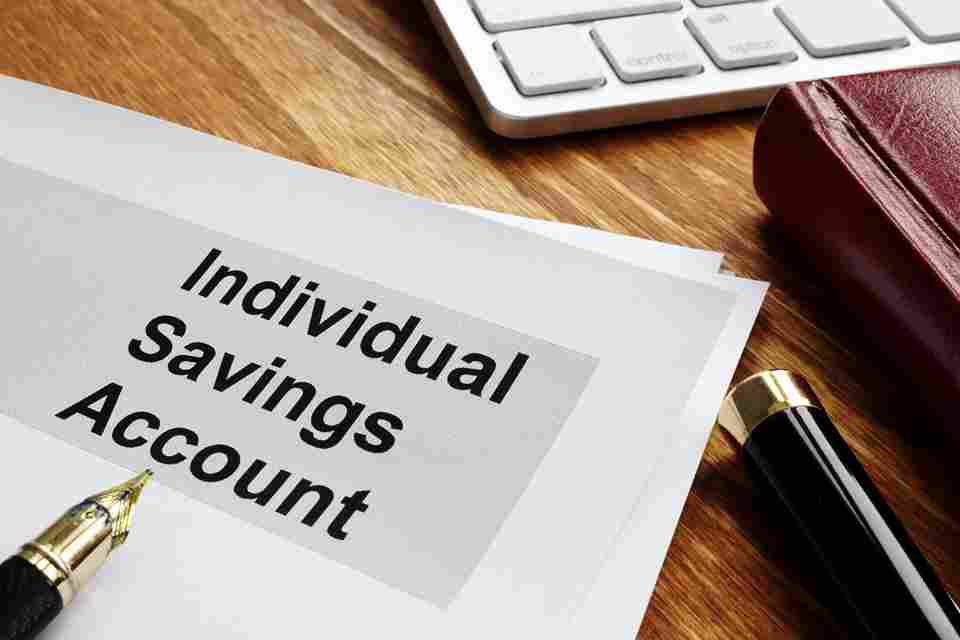
WHAT IS AN ISA?
An ISA is an individual savings account. The aim of an ISA is to encourage people to save money and invest in what is considered to be a tax-efficient way.
Having first launched in the United Kingdom in 1999, ISAs have become a popular way to prepare for your future by making sure you have savings set aside.
Anyone over the age of 18 in the UK can apply to open an ISA, and for anyone under the age of 18 there are options to open a junior ISA account.
The main things to note with ISAs accounts are as follows:
- You can only open one ISA per tax year
- There are limits to how much money you can put into your ISA each year
- The current ISA limit is £20,000
SHARIA-COMPLIANT ISAs
Sharia-compliant ISAs are essentially ISAs that comply with the strict Sharia rules relating to finance and savings. There can be no element of riba or interest as this is not allowed in Islam.
In addition, a halal ISA must ensure that any money generated comes from halal business and investment opportunities. So if you have a stocks and shares ISA you must ensure that the investment fund only invests in Sharia compliant companies and is not involved with industries that are deemed to be haram such as the porn, alcohol, and gambling industry.
The foundation of Islamic finance rules is that money itself has no intrinsic value. It is simply seen as a medium of exchange, therefore it cannot generate money by itself (hence the principle of interest being forbidden).
WHAT ARE THE ISLAMIC FINANCE RULES THAT APPLY TO ISAs?
As mentioned above, money held in Sharia compliant ISAs cannot attract nor pay any interest. In addition, any money held in a halal ISA must be invested ethically under Islamic finance banking rules.
A good bank that is Sharia compliant will go to great lengths to ensure it remains Sharia-compliant and in line with Islamic finance rules. For example, it will steer clear of businesses and industries that are deemed to be haram and unethical (such as gambling, weapons, and alcohol).
A Sharia-compliant will ensure no interest is paid on your ISA, and that you are not charged interest. Instead, many banks will pay what is known as an 'Expected Profit Rate' This is deemed to be profit that is earned on the savings (as opposed to interest which is accrued).
WHAT TYPES OF HALAL ISAs ARE AVAILABLE?
There are a variety of ISAs that are available on the market. These include the following:
- Stocks and Shares ISAs: also known as investment ISAs, these types of ISAs invest your savings into investments including stocks, shares and commodities.
- Cash ISAs: these work like a traditional savings account.
- Lifetime ISAs are popular with people saving for retirement or their first home. They are only available to those over 18 and under 40 years old.
INVESTMENTS AND ISAs
Sharia-compliant banks will invest your money into those ventures that are deemed to be halal and Sharia compliant. Any money that is generated from this investment is then returned to investors.
For cash ISAs, the important distinction between standard ISAs and halal ISAs is that no interest is payable on halal ISAs.
Banks offering their customers halal ISAs will ensure that they have lots of information about the businesses linked to their ISA investments, and potential opportunities are screened for compliance with Sharia rules. Any bank offering Sharia-compliant products and services will have a dedicated team who is responsible for the management and screening of the product against Sharia principles and providing advice about the products.
As ISAs are seen as tax efficient this is a big draw and incentive for people to open an ISA account.
IS MONEY IN A HALAL ISA SAFE?
There are various different banks in the United Kingdom that offer their customers and investors halal ISAs. They include Al Rayan Bank, Ahil United Bank, and Gatehouse Bank. There is further information about the ISAs on the website of these banks. ISAs in the United Kingdom are regulated by the Financial Conduct Authority.
Halal ISAs are available to Muslims and non-Muslims and offer what is considered to be a decent return on investment. Any provider offering halal ISAs and any other Islamic finance product or service in the UK will need to be registered with the regulating authorities and follow the guidance that applies to any company offering financial services. This means that customers have some peace of mind in the event of a collapse.
You should always make sure that any investment product you are interested in is offered by an institution that is regulated. Under UK law, this means that the Financial Services Compensation Scheme protects investors savings of up to £85,000 in the same way as they would be in a traditional bank.
Stay informed on finance
Subscribe to our newsletter for the latest insights on ethical financing