
What is Cryptocurrency - is it halal?
Introduction
Cryptocurrency is essentially a digital currency exchange and digital payments platform that uses blockchain technology. The technological and digital revolution over the last few decades has meant that innovative payment systems have been created and utilised, and cryptocurrency is one of the major breakthrough payment systems for business and personal finance use. Whether or not cryptocurrency is halal or haram is a debate that is ongoing between Islamic scholars.
This article will examine cryptocurrency, Islamic interpretations, and the types of cryptocurrencies available.
Cryptocurrency
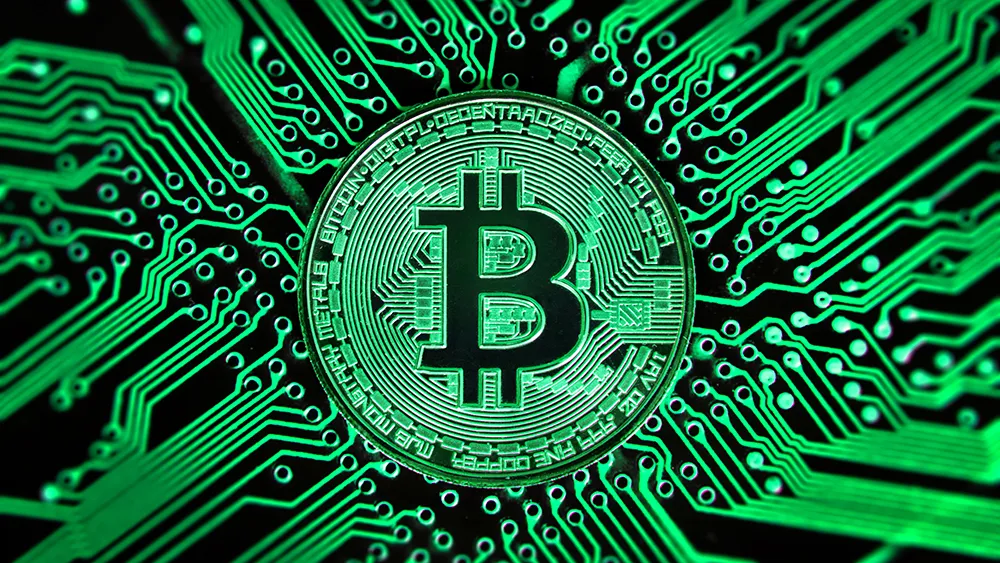
Although there are over 2,000 cryptocurrencies on the market now, Bitcoin is probably still the most known form of cryptocurrency in the blockchain market, and was the first cryptocurrency coin to go mainstream but there are other cryptocurrencies entering the market.
For Muslims across the Islamic world, the question arises as to whether crypto payment platforms are deemed to be halal or haram in the eyes of Allah and in accordance with Shariah principles, and whether as a currency it prevents money laundering. Whether or not cryptocurrency is halal or haram depends on the how a specific cryptocurrency aligns with the principles of Islam.
Cryptocurrency - Characteristics
One of the defining aspects of cryptocurrency is that there is no central authority such as a Government that authorises it or records it. Cryptocurrencies operate on decentralised networks using blockchain technology.
Most cryptocurrencies have a limited supply, or at least a capped supply. Transactions are transparent and traceable, but there is also a degree of anonymity of parties. One the main advantages of cryptocurrency is that it offers global accessibility. It can be received anywhere in the world - all you need is an internet connection.
For Muslims, cryptocurrency does tick a lot of the Islamic finances boxes when it comes to transparency and traceability. However, ultimately it is the duty of every Muslim to be seeking knowledge, and this guide will address the use of the cryptocurrency market and its intrinsic value.
This article will consider whether crypto currency is permissible as a form of actual money under Islamic laws and in the Islamic world. We will consider the views of Islamic jurists and scholars on this emergence of what is considered to be new money addressing the question of is cryptocurrency halal.ISLAMIC SCHOLARS INTERPRETATION - IS CRYPTOCURRENCY HALAL?
A comprehensive Islamic law interpretation, one that sparked a massive rise in Muslim investment in Bitcoin and Ethereum in 2018, was provided by Sharia advisor Mufti Muhammad Abu-Bakar (former advisor to Blossom Finance) who looked at the question of is cryptocurrency halal as a money supply. He argued that Bitcoin is permissible under Islamic principles.
Mufti Abu-Bakar considered arguments that crypto itself was speculative when it comes to personal finance, but his view was that all currencies have a speculative element and this did not automatically deem cryptocurrency as haram.
Crypto Currencies
Islamically, if a business does not have an element of appropriate loss probability within its assets is not strictly trading in a Sharia compliant manner. The Grand Mufti of Egypt, Shaykh Shawki Allam believes that cryptocurrency is haram and he is joined by other Shariah scholars from the Middle East and beyond including Shaykh Haitham Al Haddad who see crypto as high risk. Their argument is based on the notion that crypto itself does not hold enough credibility as a currency to be deemed to be halal.
However, many other Sharia scholars believe that crypto itself does confirm to Sharia money rules and Muslims are permitted to invest in crypto.
Islamic scholars who believe that cryptocurrency money and digital assets are halal include Ziyaad Mahomed, Shariah Committee Chairman of HSBC Amanah Malaysia Bhd, and Mufti Faraz Adam. These views lend credence to the notion that Muslims can invest in crypto.
Arguments in favour of crypto being deemed halal include:
- There is often a lack of riba (interest). Crypto operates on decentralised platforms without any central authority. This usually means there is no interest charged or payable.
- Crypto is used as a medium of exchange with a legitimate purpose in financial and economic transactions.
- Technologically, crypto is neutral. Scholars argue that it is the use of the crypto that determines if it is Sharia compliant or not.
- The fact that crypto is generally thought to be scarce means that it is easier to avoid speculation and uncertainty and this aligns with Islamic finance rules.
Islamic Scholars
As mentioned above, one of the main reasons Islamic jurists and scholars from Muslim countries argue that cryptocurrency is halal, is that the concept of the blockchain and other cryptocurrencies are inherently anti-interest when looked at from a money generation source or perspective. Crypto operates outside of conventional banking systems and interest-based transactions.
Islamic banking laws are also anti-interest so the technology, pricing, and buying and selling of cryptocurrency money is deemed halal by many Islamic scholars who rely on the teachings of Prophet Muhammad PBUH when seeking guidance about permissibility (ultimately, only Allah knows best).
Given that crypto has a finite supply, it is less likely to be subject to inflation. This means it can maintain a fairly stable value - again an important element of Islamic finance.
Crypto Blockchains And Islamic Finance Principles
Blockchains refer to the blocks of technology used to record digital cryptocurrency transactions. Blockchains act as a system of record and the reason this form of technology is so important is that it is virtually impossible to hack, change or cheat the blockchain platform or marketplace.
With the use of blockchain, centralized financial institutions and establishments are not needed as no central control is required. This also means that crypto trading (and the stock market) is more transparent.
According to many Islamic scholars and religious leaders, this addresses the question of is crypto halal within Islamic Finance rules and Islamic law more generally.
As cryptocurrency money is deemed permissible and halal under Islamic Sharia rules this has unlocked the crypto investment market to a global Muslim community with increasing numbers of Muslims with an interest in buying crypto and use it as a form of currency.
In terms of business practices, there are some basic principles (discussed in this article) relating to crypto and cryptocurrency trading that help many Muslims to decide if their entrepreneurial journeys and endeavours are permissible or strictly prohibited.
Consideration And Commercial Value - Is Crypto Halal Or Haram
From the perspective of Islamic contract rules, there must be an element of consideration when answering the question is crypto halal - there must be Mal. Mal refers to possession and effective storage, and cryptocurrencies meet the criteria required as they can be possessed and stored and have commercial value (Mutaqawwam).
Crypto is a real and viable digital asset, its worth and value lies in what is paid for it, and it is capable of being owned and traded commercially so the Shariah requirements are satisfied and the the question of is crypto halal can be answered.
Shacklewell Lane Mosque
The Shacklewell Lane Mosque in East London became one of the first mosques in the UK to accept cryptocurrency donations and Zakat contributions in 2018 during Ramadan. This mosque deemed cryptocurrency halal and permissible and generated a lot of interest on the topic of the permissibility of crypto more generally under Islamic law.
Digital Currencies, Money Laundering And Shariah Law
Islamic finance principles dictates that in order for income, or investing in any product or asset, to be deemed halal it has to meet certain criteria. The principles of Shariah law should be applied to the financial systems we operate in and there has been some discussion amongst Muslim scholars about whether rules devised centuries ago can still be applied to a technologically modern digital financial marketplace.
Whether cryptocurrency is halal or haram centres on the rules of Sharia law.
Is cryptocurrency halal? For many Islamic scholars, the answer quite simply is yes. Shariah principles can be applied to modern crypto analysis and digital currencies as they are based on social justice, accountability and ethics which transcend all forms of financial transactions. As long as there is no illegal activity, then trading or investing in crypto should not be deemed to be contrary to Shariah principles.
Investments, Islamic Banking Law And Illegal Activities
There has been some discussion amongst Muslim scholars around the use of cryptocurrencies for illegal activities such as gambling, drugs, and money laundering. Critics of Bitcoin also argue that it is not legal tender as it is not backed by any central government that assigns its value and maintains regulatory standards, and it is therefore deemed to be speculated trading.
However, Islamically the use of an item that is deemed halal for an unlawful purpose does not make the original item halal. Whether it is halal or haram depends on the multiple factors.
Currency Ownership
Ownership of the currency remains with the owner according to Muslim scholars, and the coins/tokens are kept in an e-wallet. This means that investors can take part in trading as and when they want, retaining control of their assets.
As mentioned above, the publication of the working paper conducted by Mufti Muhammad Abu Bakr clearly identified that cryptocurrency is permissible under Shariah rules.
For Muslims worldwide this could have huge implications for the payment of Zakat monies that are made to the poor and to charities globally. If Muslims make up 25% of the world's population and hold approximately £1.04 billion in bitcoins, this means that £26 million is due in Zakat contributions. [1]
Medium Of Exchange
Cryptocurrency operates as a medium of exchange across the globe. This means that it can operate in legally diverse and unpredictable environments, often making it more accessible than mainstream finance options. It is a valid form of currency that holds purchasing power.
Although vulnerable to market changes, crypto coins such as Bitcoin and Ethereum are deemed to be a legitimate medium of exchange, available for use in transactions and trading. Although crypto has not yet reached the status of being a globally accepted medium of exchange, it is fair to say that it is on the way to becoming so. Commentators expect crypto to appreciate over the course of time and to store value.
Cryptocurrency Guidelines
The development of Shariah compliant cryptocurrency guidelines provides Muslims with the opportunity for ethical investments. From a financial perspective, Islamic charities could benefit hugely from Zakat and other donations as a result of crypto investment.
Many banks and financial establishments globally are recognising crypto as a financially viable medium of exchange, and this makes it easier for investors to continue to trade, buy and sell cryptocurrency.
With billions of Muslims worldwide, and the growth of crypto, it seems clear that what is perhaps needed is some form of shariah compliant cryptocurrency guidelines for Muslims to follow. This would enable Muslims to assess themselves the validity of cryptocurrency when assessed against Islamic finance rules.
Contracts
In terms of whether contracts relating to crypto are Shariah compliant, given that the contractual relationships in crypto are based on smart contracts using blockchain technology, this means that the process can be made increasingly secure and automated.
This not only reduces administrative complexities, confusion and errors, but also ensures that banks are more likely to accept the contractual relationships created.
In demonstrating Shariah compliance, cryptocurrency is earning legitimacy across the Islamic finance world. Cryptocurrency agencies are springing up across the Muslim world such as One Gram in Dubai, and Hello Gold in Malaysia.
This adds further legitimacy to the rulings that cryptocurrency is halal and can be utilised by Muslims and Islamic financial institutions. Of course, there needs to be ongoing discussion to consider is crypto halal as it operated within a dynamic and changing industry.
As the crypto market continues to evolve more questions will need to be asked, and each crypto coin should be analysed against Islamic finance principles to check for permissibility. However, as things stand right now, crypto is recognised as an asset under Sharia law and this lends it legitimacy. The things to be careful of are making sure that any cryptocurrency you are involved in does not link to any haram things and industries or activities or any form of money laundering.
Whilst there is no central body who can make a final ruling on whether crypto is halal or haram, but as there is no element of interest (riba) and no exorbitant fees relating to crypto the interest from Muslims is growing. Crypto can be used within Islamic finance principles to make ethical investments and wealth management in a Shariah compliant way. This could unlock the cryptocurrency investment market to billions of Muslims worldwide who are looking to enter the crypto market as investors.
As the currency is still in its infancy it is important to keep an eye on all new developments and to assess and analyse changes in the marketSource:
[1] https://www.independent.co.uk/life-style/gadgets-and-tech/news/bitcoin-halal-london-mosque-donations...
Explore more news
Wills
A will is a legal document that sets out the wishes of a person with regard to the distribution of their wealth, income, and assets once they pass away. An Islamic will is a will that documents how your wealth, property, and gifts will be distributed when you die and is prepared in accordance with Islam and Sharia law. The last will and testament specifies exactly what happens to your assets and wealth when you die. What you leave behind is known as your estate, and this inheritance will be passed down to those mentioned in the will upon your death.Islamic wills are also known as wasiyyah, and are one of the many important elements of Islamic financial planning.This article will discuss Islamic wills, why they are important, and how to ensure you have one prepared.
Wills In Muslim And Non-Muslim Countries
Islamic wills are used by Muslims who want to ensure that their finances and responsibilities are dealt with in a Sharia compliant way once they have passed. In Muslim countries, the rules of the country dictate the laws of intestacy, which is the law that will apply on the death of a person.
However, in non-Muslim and western societies (such as the United Kingdom) where Sharia law does not apply, Muslims look to having an Islamic will in place before their death to ensure that it complies with their Islamic obligations and the rules stipulated in Islam when it comes to inheritance.
Why Islamic Wills Are Important
For Muslims, it is critical that they have an Islamic will in place before they pass away. Not only is the importance of having an Islamic will highlighted in the Quran it is also mentioned in the hadith.
If a Muslim does not have an Islamic will, this means that their property and wealth will not be distributed in accordance with Islamic Sharia rules and regulations.
Islam places great emphasis on making sure you live your life in an orderly manner, and this duty for orderliness and preparedness also applies to leaving this world.
If a Muslim dies without having made an Islamic will then they should expect their wealth to be distributed by the rules of intestacy of the country they live in. In the UK and the United States, the rules of intestacy are not in line with Sharia rules and are therefore not Sharia compliant.
Importance Of Having An Islamic Will
It is especially important to have an Islamic will for those with dependants, a spouse, children, or other beneficiaries. Not only will an Islamic will deal with the distribution of your assets, it will also ensure that any charitable donations you wish to make are dealt with, but your family is provided for adequately, and your funeral is managed in line with your wishes.
It is always best to make your Islamic will as early as possible, and whilst you are of sound mind.
The incentive in doing this is that once you sort your will it can remain in place until you die unless of course you decide to make any changes in which case your Islamic will can be updated.
Dying Intestate
If you die without a will in a non-Muslim country then the intestacy rules of that country will apply. For example, in England, if you have no surviving relatives then your estate will automatically pass to the Crown.
Dying intestate not only means that your assets will be distributed without your instructions, but it also makes dealing with your estate long-winded and difficult. It can also take months and sometimes years to unravel the estate and distribute the assets.
Usually, a close member of the family such as a spouse or parent has the legal right to distribute and manage the estate and the real property within it.
Islamic Wills Explained
An Islamic will is a legal document that will outline how a Muslim's assets will be distributed on their death. What sets the Islamic will apart from the traditional will is that the Islamic will is drafted based on the guidance and rules set down by Islam and Sharia law.
The Islamic will not only deals with the distribution of your assets but should also cover what happens to your debts and monies you owe to third parties.
Islamic wills should always comply with Islamic laws of inheritance, this is why you need to use the services of a solicitor who understand Sharia law and compliance.
Islamic Laws Of Inheritance
Islamic laws relating to inheritance are set out in the Quran and the teaching of Prophet Muhammad (peace be upon him).Some of the main principles of Islamic inheritance laws are as follows:
- Equality - a key component relates to equality between female and male heirs. Sharia rules state that male and female heirs should receive equal shares in the estate of the deceased
- Differentiating between debt and assets - debts and assets should always be separated and any debt should be settled before any assets are distributed to heirs and beneficiaries
- Shares - Islamic rules and guidance states that there are certain heirs (such as husband / wife/ children) who are entitled to what is considered to be a mandatory share of the estate
- Beneficiaries and heirs - for those writing and preparing wills, they should be mindful of the determination of heirs. That is those heirs who are specifically entitled to a share in the deceased estate (this includes spouses, children, parents, and grandparents)
Requirements Of Islamic Wills
When it comes to Islamic wills there are some key principles you need to be aware of:
- Compliance with Sharia law - make sure you know and understand the intestacy rules of the country you live in. Do not just assume that Sharia rules apply, do your due diligence and make any relevant inquiries
- Finding the right professional - when it comes to writing the will you should always seek the services of an Islamic lawyer who understands Sharia rules and the Islamic distribution of assets. The cost and expense will likely be the same as appointing a non-Muslim probate solicitor.
- Writing the will - the wording in the Islamic will should be clear and concise with no room for ambiguity or uncertainty
- Signing the Will - make sure your signature is applied in the right place and witnessed by two credible, Muslim witnesses. The last thing you want is for your will to be challenged in the future.
- Review - once your Islamic will has been prepared and signed you should review it periodically to make sure it still meets with your requirements and wishes.
Why Islam Recommends Having An Islamic Will In Place
There is a huge emphasis in Islam for Muslims to have an Islamic will. Ensuring that our assets and property are distributed in accordance with Sharia principles is the last legacy for Muslims before they exit this world and enter the next.Every Muslim will want to leave this world and leave their estate in a way that pleases Allah.
Benefits Of Islamic Wills
For Muslims, the main benefit of an Islamic will is that it ensures the estate is distributed in accordance with Sharia rules.Let's have a look at the main benefits of having an Islamic will prepared:
- Islamic estate planning - as mentioned above, there is peace of mind knowing your estate will be managed as per your wishes
- Islamic compliance - Islamic wills are Sharia compliant
- Avoids disputes - having the Islamic will prepared means that disputes about the distribution of your assets in the future are minimised
- Protection for heirs - of course, having the will ready means that your beneficiaries are protected and your assets, property, gifts, and money are shared in accordance with your wishes
- Burial - your Islamic will can outline plans for your funeral and burial and make sure it is all done in an Islamic way and in accordance with your belief and choice. This not only gives you reassurance but also makes the whole experience easier for those you leave behind.
In addition, Islamic wills can also address the importance and appointment of a legal guardian when minor children are left behind. Islamic law states that a legal guardian should be appointed in accordance with the best interest of the children.
Islamic wills can deal with such appointments, and this means that your son or daughter will be adequately supported by your nominated guardian.
ISLAMIC WILLS - WHAT IF THERE IS A DISPUTE?
If you find yourself in a situation where there is a dispute relating to an Islamic will then the first thing you should do is seek the services and advice of a professional Islamic wills lawyer.
Your lawyer will be best placed to advise you of your options, and many of them offer telephone call consultations and advice. If the dispute cannot be sorted via discussion and negotiation with the other parties involved, then you could seek a resolution through the Islamic Sharia court system.
Sharia courts are able to deal with disputes and help resolve disputes in accordance with Islamic principles.
What you should remember though, is that having a well-drafted, water-tight Islamic will means that it is less likely to be challenged or to lead to disputes in the future.
A good professional solicitor with knowledge of Sharia principles will help you prepare your Islamic will and ensure that it meets your requirements and remains Sharia compliant.
You should also make sure you speak to a financial expert who can advise you about tax planning making sure your property, assets and money are distributed in the most tax efficient way. Inheritance tax rules differ from one country to the next so it is always important to understand how they will impact you.
In addition to this, you should also consider having an executor you trust and who will abide by your wishes. The executor could be your solicitor, your child, or your parent, sibling, husband or wife.
Always be conscious of the fact that the rules about inheritance laws vary from one country to another, so always make sure you have the correct information you need. Seek the advice and opinion of a lawyer who specialises in Islamic Sharia law and Islamic wills.


WHAT ARE INTEREST RATES?
Interest and inflation rates are linked and affect our daily lives from the cost of our weekly shop to how much money we can borrow. Interest rates are essentially the amount borrowers are charged for borrowing money. Most banks will show the interest rate as a percentage of the total loan amount. This means that the higher the percentage, the more interest you will pay back over the term of your loan.
If you are not a borrower and you are a saver, then the interest rate will inform you how much money you will accrue in your account. the higher the interest savings rate you have the more money you will be paid into your bank account.
Interest rates vary depending on who you are borrowing from, the amount of your borrowing, the level of risk involved, and the terms of your loan.
If a lender thinks lending you money is high-risk then it is likely they will charge you a higher interest rate. In this way, the economics of a country are impacted by the interest rates.
HOW CHANGES IN THE INTEREST RATE AFFECT US?
One of the most obvious impacts of a changing interest rate is that it affects the amount of interest we are paid (as savers) or pay (as borrowers).
Any time there are changes in interest rates you should examine your savings and lending to see if you will be affected.
For those looking to borrow money, whether that is to buy a house, invest in business, or even just for the purposes of education (such as a student loan), the cost of borrowing will increase when interest rates are raised.
Current economic uncertainty means that businesses, individuals, corporations, and almost everyone in society are impacted.
For homeowners, an increase in interest rates means an increase in repayments (unless the mortgage is based on a fixed rate). Ultimately, this will result in a squeeze on household income and budgets at a time when the UK is dealing with an energy bills crisis and an increase in fuel costs.
To summarize the main effects of rising interest rates:
- increase in mortgage repayments
- increase in the cost of borrowing
- reduced consumer and business confidence
- increased incentive to save more to take advantage of the improved interest rates (but this depends on the rate being offered by banks on savings accounts)
- slower economic growth
- possible rise in unemployment
WHAT IS A BANK RATE?
A bank rate is set by the Bank of England. Arguably, it is the most crucial interest rate and is also sometimes known as the base rate.
The base rate is controlled by the Bank of England and is the rate paid by the Bank of England to businesses and banks that borrow from it.
The Bank of England is known as the central bank of the United Kingdom. They not only set the bank rate, which is currently 1.25%, but they also undertake the regulation of the banking industry, and financial business services, and they oversee the country's monetary policy. This then goes on to affect the economy including employment, wages, spending, and borrowing.
When banks set an interest rate they consider many factors in addition to the bank rate.
However, if the Bank of England changes the bank rate, then banks will also change their interest rate for both borrowers and savers in the market.
WHAT IS INFLATION?
The word inflation describes rising prices. If prices of goods and services are rising quickly then this is referred to as the rate of inflation.
Currently, in the United Kingdom the rate of inflation is 9.4%.
The rate of inflation is worked out by comparing the cost of products today and comparing the price against what the same products cost a year ago. The Office for National Statistics is the organization that is responsible for checking the price of goods and services.
If the price of production, imports, and raw materials increases then it is very likely that the rate of inflation will also increase. In addition, any increase in demand from consumers also causes the inflation rate to increase.
This is what is currently happening in the UK with the cost of living crisis.
WHAT CAUSES INFLATION?
As mentioned above, inflation is caused by various factors. The main drivers of inflation rates going up are the increased cost of production, and increases in raw materials and wages.
If inflation rates begin to increase it means that the cost of basic necessities including food and household items also rises. This can adversely affect society as many people will struggle to afford the basics and fall into debt. Inflation rates could also affect employment rates as employers also face cuts to their budgets and increased costs of operating.
Inflation does not only affect the basic necessities such as food. As we have seen recently in the UK, inflation also affects utilities, fuel costs, clothing, luxury goods, and cars.
Some of the main factors causing the rising prices in the UK, and thereby affecting the rate of inflation, include the following:
- increase in energy bills
- high fuel prices
- the war in Ukraine
- the rising cost of car prices (according to the Office for National Statistics)
- increased costs of household goods and furniture
- increased costs of food
- higher interest rates impacting homeowners
Whilst the cost of goods is rising, the wage increases are not rising in line with the cost of living.
HOW ARE INTEREST RATES AND INFLATION CONNECTED?
Theoretically, interest rates and inflation rates have what is considered to be an inverse relationship. This means that when interest rates are low, inflation is expected to rise, and when interest rates are high inflation rates should go down.
When interest rates are lower, the borrowing power of consumers is increased.
If consumers are spending but the prices of goods are going up faster than wages are increasing, then inflation rates increase. In order to encourage borrowers to borrow less and encourage them to save more the Bank of England increased the interest rate.
The aim is to slow the economy down enough to decrease inflation.
WHY HAVE INTEREST RATES GONE UP?
The Bank of England has increased interest rates so that it can reduce the rate of inflation. If the rate of inflation continues to go up in the UK then this can have many negative effects on UK residents. Currently, the inflation rate in the UK is at a 40 year high.
For example, people will have to pay more and more for goods and services. Property could lose some of its value, and fuel prices could continue to rise.
If inflation rises too high then this is called hyperinflation. This can result in a full economic collapse and devalue the currency.
WHY DID THE BANK OF ENGLAND RAISE INTEREST RATES?
The general view is that if the Bank of England raises interest rates they want people to spend less money.
When interest rates increase the Bank of England hopes that people begin to spend less and save more.
The Role Of The Bank Of England In The Economy
The Bank of England was established in 1694 as a private bank that lent the UK government money.
In 1997, the Bank of England was granted independence so that it could set the interest rates without any form of political affiliation.
The Bank of England is not connected to the Chancellor of the Exchequer as it it is important for it to base its interest rates on economic factors rather than political ones.
Not only does the Bank of England set the base rate, but they also:
- forecast the inflation rates
- issue coins and bank notes
- act as a lender of last resort for UK banks
The Current State Of The Uk Economy
According to PWC, the UK economy was recovering well from the global pandemic.
Unemployment rates were low and the labour market and service industry was recovering well.
However, the war in Ukraine was a shock to the UK economy (and economics globally), impacting it in many different ways including:
- disrupting supplies and services for all industries including retail and construction,
- leading to higher commodity prices and less revenue for businesses
- lower trade levels
- less investment flow
News agencies and websites are reporting that the UK growth outlook for the next 12 months does not look promising.
KPMG has agreed with this analysis stating that the GDP growth this year will halve and slow further in 2023 (UK Economic Outlook Report, KPMG, 2022).
According to KPMG, they predict further interest rate increases from the Bank of England. This is based on data from economic forecasts, consumer spending, interest rates, and the unemployment rates.
WHAT IS HAPPENING IN OTHER COUNTRIES?
Many other countries around the world are dealing with similar problems that the UK economy is dealing with.
According to the Office for National Statistics, the European Union is facing similar rates of inflation as the UK.
The United States is reporting inflation levels of 9.1%.
DO INTEREST RATE AND INFLATION RISES AFFECT INVESTOR BEHAVIOR?
The basic answer to this question is yes. Interest rates and inflation rates affect investor behavior. In fact, changes in inflation and interest rates affect everyone.
What it means in real terms is that any money you have saved could be worth less today than it was yesterday. High inflation rates impact the purchasing power and confidence of consumers and their spending.
Inflation rates and interest rates affect investment portfolios. If investors are finding it more expensive to borrow funds to invest then it is very likely that investments overall will reduce.
Investor Risk
Investors aim to increase their wealth and minimize their risk and tax liabilities. In an economy where interest rates and inflation are rising, there is normally an impact on portfolios and investments.
Rising inflation not only affects stocks and bonds it also affects property prices. Of course, all investment comes with a risk of losses.
Any investor with inflation-indexed assets or liabilities needs to be particularly aware of the changes in their portfolio.
Also, as interest rates rise this affects borrowing. As borrowing becomes more expensive, this leads to investors having less money available to invest.
Rises in interest rates also affect the stock market and the impact of the rise is usually felt quicker than in the general economy.
Normally, when interest rates fluctuate investors should expect the market rate of their bonds to also fluctuate. However, not all bonds are equally affected. Bonds that have short maturities may not be as impacted as bonds with longer maturities.
For investors who have a long-term outlook and planning when it comes to their portfolio, short-term changes to the interest rate should not significantly impact them.
For an investor who is looking at the long-term goal and who has a mix of assets, the long-term outlook of their portfolio should be fine.
To summarize, when interest rates increase the impact on investments includes the following:
- a rise in mortgage rates
- affect on the price of commodities
- Fall in bond prices
- Potential losses in the stock market
- fluctuations in real estate values
- increases competition between banks
Interest Rates And Islamic Finance Customers
For many borrowers, any increase in interest rates will affect how much they pay back to the bank they have borrowed from. The exception to this is those with fixed rate loans or mortgages. As the interest rate on these loans has effectively been 'fixed' for a specific period, then interest hikes or drops will not affect the repayments. Make sure to check when your fixed rate period comes to an end so you can plan accordingly.
In theory, for customers of banks who want Islamic Finance and Sharia compliant services, changes in the interest rate should not adversely affect borrowers or savers. This is because banking services based on Islamic Finance principles do not rely on interest or include any form of interest payment.
Conceptually, Islamic banking customers are not motivated by profits or gains. Therefore, changes to the interest rate should not affect them.
However, on a wider scale, any changes to the interest rates and inflation will affect all lending institutions in some way. Many Islamic Finance lenders use the base rate of the country to benchmark their repayment calculations. This means any increase to the base rate could affect the repayments for customers of Islamic finance products.
However, for economies where the interest and inflation rates and subject to fluctuation, this could lead to more people being interested in the interest-free products offered by financial institutions that offer Sharia compliant services. A research study in Malaysia found that any increase in base rates increased consumer interest in Islamic mortgages.
Ultimately, how you are affected by increased interest rates and inflation rates depends entirely on your financial circumstances and the management of your investment portfolio.
Waqf is an ongoing, sustainable, charitable donation and has been used throughout Islamic history to benefit and support communities, and aid community development. Islamically, waqf is a mechanism through which the condition of society can be improved. Waqf refers to an endowment made to a charitable, educational or religious cause.
It is a voluntary action that the whole community can benefit from, for example, the building of a university, research centre or hospital.
WAQF - WHAT DOES IT MEAN?
The Arabic meaning of waqf means 'restriction'. This is based on the principle that all property essentially belongs to Allah. So, whilst a Muslim may donate to a charity for community development, the donation is not owned by the Muslim but by Allah.
For example, if you donate some land or an asset for the purpose of community development, then the community will reap the benefits. The donation releases an ongoing community benefit that supports future generations. A famous example of waqf is the Al Azhar Mosque and University in Cairo, Egypt. This University was founded as waqf in 1908, with funds donated by wealthy Egyptians.
HOW DOES WAQF WORK?
Waqf involves donating a fixed asset which in turn provides a financial return.
Waqf is based on the principle that you can donate an asset that can then continue to provide a charitable service for the foreseeable future. The waqf project goes on to support others in the community through various activities and services.
This is how waqf works:
- Individual donates an asset to a waqf project.
- The donations are collated and invested in a Sharia compliant way.
- Any profits and returns on the investments are used to support charitable organizations such as education, relief of poverty, providing healthcare services and emergency solutions.
- Some profits are reinvested in a Sharia compliant manner.
The outcome is that your donation should keep going for a number of years, benefiting humans for generations. The incentive for Muslims wanting to donate to a waqf is that the donation is considered to be an ongoing charitable endowment that benefits others for many years.
History Of Waqf
Although waqf is not explicitly prescribed in the Quran like charity is, it is considered to be comparable to sadaqah. Waqf investments are deemed to be a crucial part of Islam as the Prophet (SAW) stated that:
"When a person dies, all their deeds end except three: a continuing charity, beneficial knowledge, and a child who prays for them"
Waqf investments have an important continuing charity element.
Waqf As A Social Finance Institution
Many Muslim majority countries in the world are still developing and income-poor. There is a lack of availability of private sector investment businesses and options. Waqf can be considered a social finance institution that can fill the gaps in development spending. Waqf provides an avenue for the effective utilisation of perpetual social savings.
With transnational waqf investments and support programmes, there is potential for philanthropic Muslims to support the development of communities across the world.
When viewed through an Islamic redistribution framework, it is clear that waqf harnesses selfless charitable giving in a way that is effective and impactful. Targeting social segments within society and aiming for long term improvement brings benefits to donors and society as a whole.
Donating assets for permanent societal benefit facilitates flexibility and stabilisation for deprived and needy communities. Waqf essentially transforms social capital into social infrastructure, complementing zakat and sadaqah donations.
Sourcing Sharia compliant waqf investments and donations online can be difficult, so you must ensure that you undertake the due diligence required.
Stay informed on finance
Subscribe to our newsletter for the latest insights on ethical financing