
Life Insurance in Islam - What You Need To Know

WHAT IS LIFE INSURANCE?
Life insurance is essentially a contract between a person and a life insurance company. In exchange for you making regular premium payments, the insurance company agrees to pay out a lump sum to your beneficiaries upon your death. Choosing life insurance policies can be a difficult task as there is a lot of information to plough through online. For Muslims, comparing and choosing a life insurance plan means that additional consideration needs to be given to insurance plans on the market that are compliant with Islam and Sharia laws and principles. Life insurance is about protecting those you love, and ensuring that when you die your estate is and interests are kept safe. Life insurance pay outs provide an essential benefit to dependants and family members. The life insurance policy does not insure the life of the insured, instead, it is more of a financial transaction that protects families of the deceased from unexpected financial risk in the future.
Whilst Islam does not expressly prohibit life insurance, there are some considerations that need to be borne in mind by those looking for Islam centred insurance products.
Life Insurance Plans In Islam
In Islam, life insurance is not seen as contradictory to any Islamic laws or principles. The last few decades have witnessed a monumental rise in the availability and popularity of Islamic banks and finance products in mainstream markets, offering Sharia and Islam compliant products such as Islamic mortgages, life insurance policies and Sharia compliant finance options. Mortgage loans in particular have become increasingly popular amongst people looking for banks that offer financial services that do not contravene any principles of Islam. Conventional mortgage loans were always deemed to be unlawful in Islam due to the interest (riba) elements.
Whilst most life insurance plans do not include interest payments, there have been some questions raised relating to the permissibility of life insurance, particularly when there is an element of risk involved.
Whether the life insurance policy is deemed to be halal in Islam is dependent on the type of life insurance policy you are dealing with.
What Are The Types Of Life Insurance
There are various types of life insurance policies available on the market. However, we will focus on two of the most common types of life insurance policy.
WHAT IS WHOLE LIFE INSURANCE?
This type of life insurance policy is one that ends on the date the insured passes away. Whole life insurance policies guarantee the family a pay out when the insured person dies. These types of policies continue to provide lifelong protection by the operators of the insurance policy. Whole life insurance is also known as life assurance. It essentially operates to ensure that whenever you die your family is protected financially when you die. There is no uncertainty about the monies being paid out, but you do have to maintain premium payments on an ongoing basis.
Whole life insurance is far more expensive than term life insurance when it is compared to term insurance (see below).
WHAT IS TERM INSURANCE?
Term insurance policies are considered to be protective insurance policies. These policies cover lost income when the insured dies and cover things like mortgage costs and the coverage protects you for a limited term.
One example of a term insurance policy is where a person is aged 30 and buys a term insurance policy that costs £20 a month. The terms of the policy guarantee a pay out to your beneficiaries of £100,000 if you die before you turn 50. If you do not die before you turn 50 then the policy comes to an end and the insurer is not required to make any payments. There is no guaranteed pay out to beneficiaries (unless of course the insured dies before they turn 50).
Although used interchangeably, the two terms - life insurance and life assurance - are very different. Both are forms of protection designed to pay out sums when a policyholder passes away. When you compare the two, however, it is clear that life insurance relates to a specific term and life assurance covers the whole life of the insured.
Islam And Life Insurance Plans
When it comes to Islamic life insurance policies, many scholars agree that when the principles of takaful are applied to insurance then it is deemed as permissible Islamically. Takaful is a form of insurance system that is compliant with Sharia law principles, and it basically involves the pooling and investment of funds.
Takaful is a form is Islamic insurance and is based on principles of cooperation, mutuality, joint interests and indemnity/ debt, solidarity, and common interests.
Policyholders of takaful policies are considered joint investors with the insurance operators. The vendors and the policyholders share in the pooled monies and they also share any losses. There is no guarantee of a positive return on investment, and there is no element of definite and fixed profits.
Muslims looking for Islam and Sharia compliant life insurance policies and products that contain terms that do not contravene Islamic laws need to ensure that they choose policies that do not include the following:
- any element of interest
- uncertainty
- high-risk
- ambiguous terms
- gambling
These are all prohibited in Islam.
The basic concept of takaful is that a group of people pool their funds together in a way that does not generate profit, but acts as a mutual benefit to those within the group.
Takaful is about communal, charitable ventures.
The principles of takaful in Islam can be summarised as:
- co-operation between policy holders
- losses and liabilities shared
- uncertainty eliminated or minimised
- No advantage for one party over another
In Islam, the concept of insurance is takaful based - a form of social solidarity. The takaful is based on principles of co-operation and trustees that safeguard the position of each person who has pooled their funds. Muslims looking for life insurance policies should seek to find products that are based around the concept of takaful.
Life insurance with takaful is considered to be fully halal, and provides financial protection alongside long-term savings.
Gharar And Life Insurance
Life insurance is considered to be an important financial planning tool, aimed at providing protection for the family and children of the deceased. However, Muslims looking for Islamic insurance products and services have raised the question about whether some life insurance policies, in particular term insurance policies, contain elements of gharar that deem the policies non-Islamic.
Gharar basically refers to uncertainty, risk, and deception. In transactions where there is a speculative element or a degree of uncertainty.
As term life insurance policies tend to involve an element of uncertainty about whether the pay out will be made (for example, if the insured passes away during the term of the insurance), there have been questions about whether this level of uncertainty leads to gharar. the uncertainty of death, that is only in the hands of Allah (SWT) is deemed to add a nuance of gharar to term life insurance policies.
Whole life insurance policies (life assurance policies) are deemed to be compliant with Sharia laws as there is no element of risk or uncertainty as the pay out is made on death. The certainty lies in the fact that we all die, and there is a guaranteed pay out.
Islam prohibits transactions where there is gharar - uncertainty. Whilst it can be argued that term life insurance policies have an element of uncertainty as none of us really know when we will die, modern insurance policies are less speculative than we like to think. Insurance companies will undertake due diligence based on the health and history of the insured to make sure that the risks are measurable and contained.
Also, it is important to note that, historically, Islam has permitted some gharar is transactions that provide a great benefit and this argument can be applied here.
Maysir And Life Insurance
Conventional insurance policies, particularly term insurance policies, require that policyholder could lose all the sums they have paid in to the policy if they do not die within the term. Maysir refers to the gambling element within insurance policies. In term insurance policies, whilst there is no profit element, if the insured does not die within the term then the insurance vendor does profit from the premiums paid in.
Islam prohibits gambling, and transactions where there are elements of gambling.
There are some Muslims who may think that term life insurance policies and products contain elements of maysir due to the uncertainty relating to the timing of the death, benefits, and pay out. However, unless a policy contains huge elements of uncertainty and elements of taking a gamble, it is unlikely that maysir fully applies. Ultimately, the responsibility lies with the person looking for the insurance policy to ensure that it does not contravene any Islamic laws or rules. This is why it is always best to search out policies that are based on Islamic finance rules.
Riba And Life Insurance
We know that riba (interest) is not permissible in Islam, and this is why so many mortgage loans and bank products on the market are not Sharia compliant. Riba usually comes into play in endowment insurance policies that promise a payment that is guaranteed.
Often in endowment policies, the insurance funds are invested in financial products and businesses that may contain elements of riba.
Islamic Insurance Policies
Muslims looking for insurance policies that comply with Islam and Sharia laws relating to financial products and services need to ensure that elements of uncertainty, risk and interest are not present in the insurance products they invest in.
Those looking for insurance policies that do not contravene any Sharia and Islamic principles should make sure that they undertake due diligence on the contractual terms of the policies and compare and contrast them.
We know that takaful is deemed halal in Islam, so any insurance policy that complies with the principles of takaful should also be deemed to be permissible. If you have a policy with insurers who invest the monies and the investment is in areas deemed haram by Islam (ie industries related to alcohol, gambling, porn etc), then you should look to switch to a policy that is more Sharia compliant.
Conclusion
The key to ensuring you have a life insurance policy that is Sharia compliant is to question what type of policy you have. Is it an investment based policy? Is there an exchange of money? Does it feel speculative? Where are the funds invested? Is there an element of risk that may lead to a cause of action against the insurance company? These are all questions that need to be addressed when looking for a Sharia compliant insurance policy.
Most reasonably minded people would agree that getting your financial affairs in order and protecting your family from financial risks in the future is a responsible action to take. Some people have speculated that taking out life insurance could incentivise others to murder the insured, but this is rarely the case. Insurance policies act as a form of protection, particularly for those who do not have substantial have assets or real property. Life assurance/ whole life insurance policies are considered to be compliant with Islamic rules.
Before you take out any life insurance policy, check for elements of gharar, riba and maysir. These three concepts are not permissible in contracts according to Islamic law.
Explore more news
Cryptocurrency, as it is known today, started with Bitcoin as the first decentralised cryptocurrency in the modern world. The first Bitcoin transaction took place as far back as 2009 and ever since Bitcoin has grown into a global phenomenon bypassing traditional finance systems and banks. Islamic cryptocurrency, also known widely as Islamic coin, began to emerge in the late 2010s as the demand for Sharia-compliant digital assets grew.
Islamic coin is Sharia-compliant cryptocurrency that adheres to Islamic finance rules relating to financial transactions and exchange. This article will examine the benefits of Islamic coins and their relevance in the modern world of finance.
Cryptocurrency And Islamic Finance
Over the years Islamic finance and the world of cryptocurrency exchange and platforms have become increasingly interconnected. Islamic coin merges the traditional with the modern, uniting decentralised currencies with Sharia principles.
Not only does the Islamic coin stand as a testament to the thriving impact of Islamic finance on the modern world, but it also offers Muslims an alternative and innovative way of managing their money.
Two notable initiatives relating to Islamic coin are the First Islamic Crypto Exchange (FICE) and project Onegram. Project Onegram is a project that aims to create an Islamic cryptocurrency coin that is backed by gold reserves. Users of the coin are able to store their coins in a digital wallet and transact securely.
FICE is an Islamic initiative aiming to provide an Islamic digital platform for cryptocurrency transactions that are fully compliant with Islamic finance rules.
The main features of FICE are:
- it employs ethical screening
- it incorporates community governance within its structure and operations
- it offers Sharia-compliant trading
FICE and Onegram are both efforts to bridge the gap between Islamic finance and blockchain technology. The aim is to offer Sharia compliant solutions to Muslim investors in the realm of digital and decentralised finance.
Main Features Of Islamic Cryptocurrency
There are some key features that differentiate Islamic coin from other cryptocurrencies:
- Asset backing - Islamic coin is based on a system of asset backing. This not only provides intrinsic value but also stability in line with Sharia rules. Often the digital coin is pegged to assets that are tangible such as gold, real estate, silver, and commodities.
- Transparency: Islamic coin transactions must be transparent if they are to comply with Islamic finance rules. This means any trade, investment, platform being used, sales, prices, return, market, service, and exchange involved must be halal and transparent.
- Sharia law: Islamic coin must be Sharia compliant. This means the coin itself cannot be involved in any form of interest, uncertainty, or speculation.
- Governance: the governance relating to Islamic coins is usually decentralised. This is looked upon favourably by Islamic finance as it means there is more scope for the community to be actively engaged in the governance structures and processes.
- Regulation: Islamic coins, whether in the UK or abroad, must comply with regulatory frameworks that govern digital assets and finance. Digital assets are seen as a valuable commodity and many countries already have robust regulatory frameworks in place.
WHAT IS AN ISLAMIC COIN?
Islamic coins are essentially a form of cryptocurrency that is Sharia compliant. Muslims have an incentive to partake in Islamic coin trades and investment as they can be reassured that the coin is fully halal.
Of course, this means the coin must be certified as Sharia-compliant by experts with knowledge of Sharia law and rules.
For example, Islamic coin cannot be aligned or involved with any industry or market that is prohibited in Islam such as the gambling or alcohol industry. There is also a requirement that Islamic coin investment considers social benefit and social purpose as per Islamic finance rules. The ethics of the management and investment of Islamic coin are also important for adherence with Islamic finance.
WHAT ARE THE BENEFITS OF ISLAMIC COIN?
Islamic coin offers many benefits to its users:
- It is Sharia-compliant and aligns with Islamic principles
- It is transparent
- It is stable
- It facilitates the creation of strategic partnerships and ethical investment
- It provides innovative financial solutions
- It supports marginalised communities
- It uses ethical investment criteria
- It facilitates and enables financial inclusion
- It enables cross-border transactions
- It operates on a profit and loss sharing arrangement
- The HAQQ platform screens for Sharia compliancy
Islamic coins offer many benefits to Muslim participants and investors looking for halal ways to invest and trade. As the cryptocurrency financial ecosystem continues to evolve, Islamic coin will play a key role in shaping the future of Islamic cryptocurrency and digital assets.
WHAT IS THE DIFFERENCE BETWEEN ISLAMIC COIN AND BITCOIN?
When considering cryptocurrency, the question always arises about the difference between Bitcoin and Islamic coin. The main difference is that Islamic coin adheres to Islamic finance principles. The very existence of Islamic coin is to ensure that Sharia rules are complied with and there is no such obligation on Bitcoin.
Whilst both coins operate on decentralised platforms, Islamic coin should incorporate more transparent structures of governance leading to greater accountability and proof of adherence.
In addition, another key difference is that Islamic coin needs to follow ethical investment screening and criteria in order to the compliant with Islamic finance. Islamic coins operate on the HAQQ blockchain.
Whilst there are similarities in the nature of both Bitcoin and Islamic coin, the main difference is that Islamic coin adheres to a different set of values and principles. Users of Islamic coin will therefore seek assurance of compliance with Islamic rules relating to finances.
WHAT IS THE FUTURE OF ISLAMIC COIN?
More and more Muslims are looking to invest in and trade in Islamic coin. The Sharia Authority which was formed for the purpose of making decisions on the validity of cryptocurrency has stated that Islamic coin is a financial asset that can be traded whether that is by sale and purchase, or traded for goods and services.
Islamic coin holds great potential in the crypto world. As the crypto ecosystem and infrastructure continue to evolve there are some trends that suggest Islamic coin will see great growth in the coming years:
- Global financial inclusion: Islamic coin is playing a central role in making sure underserved Muslim-majority regions are able to partake in digital currencies. The demand is already there and is growing.
- Islamic finance growth: as the Sharia compliant finance industry grows so too does the demand for the accompanying digital ecosystem.
- Evolving markets: as the dynamics of markets in the world continue to grow and develop, Islamic coin is predicted to grow alongside them. Collaboration and innovations are already being seen across many different regions.
- Adoption: increased adoption of Islamic coins will lead to greater liquidity, market development, and acceptance.
WHAT ARE OTHER HALAL COINS TO INVEST IN?
Whilst the list of halal cryptocurrencies is growing, it is important to note that cryptocurrencies as digital assets are not deemed to be automatically compliant. They need to be screened by experts against Sharia principles. Some coins that have been deemed to be halal include:
- ZRX
- ELF
- Aion
- Alchemy Pay
- ASTA
- BEAM
- Cardano ADA
- Chainlink
There are many other coins that are deemed to be Sharia-compliant, but in each case you must do your own research and satisfy yourself.

Introduction
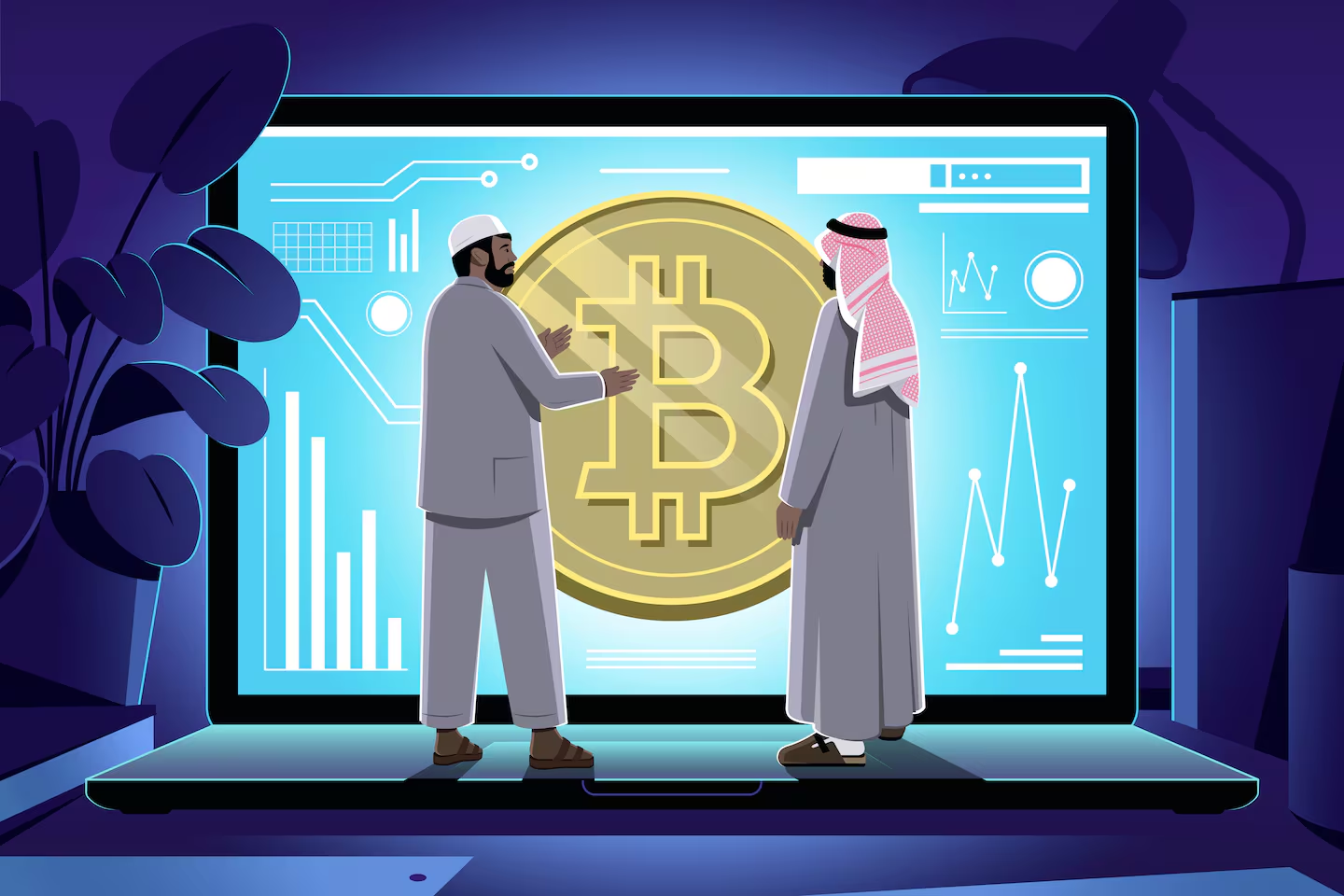
Cryptocurrency is essentially a digital currency exchange and digital payments platform that uses blockchain technology. The technological and digital revolution over the last few decades has meant that innovative payment systems have been created and utilised, and cryptocurrency is one of the major breakthrough payment systems for business and personal finance use. Whether or not cryptocurrency is halal or haram is a debate that is ongoing between Islamic scholars.
This article will examine cryptocurrency, Islamic interpretations, and the types of cryptocurrencies available.
Cryptocurrency
Although there are over 2,000 cryptocurrencies on the market now, Bitcoin is probably still the most known form of cryptocurrency in the blockchain market, and was the first cryptocurrency coin to go mainstream but there are other cryptocurrencies entering the market.
For Muslims across the Islamic world, the question arises as to whether crypto payment platforms are deemed to be halal or haram in the eyes of Allah and in accordance with Shariah principles, and whether as a currency it prevents money laundering. Whether or not cryptocurrency is halal or haram depends on the how a specific cryptocurrency aligns with the principles of Islam.
Cryptocurrency - Characteristics
One of the defining aspects of cryptocurrency is that there is no central authority such as a Government that authorises it or records it. Cryptocurrencies operate on decentralised networks using blockchain technology.
Most cryptocurrencies have a limited supply, or at least a capped supply. Transactions are transparent and traceable, but there is also a degree of anonymity of parties. One the main advantages of cryptocurrency is that it offers global accessibility. It can be received anywhere in the world - all you need is an internet connection.
For Muslims, cryptocurrency does tick a lot of the Islamic finances boxes when it comes to transparency and traceability. However, ultimately it is the duty of every Muslim to be seeking knowledge, and this guide will address the use of the cryptocurrency market and its intrinsic value.
This article will consider whether crypto currency is permissible as a form of actual money under Islamic laws and in the Islamic world. We will consider the views of Islamic jurists and scholars on this emergence of what is considered to be new money addressing the question of is cryptocurrency halal.ISLAMIC SCHOLARS INTERPRETATION - IS CRYPTOCURRENCY HALAL?
A comprehensive Islamic law interpretation, one that sparked a massive rise in Muslim investment in Bitcoin and Ethereum in 2018, was provided by Sharia advisor Mufti Muhammad Abu-Bakar (former advisor to Blossom Finance) who looked at the question of is cryptocurrency halal as a money supply. He argued that Bitcoin is permissible under Islamic principles.
Mufti Abu-Bakar considered arguments that crypto itself was speculative when it comes to personal finance, but his view was that all currencies have a speculative element and this did not automatically deem cryptocurrency as haram.
Crypto Currencies
Islamically, if a business does not have an element of appropriate loss probability within its assets is not strictly trading in a Sharia compliant manner. The Grand Mufti of Egypt, Shaykh Shawki Allam believes that cryptocurrency is haram and he is joined by other Shariah scholars from the Middle East and beyond including Shaykh Haitham Al Haddad who see crypto as high risk. Their argument is based on the notion that crypto itself does not hold enough credibility as a currency to be deemed to be halal.
However, many other Sharia scholars believe that crypto itself does confirm to Sharia money rules and Muslims are permitted to invest in crypto.
Islamic scholars who believe that cryptocurrency money and digital assets are halal include Ziyaad Mahomed, Shariah Committee Chairman of HSBC Amanah Malaysia Bhd, and Mufti Faraz Adam. These views lend credence to the notion that Muslims can invest in crypto.
Arguments in favour of crypto being deemed halal include:
- There is often a lack of riba (interest). Crypto operates on decentralised platforms without any central authority. This usually means there is no interest charged or payable.
- Crypto is used as a medium of exchange with a legitimate purpose in financial and economic transactions.
- Technologically, crypto is neutral. Scholars argue that it is the use of the crypto that determines if it is Sharia compliant or not.
- The fact that crypto is generally thought to be scarce means that it is easier to avoid speculation and uncertainty and this aligns with Islamic finance rules.
Islamic Scholars
As mentioned above, one of the main reasons Islamic jurists and scholars from Muslim countries argue that cryptocurrency is halal, is that the concept of the blockchain and other cryptocurrencies are inherently anti-interest when looked at from a money generation source or perspective. Crypto operates outside of conventional banking systems and interest-based transactions.
Islamic banking laws are also anti-interest so the technology, pricing, and buying and selling of cryptocurrency money is deemed halal by many Islamic scholars who rely on the teachings of Prophet Muhammad PBUH when seeking guidance about permissibility (ultimately, only Allah knows best).
Given that crypto has a finite supply, it is less likely to be subject to inflation. This means it can maintain a fairly stable value - again an important element of Islamic finance.
Crypto Blockchains And Islamic Finance Principles
Blockchains refer to the blocks of technology used to record digital cryptocurrency transactions. Blockchains act as a system of record and the reason this form of technology is so important is that it is virtually impossible to hack, change or cheat the blockchain platform or marketplace.
With the use of blockchain, centralized financial institutions and establishments are not needed as no central control is required. This also means that crypto trading (and the stock market) is more transparent.
According to many Islamic scholars and religious leaders, this addresses the question of is crypto halal within Islamic Finance rules and Islamic law more generally.
As cryptocurrency money is deemed permissible and halal under Islamic Sharia rules this has unlocked the crypto investment market to a global Muslim community with increasing numbers of Muslims with an interest in buying crypto and use it as a form of currency.
In terms of business practices, there are some basic principles (discussed in this article) relating to crypto and cryptocurrency trading that help many Muslims to decide if their entrepreneurial journeys and endeavours are permissible or strictly prohibited.
Consideration And Commercial Value - Is Crypto Halal Or Haram
From the perspective of Islamic contract rules, there must be an element of consideration when answering the question is crypto halal - there must be Mal. Mal refers to possession and effective storage, and cryptocurrencies meet the criteria required as they can be possessed and stored and have commercial value (Mutaqawwam).
Crypto is a real and viable digital asset, its worth and value lies in what is paid for it, and it is capable of being owned and traded commercially so the Shariah requirements are satisfied and the the question of is crypto halal can be answered.
Shacklewell Lane Mosque
The Shacklewell Lane Mosque in East London became one of the first mosques in the UK to accept cryptocurrency donations and Zakat contributions in 2018 during Ramadan. This mosque deemed cryptocurrency halal and permissible and generated a lot of interest on the topic of the permissibility of crypto more generally under Islamic law.
Digital Currencies, Money Laundering And Shariah Law
Islamic finance principles dictates that in order for income, or investing in any product or asset, to be deemed halal it has to meet certain criteria. The principles of Shariah law should be applied to the financial systems we operate in and there has been some discussion amongst Muslim scholars about whether rules devised centuries ago can still be applied to a technologically modern digital financial marketplace.
Whether cryptocurrency is halal or haram centres on the rules of Sharia law.
Is cryptocurrency halal? For many Islamic scholars, the answer quite simply is yes. Shariah principles can be applied to modern crypto analysis and digital currencies as they are based on social justice, accountability and ethics which transcend all forms of financial transactions. As long as there is no illegal activity, then trading or investing in crypto should not be deemed to be contrary to Shariah principles.
Investments, Islamic Banking Law And Illegal Activities
There has been some discussion amongst Muslim scholars around the use of cryptocurrencies for illegal activities such as gambling, drugs, and money laundering. Critics of Bitcoin also argue that it is not legal tender as it is not backed by any central government that assigns its value and maintains regulatory standards, and it is therefore deemed to be speculated trading.
However, Islamically the use of an item that is deemed halal for an unlawful purpose does not make the original item halal. Whether it is halal or haram depends on the multiple factors.
Currency Ownership
Ownership of the currency remains with the owner according to Muslim scholars, and the coins/tokens are kept in an e-wallet. This means that investors can take part in trading as and when they want, retaining control of their assets.
As mentioned above, the publication of the working paper conducted by Mufti Muhammad Abu Bakr clearly identified that cryptocurrency is permissible under Shariah rules.
For Muslims worldwide this could have huge implications for the payment of Zakat monies that are made to the poor and to charities globally. If Muslims make up 25% of the world's population and hold approximately £1.04 billion in bitcoins, this means that £26 million is due in Zakat contributions. [1]
Medium Of Exchange
Cryptocurrency operates as a medium of exchange across the globe. This means that it can operate in legally diverse and unpredictable environments, often making it more accessible than mainstream finance options. It is a valid form of currency that holds purchasing power.
Although vulnerable to market changes, crypto coins such as Bitcoin and Ethereum are deemed to be a legitimate medium of exchange, available for use in transactions and trading. Although crypto has not yet reached the status of being a globally accepted medium of exchange, it is fair to say that it is on the way to becoming so. Commentators expect crypto to appreciate over the course of time and to store value.
Cryptocurrency Guidelines
The development of Shariah compliant cryptocurrency guidelines provides Muslims with the opportunity for ethical investments. From a financial perspective, Islamic charities could benefit hugely from Zakat and other donations as a result of crypto investment.
Many banks and financial establishments globally are recognising crypto as a financially viable medium of exchange, and this makes it easier for investors to continue to trade, buy and sell cryptocurrency.
With billions of Muslims worldwide, and the growth of crypto, it seems clear that what is perhaps needed is some form of shariah compliant cryptocurrency guidelines for Muslims to follow. This would enable Muslims to assess themselves the validity of cryptocurrency when assessed against Islamic finance rules.
Contracts
In terms of whether contracts relating to crypto are Shariah compliant, given that the contractual relationships in crypto are based on smart contracts using blockchain technology, this means that the process can be made increasingly secure and automated.
This not only reduces administrative complexities, confusion and errors, but also ensures that banks are more likely to accept the contractual relationships created.
In demonstrating Shariah compliance, cryptocurrency is earning legitimacy across the Islamic finance world. Cryptocurrency agencies are springing up across the Muslim world such as One Gram in Dubai, and Hello Gold in Malaysia.
This adds further legitimacy to the rulings that cryptocurrency is halal and can be utilised by Muslims and Islamic financial institutions. Of course, there needs to be ongoing discussion to consider is crypto halal as it operated within a dynamic and changing industry.
As the crypto market continues to evolve more questions will need to be asked, and each crypto coin should be analysed against Islamic finance principles to check for permissibility. However, as things stand right now, crypto is recognised as an asset under Sharia law and this lends it legitimacy. The things to be careful of are making sure that any cryptocurrency you are involved in does not link to any haram things and industries or activities or any form of money laundering.
Whilst there is no central body who can make a final ruling on whether crypto is halal or haram, but as there is no element of interest (riba) and no exorbitant fees relating to crypto the interest from Muslims is growing. Crypto can be used within Islamic finance principles to make ethical investments and wealth management in a Shariah compliant way. This could unlock the cryptocurrency investment market to billions of Muslims worldwide who are looking to enter the crypto market as investors.
As the currency is still in its infancy it is important to keep an eye on all new developments and to assess and analyse changes in the marketSource:
[1] https://www.independent.co.uk/life-style/gadgets-and-tech/news/bitcoin-halal-london-mosque-donations...
Introduction
Islamic banks are able to offer their customers financial services that are compliant with the principles of Islamic finance. Digital banking enables banking systems to be personalised, informative, and efficient. Users are able to quickly access information that is relevant to their account and spending habits. It can take seconds to access your account and your credit and debit balance.
Personalising services via digital banking means customers are more aware of their financial dealings and more able to control their financial habits.
Islamically, knowing exactly how much money you have in your account means you are less likely to overspend, or get into debt. Where in the past customers would have had to attend a bank or a cash machine to find out their account balance, now with digital banking the enquiry can be made at any time and anywhere from a mobile phone.
WHAT IS DIGITAL BANKING?
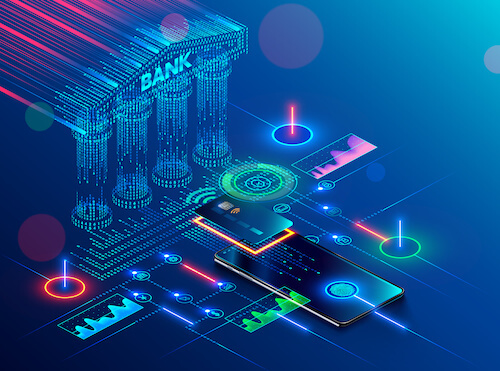
Digital banking is when a bank or financial institution offers its customers financial services via digital platforms. Customers are now able to access information via their mobile, desktop, accessing their bank's website, and using various apps.
One of the aims of digital banking is to offer a seamless service to people and also to ensure there is financial inclusion when it comes to managing money. Banks want to operate in a more efficient way and make banking more accessible to their clients.
For the bank, it means that they have fewer operational costs as they can rely on digital platforms to offer their services and products.
Digital banking is used widely across the globe, and it means that communities that formerly may not have been served by banking sectors now have more access to basic financial services. Digital banking relies heavily on technology and the technological advancements that have taken place over the last few decades.
Benefits Of Digital Banking
There are many advantages of using digital banking, they include the following:
- greater efficiency
- more seamless service
- enhanced customer experience
- increased transparency
- intuitive platforms
- ease access to information
- no need to attend banks in person
Types Of Digital Banking
- Business to consumer services
- Crowdfunding
- Zakat payments
- Micro-financing
- Interest free loans
- Family banking
- Social banking
- Collections of payment
Islamic Finance And Banking
As digital connectivity and technology continues to grow, the demand for digital services is increasing. At the same time, the Islamic banking industry is also growing and working hard to keep up with digital innovations.
With both industries growing at pace simultaneously, Muslim consumer needs have driven the need for digital solutions within the Islamic banking sphere.
Muslims represent almost 25% of the population of the world and Islam is the fastest growing religion. This means there is already a large demand for digital Islamic services. In addition, the Muslim population has a strong youth demographic who are tech savvy, educated, and aware of how they want to manage their money.
This demographic is also keen to have increased information and transparency when it comes to banking services.
The Islamic economy has moved hand in hand with halal infrastructure. This is definitely the case when it comes to Islamic finance and the banking infrastructure to support it.
There is an increased focus on ensuring that payments and financial transactions are interest free and free from speculation and other haram activities.
Muslim consumers are digitally aware and connected. They are also educated on the principles of Sharia law which deem transactions halal or haram. Their Muslim identity is an important part of the lifestyle and the choices they make.
It is not only Muslim countries that are developing their Islamic finance infrastructure. The Islamic finance industry is thriving in the UK, the US and the rest of Europe. One example is the Port of Rotterdam which has created what is known as a halal distribution park to cater to European Muslims.
Let's examine the fundamental principles of Islamic finance:
- No interest
- No ambiguous terms or uncertainty
- Purification: a requirement that banks ensure money generated is Sharia compliant and separate from non compliant income
- Ethical and socially responsible transactions and investments
- Asset backed systems: not seeing money as a tradable commodity but linking it to real economic activity and assets.
Ethics And Islamic Banking
With the ongoing recession and global financial crisis, there is also an increasing and growing demand for more ethical and socially responsible banking options and services.
Islamic finance services, together with Islamic digital banking services, are well positioned to offer ethical practices and options for consumers. Islamic finance is centred on ethics and offering an alternative system that strengthens real economy sectors.
What Islamic finance also requires is increased due diligence and transparency. In order to be Sharia compliant banking services must comply with the rules of Islam and must be vetted for compliance.
Digital Islamic Economy
The digital Islamic economy is a fast growing industry. The rise of Islamic lifestyle magazines and online platforms means there is a demand for Islamic content and services. For example, the modest fashion industry has become a big player in the fashion sector and has seen incredible growth online.
With over 1.7 billion Muslims in the world, the digital services landscape has the potential to grow and accelerate fast. With it comes an emerging digital Islamic economy that is focused on the consumer needs of Muslims.
Commercially and digitally, Islamic finance is one of the most attractive vertical sectors. However, it's success will need to ensure compliance with Islamic finance principles and Sharia rules.
In terms of the future and the potential of Sharia compliant digital banking, the opportunities are limitless.
There is support from individuals, companies and investors for further development of digital banking services. One of the challenges for digital banking will be to ensure that any product or service that markets itself as compliant will require additional and ongoing due diligence.
Whilst application software (app) programmes will continue to be developed to facilitate compliant investment, saving and money management options.
Digital banking platform Algbra did a survey and found that out of the 1.6 billion unbanked adults in the world, 800 million are Muslims. This is an alarming figure, but it is hoped that digital banking will be more inclusive than conventional banking methods.
Whether it comes to loans, savings, personal or business accounts, or investment, digital banking will ensure more marginalised groups are able to partake.
Developing a robust digital banking service should be a high priority for Islamic banks. In turn, this will lead to enhanced Sharia compliant tools and services.
Stay informed on finance
Subscribe to our newsletter for the latest insights on ethical financing