
London becomes huge Islamic finance hub
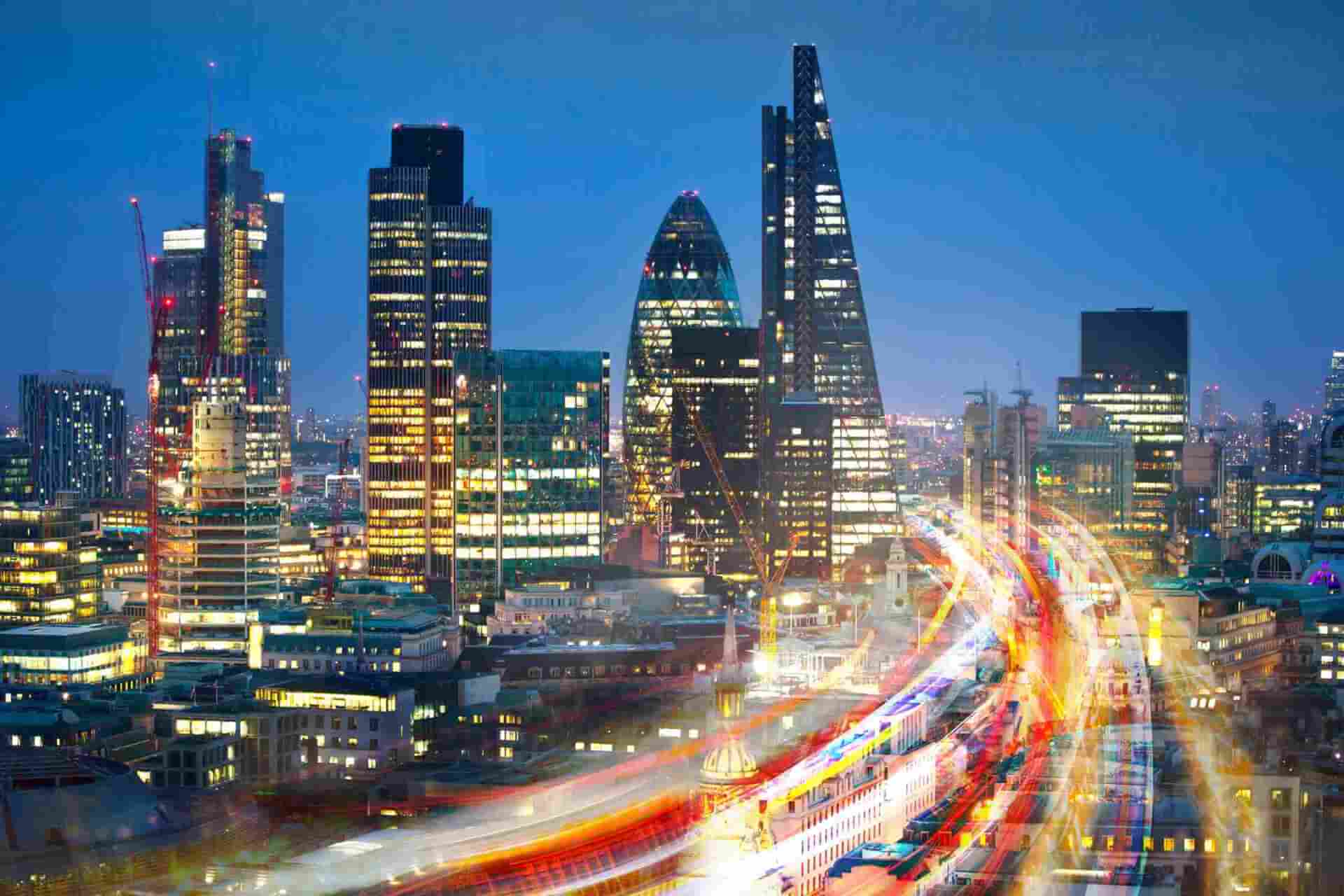
The United Kingdom, and in particular London, has become one of the leading voices and stages for the development of Islamic finance. As the global Islamic finance industry has grown, London has emerged as one of the leading Western markets offering and improving Islamic finance services and products.
One of the key reasons for the investment and development of the Islamic finance market in London is to ensure that the finance markets and industry is able to keep pace with the emerging and dynamic markets in the Muslim centred Middle East region (Dubai and the UAE included).
The Islamic Finance Industry
There are other reasons Islamic finance has really surged ahead in London, and they include the importance of financial inclusion and providing access to funding and finance to those looking to invest in the economy without compromising their beliefs.
The UK is not the only country that is fast developing its Islamic finance reputation, regulation, and provision. Most European countries also offer Islamic finance products and services to individuals and companies.
What has become clear is that Islamic finance has enabled many people from diverse backgrounds to trade, invest and operate a business in the West. This can only be a good thing for the economy and when it comes to financial inclusion.
Interest, Profit Sharing And Risk Management
Many Muslims only use the Islamic finance system so that they do not have to pay interest and can trade and deal with any income, savings, investment strategy, and asset they own in a Sharia compliant way.
The result is that the Islamic finance industry is booming and entering the mainstream finance industry.
Islamic finance has opened up and increased the scope of investment options for investors wanting to raise or build capital, property and other assets.
In addition, the profit and risk sharing element of Islamic finance transactions and contracts are growing in appeal to a much wider audience. The first Islamic finance bank launched in the UK in 1982 - the Al Baraka Bank. Since then the Sharia compliant market has seen growth on a huge scale with Islamic finance products available in trade finance, project finance and real estate.
The Islamic sukuk (bond) market in the UK started around 2007 and has continued to grow. In 2014, the UK government was the first to issue sovereign sukuk.
Understanding Islamic Finance - Knowledge Matters
Many financial experts and researchers have become knowledgeable about Islamic finance and how it operates. In order to offer financial services and products that are Islamic finance and Sharia compliant, there needs to be a good depth of understanding relating to Islam and its principles and rules.
Islamic finance has proven to yield competitive and attractive rewards, and Islam's core underlying principle relating to social justice and equity is becoming more attractive to Muslim and non-Muslim customers alike.
The focus on risk sharing and collaboration between the parties means transactions are more transparent and fair. This in turn creates more stable investment options in volatile markets and economies.
Uk Leading Western Islamic Finance Centre
A recent report from The City UK has stated that the UK is the leading Western centre for Islamic finance. In 2021, the Islamic finance banking asset market was said to be worth approximately $7.5bn.
In addition to general Islamic finance products, Islamic fintech is also growing rapidly in the UK and Europe. The strong regulatory support from the UK government has led to an increasing number of Sharia compliant fintech services.
The UK has also been able to reach attract a large number of professionals with Islamic finance knowledge and expertise.
The growing Muslim population in the UK, the vast majority of whom are young professionals with capital, further strengthens the UK's resolve to continue developing its Islamic financial services market.
London Stock Exchange
The London Stock Exchange (LSE) is one of the leading exchanges for sukuk listings.
In addition, The UK has become one of the world's biggest providers of Islamic finance education. There has been a recent surge in the number of Islamic finance courses and qualifications available to those wanting to expand their knowledge and work in this field.
What is driving this demand for Islamic finance services is private sector initiatives. This coupled with support from government policy and compliance rules has provided a solution for those investors and businesses looking for financial services that are compliant with Islamic finance rules.
Investment
If the UK wants to continue to strengthen its position and status as a leading international centre for Islamic finance then it needs to continue to invest in the Islamic finance market.
This will require the development and progression of the right financial infrastructure and ecosystem to support the industry. It is forecasted that the Islamic finance assets under management are likely to double over the next decade.
The UK is well placed to grow its Islamic finance market and offerings. However, this must be done in line with Sharia rules relating to finance without cutting corners and innovation which could lead to non-compliance. More investment needs to be made in research relating to how Islamic finance operates so that any investor is reassured that their Islamic values are not being compromised during financial transactions.
The growing confidence in the Islamic finance market in the UK has attracted investments in regeneration projects and infrastructure - thereby directly benefiting society as a whole.
Explore more news
Introduction
Forex trading refers to foreign exchange trading where one currency is traded into another. Forex trading is important in the global markets and economy because it not only facilitates international trade, but is also the biggest financial market globally.
A common question is why does forex matter to the global markets? Not only does forex enable international investment and trade it also leads to financial stability. In order to conduct cross-border and cross-country financial transactions, governments and businesses rely on forex. One example of this is where a European company that is importing goods from the USA is able to exchange euros into dollars.
Central banks use forex to stabilise economies when currencies weaken or inflation increases. Forex ensures that money is able to flow across borders.
To decide whether forex trading is haram or halal depends on the the circumstances of the forex trade. We know that any forex trade that includes interest (riba), gambling (maisir) or uncertainty (gharar) could be deemed to be haram. However, when using interest-free accounts, Islamic forex accounts, and Sharia compliant strategies, forex trading can be done in a halal way.
Key Principles of Islamic Finance
What are some of the key Islamic finance principles to be mindful of when examining forex trading?
The main principles you should know about are:
- Prohibition of riba (interest): any kind of interest element attached to a trade is not permissible under Islamic finance rules. Riba is seen as unjustified financial gain and is haram. In forex trading watch out for overnight interest (swap fees) or interest earnt on sums held overnight.
- Avoidance of gharar (uncertainty): any significant uncertainty could render the forex trade haram. Avoid high-risk and speculative trades especially where traders gamble on price movements that have no real economic value. Similarly, avoid traders who trade without any underlying asset (see below). Uncertainty also applies to contract terms. If a trader has hidden fees or complex conditions then this needs to be challenged.
- Avoidance of maisir (speculation/gambling): Islam prohibits gambling and this also applies to trades where financial gains are linked to luck and unearned income. High-frequency and high-risk trades are best avoided.
- Ethical trading: trades and transactions that happen instantly such as spot forex trades (T+ 0 rule) are better than derivatives and futures that relate to settlements in the future.
The Halal Perspective
Forex trading is considered halal when conducted through Islamic accounts with zero interest. There are Islamic forex traders who adopt ethical practices in line with Islamic finance rules, ensuring adherence to Sharia law. The benefit for Muslims is that they can participate in investing and trading without breaching Islamic rules.
As a simple exchange of currencies, the following conditions can render a forex trade halal:
- Islamic swap-free accounts: these accounts are not interest-based and adhere to Islamic finance principles.
- Clear contracts: ensure you have transparent contract terms and pricing with real market involvement.
- Avoid gambling on price movements and work with experienced knowledgeable traders who understand Islamic finance and who are not single-mindedly focused on the margin or return for the parties.
- spot-trading: focus on actual asset ownership and immediate settlement rather than delayed settlements.
- Make sure your dealings are not gambling, but based on legitimate business trades.
- Day trading vs swing trading: day trading includes buying and selling on the same day. No positions are held overnight therefore the chance of incurring interest fees or swap fees is eliminated. Swing trading involves holding positions for many days at a time and this can include interest fees which are haram.
The Haram Perspective
Conventional forex trading is considered to be haram where there is interest payable/charged, and where there are elements of gambling or uncertainty. Always find out as much information you can about the broker, account, process and industry you are engaging with before starting any trading activity.
There are many Islamic brokers and experts that can help you navigate away from haram practices when it comes to currency trading and markets.
Avoid the following practices
- interest payments.
- hidden fees.
- sudden changes in price.
- manipulations by the brokers
- excessive uncertainty and ambiguity
- swap fees (eg overnight payments)
- exploitation of others in trades
- trades on market movements without understanding the fundamentals of the market
- borrowing large amounts of money/ loan (leverage) which is often linked to riba and increased risk
According to Islamic scholars and the Fiqh Council, conventional forex trading is haram when rooted in traditional trading practices. Conventional trading practices go against Islamic beliefs and values relating to financial activities.
However, forex can be halal if:
- you use transparent traders and brokers with Islamic finance knowledge
- you use Islamic accounts with no interest (swap-free accounts)
- you conduct trades on real economic analysis and foundations
- pick Islamic-compliant brokers and organisations
- you avoid speculation, gambling and deception,
- you focus on immediate settlement and future payments
- your trades are based on real asset ownership
- trade using your own capital and not borrowed sums
Frequently Asked Questions
● Is forex trading a form of gambling?
Unless forex trading takes place within an Islamic finance framework (using Islamic accounts and knowledgeable brokers who understand the religious principles of Islam) then it could be deemed to be gambling. When conducted within Sharia rules, forex can be halal.
● How do Islamic accounts work?
Simple speaking, Islamic forex accounts avoid interest payments and interest rate calculations, and are created specifically to comply with Sharia rules about financial transactions.
● Is leverage allowed in Islam?
Leverage refers to traders borrowing money from other brokers to increase their potential profits. In traditional forex trading accounts leverage often includes interest payments on borrowing. Is Islam, leverage is allowed as long as there is no interest payable on leveraged funds.
● Can I trade forex without interest?
Yes, of course. Islamic forex accounts enable Muslims and ethical investors to trade without receiving or paying any interest. Islamic swap-free accounts were created as a solution for Muslim customers and are available on the market that are tailored to ensure they comply with Islamic finance principles.
Conclusion
Ultimately, whether or not forex trading is halal or haram depends on whether the trade itself complies with Islamic finance principles. Islamic scholars and experts can provide guidance and specify trading practices that are haram to help clarify if trading is halal or haram. However, by choosing Sharia-compliant brokers and accounts and focusing on ethical trading there are many ways of engaging in forex trading in a halal way.
There are obvious red flags to avoid for any Muslim (riba being one of them), but there are ways of ensuring that trades are halal. One of the best things you can do before any kind of financial investment or trade is to seek the advice of Islamic scholars and then speak to Muslim forex traders. These people are best placed to ensure that any trade you undertake is halal and remains compliant.
Remember, even Islamic accounts change over time so you need to ensure that there are proper risk management and risk mitigation strategies in place. Exercise caution, if something looks like it is too good to be true then the onus is on you to dig deeper.


Since student loans were first introduced in the United Kingdom in the 1990s they have proven to be problematic for Muslim students. The primary reason for this is that student loans incur interest - something that is prohibited in Islam under Sharia rules.
For many Muslim students who want to be compliant with Sharia laws relating to financial transactions, taking out a student loan is not seen as a viable option.
Riba In Islam
The literal Arabic meaning of the word riba is 'increase', 'growth', 'excess', or 'addition'.
According to Sharia laws, an increase of a debt owed or repayment of a loan is considered to be riba, or interest. This is strictly forbidden in Islam. Both the payment of interest and the receipt of interest payments are considered to be contrary to Islamic Sharia rules.
The reason Islam does not permit interest is that it is considered to be a means through which the poor remain poor, and the rich get richer. There is considered to be an inequality between the parties and within the transaction.
Riba is generally deemed to increase the gap between the poor and the rich in society and this goes against Islam and the social responsibility message that permeates Islam.
Student loans within the UK are currently repayable with interest, so this creates a dilemma for Muslim students.
Interest And Student Loans
As student loans require repayments that incur interest, many Muslims deem them to be an unacceptable way of funding their higher education goals.
There has been a great deal of debate within the Muslim community about student loans and the issue of riba.
Islamic Concept Of Finance
One important thing to note for anyone considering taking out a student loan is that traditional western banks and lending organisations treat money solely as a commodity in business.
By contrast, in Islam, money is considered to be a medium of exchange with a measure of value only.In Islam, money performs a social role.
The value of the money is stored within it, not outside it. This is one of the primary reasons riba / interest is not permitted.
Student Loans - History
Student loans have had a variable history. In the 1960s, 12% of school leavers went on to university. This represented 1 in 10 students. There was no such thing as student loans in the 1960s. University fees were actually paid fully by local education authorities. Students left university with little to no debt.
In addition to having fees paid, university students could also apply for a means tested annual grant to cover their living costs.
In the 1970s the number of school leavers attending university increased slightly to one in seven. By the end of the decade, this figure had dropped again as there was a squeeze on university funding.
The 1980s saw a huge increase in the numbers of students wanting to go on to higher education. The then education secretary, Kenneth Barker, pushed for higher numbers of young people to attend university and increase their skill sets.
By 1990, one in five school leavers was attending university. However, the maintenance grants had not increased by much, so in 1989 the Tory government introduced student loans akin to mortgages. These loans were to account for having no increase in the annual student grants and were intended to bridge the gap between the funds available and the increased cost of living. Grants of up to £2265 were available on a means tested basis.
Higher education and university entry really saw a boom period in the 1990s onwards. More and more young people were going to university and the number of courses available increased.
The Labour government got rid of the grant in 1997 and replaced it with a new policy and system whereby a £1,000 means tested tuition fees was available, alongside low cost loans.
By the early 2000s, many more young people were attending university. The Labour government pledged to raise the percentage of young people going to university to 50% and they wanted to make sure students had an incentive to study further. Tuition fees amounted to £1,100 per year, and this was offset by loans of up to £3,950.
In 2006, tuition fees were raised to £3,000 per year which become payable once students graduated and were earning above £15,000 per annum. Students were informed that the repayments were to be made on the 9% of income over the relevant threshold, with inflation-only interest rates.
Coming to modern day student loans, tuition fees are currently £9,000 per year and additional loans are available that could amount to over £12,000. This means that an average university student who undertakes a 3 year degree will come out of it owing a considerable debt. This debt accrues interest.
In the United Kingdom, it is the Student Loans Company that administers and monitors student loans. The Student Loans Company is the organisation that calculates the amount payable to individuals and ensures the payment reaches the right bank account.
INTEREST ON STUDENT LOANS - IS THIS RIBA?
Opinion is divided about whether student loans are considered to be halal or haram.
There are some Islamic scholars who believe that student loans are inherently haram and non Sharia compliant as they incur interest. However, there are also scholars who have the opinion that student loans are halal.
Let's have a look at the arguments for and against student loans.
Fatwas That Deem Student Loans To Be Haram
The Al Qalam Institute did its own research and issued a fatwa relating to student loans and their permissibility for Muslim students. The issue they looked at in detail was whether the repayment of the student loans was commensurate with inflation rates, or whether the repayments incurred 'bolt on' interest payments.
The research the Al Qalam institute undertook concluded that the student loans at the time of the fatwa (2013) were deemed to incur riba. This meant that student loans were contrary to Islamic laws relating to finance and loans.
The reasoning behind the judgement was that student loans DID attract riba and were not simply attracting inflation based increases in repayments.
According to the Institute, irrespective of the need for the loan (ie to further a person's education, knowledge, and prospects), if a loan incurs interest then it is prohibited.
There is still a great deal of ongoing debate amongst scholars about whether the loans are strictly linked to index price/inflation raises or whether they do actually incur interest outright.
It is likely the debates will continue for some time until any consensus is reached.
Arguments And Fatwa In Favor Of Permitting Student Loans
There are, however, other schools of thought that have the opinion that by their very nature, student loans do not fit the traditional definition of a loan.
Some Islamic scholars have raised the question of whether student loans do in fact incur riba and whether they should fall under the definition of what a de-facto loan is.
The reasoning behind this argument is that any student who obtains a student loan will never fully take ownership of the loan amount.
The student loan itself is seen as an investment towards a future of learning.
As the bulk of the student loan is given straight to the university or institute of higher education, the student never actually receives full ownership of the money. Without ownership it is questionable as to whether student loans are actual loans under Islamic finance principles.
In addition to the above, it can be argued that as the loan only becomes repayable once a student earns over a certain threshold, there is no automatic interest based repayment.
Shaykh Dr. Haitham al-Haddad has issued his own fatwa relating to student loans. It is his opinion that taking out a student loan is permissible. He maintains that no riba is involved in the student loan transaction.
Shaykh Dr Haitham al-Haddad has researched this issue at length and concluded that student loans within the UK are permissible under the rules of Islam.
The Shaykh raises the following points to note when arguing that student loans are halal:
- the student never receives the full loan amount
- the student does not have full control of where the money is spent nor is there any element of profit
- the loan is eventually written off (cancelled if you die)
- the minimum earning threshold applies before any repayment is due
According to the Shaykh, the points mentioned above render the student loan as an entity that is different from the traditional loan, or qard.
The element of human ownership is not fulfilled as the monies are paid (mostly) directly to the university in lieu of tuition costs.
Of course, opinions on this issue continue to remain divided.
Students are encouraged to undertake their own research and due diligence.
Want Versus Need
Some scholars are of the opinion that there will never be a clear cut answer on whether student loans are considered to be halal or haram.
However, students should always consider whether their desire to pursue further education is a want or a need. If university is seen as a want - that is, it is not essential - then taking out extensive student loans might not be a good idea.
However, for those people who have no choice but to go to university such as doctors, lawyers, and dentists, perhaps there is an argument to say that there is a real need.
Not everyone who attends university is entitled to a bursary or scholarship and it would be a shame for these students to miss out on learning or advancement.
What is clear is that many Muslim students (and parents of students) have felt unable to access Sharia compliant and appropriate student finance. This has affected their employment prospects and their career progression.
Whatever your view of student loans, the UK does need to identify and create solutions that are accessible for Muslim students.
Conclusion
Ultimately, when deciding if student loans are halal or haram. students should be doing their own research on whether they feel comfortable taking out student loans.
Always seek out the knowledge of experienced and knowledgeable scholars. Use a website that you trust to find out more information, and read the opinions and advice of scholars who have researched the topic extensively.
Whilst not all Islamic scholars agree on whether student loans are halal or haram, what is clear is that the subject is still open to debate. Perhaps this is the reason that more and more universities are directing their Muslim students towards Sharia compliant loans and finance options.
In addition, the Federation of Student Islamic Societies, and the National Union of Students have been working collaboratively with the government to find alternative finance solutions for Muslim students who do not want to go down the traditional student loans route.
In the meantime, it is worth having a look at the various scholarships and bursaries available. These could be an alternative form if financing but it is rare to find one that will cover a full university course plus living costs.
In addition to this, many UK banks offer interest free current accounts up to a certain limit so it is also worth checking these out.
The UK government has been looking into having an alternative financing option for Muslim students to ensure that they have access to higher education.
In 2014, the government approved a non-interest based student loan model, and this is still under review.
However, in June 2022, the Federation of Student Islamic Societies reported that a date has been finalised for the non-interest based student loan and it would be available in 2025.
Until then, of course, the most beneficial course of action would be to seek out halal funding options. There are service providers available who provide Sharia compliant loans and products. In addition, there are some Muslim charities who will fund higher education.

Introduction
Zakat is the third pillar in Islam and plays a significant role in the way Muslims live and conduct their financial affairs. The recipients of zakat are a very specific group of people as outlined in the Quran, and there is a specific calculation involved.
Our online zakat calculator assists with calculating the amount of zakat that is owing.
Understanding Zakat And Its Obligations
WHAT IS ZAKAT?
The word zakat means growth and purification in Arabic and refers to the mandatory obligation to give a portion of wealth accrued to charity. Zakat is a fundamental obligation for all Muslims who meet the criteria, and its purpose is to purify wealth and create economic equality and enhance social welfare.
According to Islamic teachings, zakat is a fundamental act of worship. The Quran (2:110) states: 'Establish prayer and give zakat'
WHO NEEDS TO PAY ZAKAT?
Muslims who are required to pay zakat must first understand if they have accrued the minimum amount of wealth required before they become eligible to pay zakat. This is known as nisab and this is worked out based on the equivalent of 85 grams of gold or 595 grams of silver.
Those eligible to pay zakat include the following:
- Adults who have reached puberty and have wealth over the nisab threshold.
- Adults who have full mental capacity.
WHAT ASSETS COUNT TOWARDS ZAKAT?
Zakat is payable on different types of wealth:
- cash
- silver
- gold
- business assets
- investment income
- agricultural produce.
When And How Much Zakat To Pay
Zakat is due on wealth that you have been in possession of for one lunar year. It's also important to note that you can deduct immediate debts from zakatable wealth (see below).
You can pay zakat at any time of the year through instalments or in one lump sum.
Calculating Zakat Step-By-Step Using A Zakat Calculator
Muslims are expected to pay 2.5% of their zakatable wealth every year. Follow these steps to work out how much zakat you need to pay:
- Determine your zakatable wealth total by adding up your assets and deducting immediate debts.
- Ensure that you meet/exceed the nisab threshold
- Apply the 2.5% rule
- Use the online zakat calculator to work out what you need to pay
Always visit a reliable zakat calculator website.
Deductions And Liabilities
There are certain debts and liabilities that be deducted when making your zakat calculation.
The following deductions are allowed:
- short term debts such as credit card balances and small loans that become due in the zakat year.
- for long term debts such as mortgages you can only deduct the payment owing in that zakat year.
- living expenses including bills, rent, good costs, transport.
- unpaid wages to employees.
- business liabilities for the zakat year.
Please note that future debts and expenses are not deductible.
Zakat Payment And Its Impact
Zakat is more than a financial payment, it goes beyond wealth distribution into the realms of spiritual growth, economic justice and fulfilling an important religious obligation.
Paying zakat on time fulfils an essential Islamic obligation and strengthens the relationship with Allah.
Timely payment of zakat leads to increase in blessings and purification of our wealth.
How To Pay Your Zakat
Zakat can be paid in different ways. You can pay zakat direct to individuals who are eligible to receive zakat. Zakat can also be paid to charities and global zakat funds.
Many Muslims choose to pay zakat online by utilising online zakat calculators.
Receiving Zakat
There are eight groups of people to whom zakat can be given:
The needy (this includes people whose earnings fail to cover basic needs such as food, home, water, clothing)
Those in poverty (who have little to no personal belongings and no means of earning a living)
Those employed to administer zakat monies
The wayfarer
People whose hearts have been reconciled to the faith In the cause of Allah (SWT)
People in debt
People in bondage
Recipients of zakat should not be members of your immediate family such as your spouse, parents or children. Other non-immediate relatives can be recipients of your zakat payments.
Many people give to charity throughout the year, for any donation to qualify as fulfilment of the zakat obligation, then there must be an intention to give the money as zakat.
Common Questions And Expert Advice
WHAT IS NISAB?
Nisab is the minimum amount of wealth you need to have before you become eligible to pay zakat. Typically nisab is the equivalent of 595 grams of solver or 85 grams of gold.
DO I PAY ZAKAT ON MY HOME?
Zakat is not payable on your primary home. If you have rental properties then zakat is payable on the income generated.
CAN I GIVE ZAKAT TO MY FAMILY?
You cannot give zakat to immediate family, ie those already dependant on you such as your partner and children. You can pay zakat to extended family members if they are eligible.
ARE ONLINE ZAKAT CALCULATORS ACCURATE?
Yes, as long as you insert the correct information based on your personal circumstances then zakat calculators are an excellent way to calculate your zakat.
IS ZAKAT PAYABLE ON MY RETIREMENT SAVINGS?
If you have full access to these savings and you meet the nisab threshold then zakat is payable.
WHAT IF I FORGET TO PAY ZAKAT?
Use an online zakat calculator to calculate what you owe and pay your zakat as soon as you can.
IS ZAKAT PAYABLE ON STOCKS AND SHARES?
Yes, if the value exceeds the nisab threshold then zakat is payable.
SHOULD NISAB BE CALCULATED ON GOLD OR SILVER VALUES?
In the United Kingdom you can use either the gold or silver value. Many scholars believe that using the value of silver is preferable as it means the amount of zakat increases. If you have assets that mainly consist of gold then it is sensible to use the gold nisab.
WHAT IS THE ZAKAT YEAR?
The zakat year begins on the date on which you first possessed the wealth that took you over the nisab threshold. This will be the start of your zakat year. The zakat payment will therefore become due when the year has elapsed.
HOW DOES ZAKAT APPLY TO YOUR INVESTMENTS ON THE WARDUS PLATFORM?
For all of you that pay zakat, it would be on the total outstanding amount payable to you from your investments via Qardus. The investment is based on a financing arrangement which involves the buying and selling of commodities, and therefore, we believe that these assets are zakatable in nature. Therefore, investors who pay zakat would use the capital plus the profit due to them to calculate the amount of Zakat payable.
Please note that Qardus does not provide tax or other financial advice and that if advice is needed, you should consult an appropriately qualified professional.
Conclusion
Calculating zakat accurately and paying it in a timely manner ensures that it reaches the most vulnerable in society. Paying zakat fulfils one of the core pillars of Islam.
Using an online zakat calculator not only ensures the payment you make is calculated accurately, it saves you time and helps you to make the sometimes complex set of calculations.
Zakat calculators also guide you to eligible recipients and make it easier for you to track your zakat payment history and accountability. The calculations eradicate errors and provide an audit trail. If you have any specific questions about your zakat payment, always remembers to consult with expert scholars.
Use the Qardus zakat calculator here.
Please note that the prices information and values mentioned above are for example purposes only. For an accurate figure of the zakat you are liable to pay then it is always best to use the zakat calculator, and also conduct your own research and obtain qualified advice where required.
Qardus do not offer financial or tax advice and if advice is needed, this should be sought from a qualified professional.

Stay informed on finance
Subscribe to our newsletter for the latest insights on ethical financing