
What role does sustainability play in Islamic finance?

WHAT IS ISLAMIC FINANCE?
Islamic finance at its very core is a way of managing money and financial transactions in a way that is compliant with Islamic rules and guidance. There is a significant interplay of sustainability and ethics in Islamic finance.
One of the foundational principles of Islamic finance is that money itself does not have any value. Instead, money is a means through which we can exchange products and services.
Islamic finance rules state that you should not use money to make money. This is why one of the most important Islamic finance principles is the one which prohibits interest in any form.
Paying or receiving interest is not seen as a permissible or equitable way of managing finances in Islam. You cannot make money by charging interest, this is seen as unethical and exploitative but also non-sustainable in the long-term.
Another important element of Islamic finance is that our transactions should not cause any harm to other individuals or wider society.
The focus should be on economic activities that are grounded in tangible assets and services, and partnership arrangements where each party shares in the profits and losses.
Ethics And Islam
Islam provides ethical guidelines within which to operate. These guidelines are based on the teaching within the Quran and from the experiences of the Prophet Muhammad (PBUH).
Underlying Islamic finance is a foundation based on integrity and fairness. The underpinning of Islamic finance with ethical considerations can be seen as contradictory to conventional business models, but ethical finance is a fast-growing industry.
Investors, individuals, and businesses are more socially conscious and want to operate in a more sustainable way.
It seems that everyone wants a more inclusive financial system where there is a real interplay between ethics and finance. Having witnessed the financial collapse of 2008 and the current global pandemic, existing Western finance models have proved to be volatile, unstable, and temperamental.
Islamic finance offers a sustainable, unique and viable ethical alternative. Applying normative ethics to financial and economic transactions brings more equality and sustainability to the table. This is mainly because operating from an ethical perspective is about duties and responsibilities rather than consequences.
Considering the consequences and impact of financial decisions means negative impacts can be identified and eliminated early. This leads to a more robust, fair, and resilient financial system.
Islamic finance recognises that finance has a useful role to play in economics. It requires overarching ethical considerations to be in place to ensure that there is intrinsic value in financial dealings, and these are supported by ethical and moral conduct.
Islam places a great deal of emphasis on ethical conduct. This is because Sharia rules derived from Islamic teachings are based on an ethical framework.
Islam requires us to align our values with the teachings of Islam in all areas of our lives. What this means for parties involved in any kind of financial deal is that the transactions are just, fair and equitable.
Islam And Wealth Distribution
Another important thing to note is that Islamic finance places emphasis on the concept of wealth distribution and social justice.
Practices including the payment of zakat every year, and regular charitable donations in the form of sadaqa aim to distribute wealth fairly. Sharing wealth is a key component of Islam, whether this is through donations or promoting those economic activities, projects, and practices that contribute positively to society.
Justice and fairness are fundamental concepts in Islam.
What Does Islamic Finance Say About Sustainability
When it comes to Islamic finance and sustainability, there is a unique interplay. Islamic finance principles are derived from Sharia law which places great emphasis on ethics and being socially responsible.
This social responsibility covers everything from wealth generation, wealth distribution, climate change, business, capital receipts, financial services, education, personal and business objectives, and education.
Sustainability in Islam must be viewed through the lens of being Sharia compliant in all dealings throughout life.
Adopting sustainable practices means you are promoting fairness and equality in every aspect of your life.
It has long been known that Islamic finance helps to divert capital into those environmental and social projects that benefit society.
There is growing recognition and support for the moral concepts of Islam and their link to global sustainability and development goals as set out by the United Nations.
Sustainable Development Goals
In 2015, the UN established sustainable development goals with the aim of achieving them by 2030.
These goals have common ground with Islamic finance as they both aim to promote social, economic, and environmental sustainability. In fact, there are several aspects of Islam and Islamic finance that align perfectly with the objectives within the UN's sustainable development goals:
- Zero hunger:
- Alleviation of poverty:
- Improving health and wellbeing
- Education
- Clean and affordable energy
- Industry, innovation and infrastructure
- Gender equality
- Clean water and climate action
- Reducing inequality
- Partnership arrangements
Role Of Islamic Finance In Sustainable Development Goals
Islamic finance is already playing a large role in contributing to the achievement of the UN's sustainable development goals. The foundations of Islam already align with these goals seeking to empower vulnerable communities.
Islamic finance initiatives such as zakat and sadaqa focus on poverty alleviation and working towards zero hunger. Islam promotes good health and wellbeing which is another UN sustainable goal.
Whether it comes to climate action, peace and justice, responsible consumption and sustainable cities, Islam is already ahead of the game.
With its emphasis on sustainable and ethical principles, Islam has been focusing on these kinds of goals for over 1400 years.
WHAT ROLE DOES SUSTAINABILITY PLAY IN ISLAMIC FINANCE?
Sustainability is a key concept in Islam, it therefore follows through that Islamic finance will also include elements of sustainability.
The Islamic finance and industry is well placed to support sustainability and sustainable development goals, whether that is individually or via collaboration.
Islam promotes social inclusion and socially responsible finance decision making. In today's global market where there is a wage labour crisis and worries about economic growth, sustainable Islamic finance is becoming more and more popular.
Research indicates that Islamic finance is one of the most sustainable and leading finance and funding models. Not only does Islamic finance base itself on ethics, it works with human beings to problem solve societal issues.
In the United Kingdom, the Bank of England recognises the significance of Islamic finance and the diversity it offers. Islam encourages inclusion and places great value in equality.
What this means for those using Islamic finance is that greater opportunities are available, and many argue that finance models based on Sharia principles will create ethical and socially responsible foundations.
Sustainability And Ethical Investments
Sustainable Islamic ethical investments are those investments that align with socially responsible and sustainable goals.
This interplay of finance and sustainability leads to positive benefits on an environmental, social and governance practices. Let's have a look at some sustainable and ethical Islamic finance investments:
- Green sukuk: green sukuks are Islamic bonds that invest in environmentally friendly projects. These projects can relate to renewable energy initiatives, climate action and other green policies.
- Islamic microfinance: Islamic microfinance provides financial services to people who may find themselves excluded from mainstream funding options.
Community development initiatives: these initiatives finance projects in agriculture, address the vulnerability in communities, and alleviate poverty.
Leveraging Islamic Finance To Build Sustainability
It is clear that Islamic finance has the potential to play an even greater transformative role in sustainability.
What is needed is for all stakeholders from individuals, governments, countries, and organisations to work together to maximise the impact of Islamic finance.
Some strategies that could achieve the synergy between Islamic finance and sustainable development goals include:
- Partnering with sustainability initiatives
- green sukuks
- sustainable investment vehicles
- support for socially responsible enterprises
- Increase in Islamic microfinance services
- Innovative finance models
- Using zakat for sustainable development
- International collaboration
Explore more news
Introduction
Progressing at pace, the already flourishing Islamic fintech (financial technology) sector, itself the embodiment of the evolution of existing Islamic financial services, now has a clear opportunity to further embed itself within the world of global finance. Islamic fintech can be defined as an offshoot of financial technology that is built on Sharia principles, prohibiting profiting from debt, interest payments and investing in businesses related to alcohol, tobacco and gambling amongst others.
With the socio-economic upheaval and geo-political changes brought about by the global COVID-19 pandemic and the ongoing war in Ukraine, Islamic fintech currently has the chance to become not only a game changing, disruptive force within global finance, but an influential driver of global financial inclusion.
2020 was a landmark year for Islamic fintech as it was the first time that a standalone Islamic fintech company purchased another, with the New York based ethical investment platform and global robo adviser Wahed acquiring the UK based, Sharia compliant digital banking operator, Niyah.
So if Islamic fintech continues along the same path of rapid growth that it has been travelling along on for some time, the sector will unquestionably emerge as a competitive selection of Sharia compliant alternatives to the wide range of innovative fintech startups and established fintech giants that have been a mainstay of Western, Asian and more recently African economies over the last quarter century.
This article explores the latest in Islamic fintech as well as forecasts of the sector’s huge future potential.
The Development Of Islamic Fintech
Islamic finance is one of the fastest growing sectors of the global finance industry. Catering to the financial needs of the 1.8 billion Muslims across the planet and a broader, international ‘ethical finance’ audience, Islamic fintech’s role holds greater significance now more than ever before, where the need for global investment and financing has never been greater, especially in terms of financing SDGs (Sustainable Development Goals) and ESG (Ethical, Social, and Governance) investments, both of which align closely with the Islamic concepts of social justice and zakat (charity).
(consultancy-me.com, jan2022)
The global fintech revolution is having a similar impact on Islamic finance through the evolution of a progressive, forward-thinking Islamic fintech ecosystem, with many Islamic fintech startups using existing, successful fintechs as loose models upon which to base their own, Sharia compliant fintech organisations on.
With the appropriate modification, many of the hugely successful fintech companies across the world could be used as a blueprint to help spawn their Sharia compliant counterparts.
Statistics On The Islamic Fintech Industry
Standard & Poor’s Head of Islamic finance stated that he believes the market will expand by approximately 10% in 2022-2023 after it expanded with a 10.2% growth in total assets in 2021. In 2020, the total combined asset value of the global Islamic finance market amounted to approximately 2.88 trillion U.S. dollars, with more than 200 million micro, small and medium-sized businesses that still require banking assistance.
Over three quarters of Islamic fintechs are active in more traditional areas related to raising funds, deposits and lending, wealth management, payments and alternative finance, meaning that the digital banking space is somewhat up for grabs.
(Global Islamic Fintech Report 2022)
Based on the 2022 Global Islamic fintech report from Dinar Standard and Elipses, the size of the global Islamic fintech market was $79 billion in 2021, although accounting for just 0.8% of the entire global fintech market. The Islamic fintech market size is expected to reach $179 billion by 2026 at a CAGR of 17.9% relative to the overall global fintech industry, which is expected to grow over the same period at a CAGR of 13.5%. The report also estimated that Saudi Arabia, the world's largest Islamic fintech market, is currently worth around $26bn and is projected to more than double in value in the next five years to $52.3bn.
75% of young Muslims want their banks to make investments that ‘do good in the world’, with 62% opposed to their bank lending to tobacco companies and 69% against their bank lending to gambling institutions. 74% of young Muslims said it’s important they can access their bank’s services via a mobile app and 80% said it’s critical they can access banking services anywhere, at any time.
Islamic Finance is currently estimated to be worth $2 trillion globally, at the very least. This figure is set to hit $3.8 trillion by 2023, as driven by high demand from millennial and Gen Z Muslims, who are confidently expected to account for upwards of 75% of Islamic banking revenue within the coming decade. Furthermore, with data from the ONS (Office of National Statistics) showing that by 2019 more than 90% of 16-24-year-olds were already managing their money online, it looks as if the Islamic fintech space will be a blessing for both consumers and providers.
In the UK, 4 million Muslims make up the second largest religious group in the country and according to the Muslim Council of Britain (MCB) contribute £31 billion to the UK economy and wield a spending power of £20.5 billion.
The UK had the third-largest number of Islamic finance education providers, only trailing behind Islamic finance powerhouses Indonesia and Malaysia. Furthermore, the UK leads the way with 27 Islamic fintechs, predominantly catering to the needs of British Muslims that want to bank with ethical financial institutions, which is more than the United Arab Emirates with its 15 Sharia-compliant fintechs.
(Global Islamic Fintech Report 2022)
Examples Of Leading Islamic Fintech Companies
Below is a selection of the most innovative and successful Islamic Fintechs currently operating around the globe:
- Qardus- The UK’s first ethical and Sharia compliant SME financing marketplace that offers up to £200,000 in working capital financing to eligible small businesses.
- Islamic Finance Guru - An online hub assisting Muslims with their investment, personal finance and entrepreneurial journeys.
- Path Solutions- Provider of Digital Banking, Risk Management/Compliance, and Banking software, serving over 150 Islamic institutions across 40 countries.
- Wahed- Ethical investment platform and the world's first global Islamic finance robo advisor. Launched the first exchange-traded fund in the United States that was compliant with Sharia law in 2019.
- P2P financier Amartha Mikro Fintek & Bank Sumut - Empowering women micro entrepreneurs through inclusive financial services including Islamic facilities to develop women-owned MSMEs in the region.
- Global Sadaqah - Award-winning, Kuala Lumpur based philanthropic fundraising finance platform, featuring CSR, Zakat and Waqf Management services.
- Yielders -UK based Islamic fintech and leading peer-to-peer property investment platform.
- PayHalal
- -
- World's first Sharia compliant e-commerce payments gateway and online ewallet issuance market. Owned by Souqa Fintech, PayHalal launched the world's first Islamic buy-now-pay-later (BNPL) platform in 2021
- MRHB DeFi Network - World’s First online, ethical / Halal DeFi Solutions platform for passive crypto Income, commodity exchange & staking. Blockchain services provider based in Sydney, Australia.
- coinMENA- One of the world’s first Sharia-compliant crypto-assets trading platforms offering non-traditional investment options in the MENA region. Licensed and regulated by the Central Bank of Bahrain (CBB).
Challenges For The Islamic Fintech Industry
- Investment capital for Islamic fintech is for now still typically scarce, and there is a need for a new generation of stakeholders aligned with the principles of Islamic finance. Although these realities are starting to change, many sources of venture capital are still far from Sharia-compliant, making it difficult for the up-and-coming entrepreneurs to fund the development and execution of their ideas.
- The Islamic fintech sector is arguably held back by inherent structural weaknesses within Islamic finance such as the complexity of transactions. This is especially true for those in the general public as well as those within the fintech/finance industry who are acquainted with the form of Islamic financial transactions or the processes involved in carrying them out.
- A barrier to the proliferation of Islamic fintech products comes from regulatory miscommunication. While the regulatory frameworks in the Middle-East and much of Asia manage to provide for Islamic fintech, those in charge of setting the rules (and in some cases, drafting the law) around the rest of the world are often poorly acquainted with Sharia compliant products and services, let alone the principles that underpin them all. Not to mention the fact that those regulatory systems were not designed with such principle-bound products and services in mind. As such, many of these countries have yet to make much effort to accommodate for Islamic fintech. This means that those in charge of building and applying the regulatory frameworks in countries on continents such as Europe and the US will need to implement what is necessary to make their markets both receptive and accommodating to such products and services. Although expert assistance is available through professional financial organisations such as the FCA in the UK, some of the most influential actors within finance such as academics, gatekeepers, and those in authority, frequently lack the necessary knowledge about Sharia compliance.
- A further challenge facing Islamic fintech products and services and another barrier to their more widespread use is a lack of awareness of their existence amongst the non Muslim global general public, along with a lack of the requisite knowledge surrounding the basic principles that are the foundation of Sharia compliant finance. This issue is frequently raised and not just in non-Muslim jurisdictions such as the UK, but also in many majority Muslim countries.
- Performing an unquestionably essential function in musharakah, takaful, and sukuk, the concept of profit and loss sharing looms large in Islamic finance, and is a concept that may be hard to align with traditional western financial and investment philosophy.
(Global Islamic Fintech Report 2022)
Adding Value And Innovation To The Global Finance Industry With Islamic Fintech
With a customer base not far short of 2 billion people, projected to reach around 3 billion people by 2060, Islamic finance and fintech has the opportunity to take the global finance industry beyond the time-honoured bottom line of profit, and offer both ethical and sustainable alternatives in terms of investment methodology and investment products. The increasing focus on sustainable/regenerative financial models and goals, along with the recent progression in financial digitalisation and e-commerce, provides the perfect foundation for Islamic fintech to positively influence the sphere of global finance and investment.
- Global financial inclusion
- Through promoting risk-sharing contracts that provide a viable alternative to conventional debt-based financing, and also through specific instruments of redistribution of the wealth among the society based on Islamic principles such as zakat (charity).
- Addressing financial risk
- The 2008 financial crash was brought about by fund managers and financial speculators making risky investments. Islamic investments by their nature mitigate much of this danger through the prohibition of riba (interest) and ghahar (risk), thereby eliminating any opportunities for short selling or uncertain contracts.
- Offering alternatives to traditional investments
- The fact that Islamic fintech and finance are Sharia compliant does not just mean that they are acceptable to muslims across the globe, but that they offer a different choice in terms of the ethical and moral implications that come with investment choices.
- Reframing the corporate landscape
- Islamic FinTech follows Sharia principles and is hence a type of technology that is ethical and religiously acceptable. Through its very nature, it embraces environmental, social, and corporate governance (ESG) elements. The alignment of certain Islamic financial products and environmental, social, and governance factors along with recent strides in digitalisation may allow Islamic fintech to makes a strong foothold in the market, perhaps even bringing about re-alignment of strict shareholder interest through increased focus on SDGs, ESG investments, and genuine, far reaching programs of CSR.


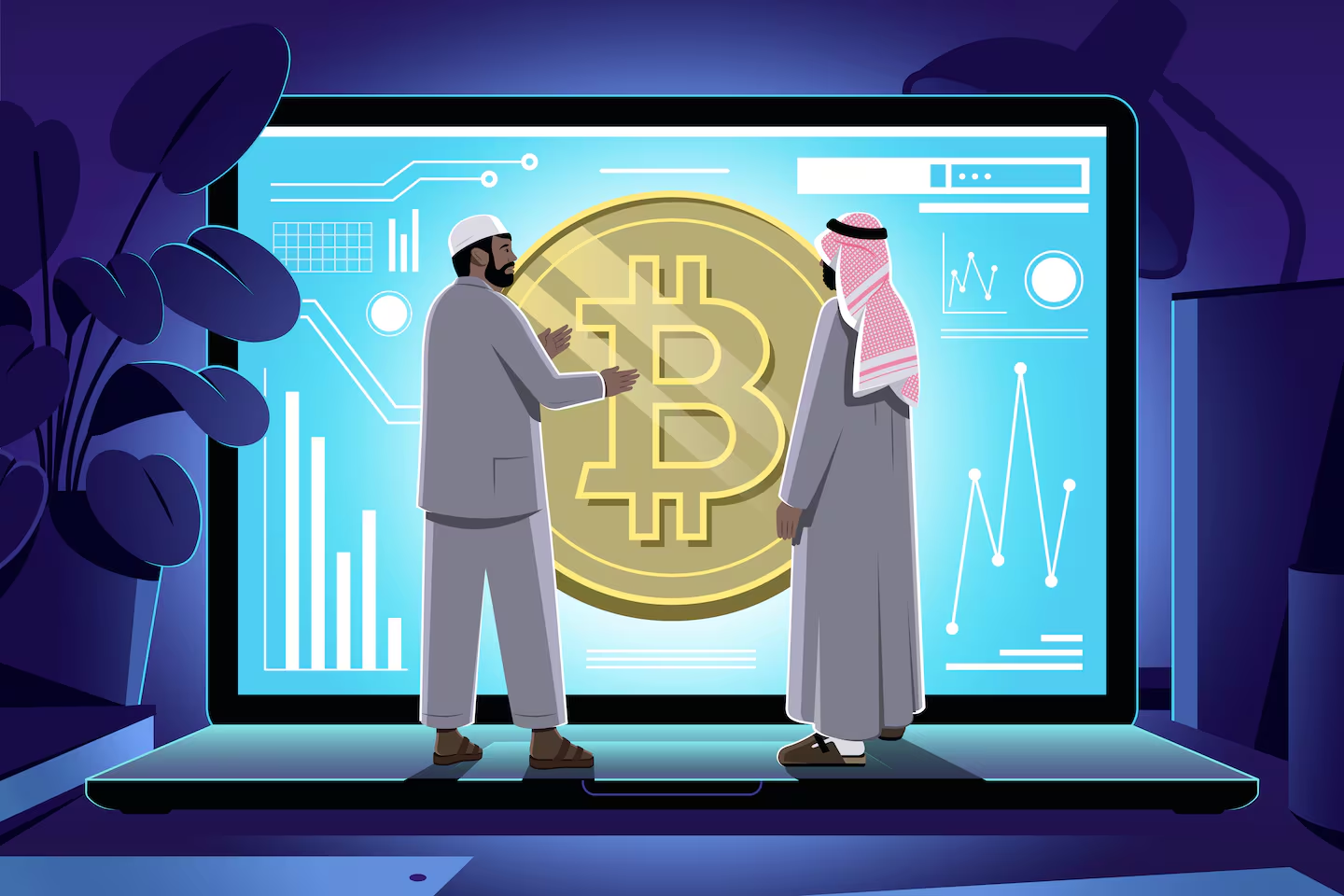
Cryptocurrency, as it is known today, started with Bitcoin as the first decentralised cryptocurrency in the modern world. The first Bitcoin transaction took place as far back as 2009 and ever since Bitcoin has grown into a global phenomenon bypassing traditional finance systems and banks. Islamic cryptocurrency, also known widely as Islamic coin, began to emerge in the late 2010s as the demand for Sharia-compliant digital assets grew.
Islamic coin is Sharia-compliant cryptocurrency that adheres to Islamic finance rules relating to financial transactions and exchange. This article will examine the benefits of Islamic coins and their relevance in the modern world of finance.
Cryptocurrency And Islamic Finance
Over the years Islamic finance and the world of cryptocurrency exchange and platforms have become increasingly interconnected. Islamic coin merges the traditional with the modern, uniting decentralised currencies with Sharia principles.
Not only does the Islamic coin stand as a testament to the thriving impact of Islamic finance on the modern world, but it also offers Muslims an alternative and innovative way of managing their money.
Two notable initiatives relating to Islamic coin are the First Islamic Crypto Exchange (FICE) and project Onegram. Project Onegram is a project that aims to create an Islamic cryptocurrency coin that is backed by gold reserves. Users of the coin are able to store their coins in a digital wallet and transact securely.
FICE is an Islamic initiative aiming to provide an Islamic digital platform for cryptocurrency transactions that are fully compliant with Islamic finance rules.
The main features of FICE are:
- it employs ethical screening
- it incorporates community governance within its structure and operations
- it offers Sharia-compliant trading
FICE and Onegram are both efforts to bridge the gap between Islamic finance and blockchain technology. The aim is to offer Sharia compliant solutions to Muslim investors in the realm of digital and decentralised finance.
Main Features Of Islamic Cryptocurrency
There are some key features that differentiate Islamic coin from other cryptocurrencies:
- Asset backing - Islamic coin is based on a system of asset backing. This not only provides intrinsic value but also stability in line with Sharia rules. Often the digital coin is pegged to assets that are tangible such as gold, real estate, silver, and commodities.
- Transparency: Islamic coin transactions must be transparent if they are to comply with Islamic finance rules. This means any trade, investment, platform being used, sales, prices, return, market, service, and exchange involved must be halal and transparent.
- Sharia law: Islamic coin must be Sharia compliant. This means the coin itself cannot be involved in any form of interest, uncertainty, or speculation.
- Governance: the governance relating to Islamic coins is usually decentralised. This is looked upon favourably by Islamic finance as it means there is more scope for the community to be actively engaged in the governance structures and processes.
- Regulation: Islamic coins, whether in the UK or abroad, must comply with regulatory frameworks that govern digital assets and finance. Digital assets are seen as a valuable commodity and many countries already have robust regulatory frameworks in place.
WHAT IS AN ISLAMIC COIN?
Islamic coins are essentially a form of cryptocurrency that is Sharia compliant. Muslims have an incentive to partake in Islamic coin trades and investment as they can be reassured that the coin is fully halal.
Of course, this means the coin must be certified as Sharia-compliant by experts with knowledge of Sharia law and rules.
For example, Islamic coin cannot be aligned or involved with any industry or market that is prohibited in Islam such as the gambling or alcohol industry. There is also a requirement that Islamic coin investment considers social benefit and social purpose as per Islamic finance rules. The ethics of the management and investment of Islamic coin are also important for adherence with Islamic finance.
WHAT ARE THE BENEFITS OF ISLAMIC COIN?
Islamic coin offers many benefits to its users:
- It is Sharia-compliant and aligns with Islamic principles
- It is transparent
- It is stable
- It facilitates the creation of strategic partnerships and ethical investment
- It provides innovative financial solutions
- It supports marginalised communities
- It uses ethical investment criteria
- It facilitates and enables financial inclusion
- It enables cross-border transactions
- It operates on a profit and loss sharing arrangement
- The HAQQ platform screens for Sharia compliancy
Islamic coins offer many benefits to Muslim participants and investors looking for halal ways to invest and trade. As the cryptocurrency financial ecosystem continues to evolve, Islamic coin will play a key role in shaping the future of Islamic cryptocurrency and digital assets.
WHAT IS THE DIFFERENCE BETWEEN ISLAMIC COIN AND BITCOIN?
When considering cryptocurrency, the question always arises about the difference between Bitcoin and Islamic coin. The main difference is that Islamic coin adheres to Islamic finance principles. The very existence of Islamic coin is to ensure that Sharia rules are complied with and there is no such obligation on Bitcoin.
Whilst both coins operate on decentralised platforms, Islamic coin should incorporate more transparent structures of governance leading to greater accountability and proof of adherence.
In addition, another key difference is that Islamic coin needs to follow ethical investment screening and criteria in order to the compliant with Islamic finance. Islamic coins operate on the HAQQ blockchain.
Whilst there are similarities in the nature of both Bitcoin and Islamic coin, the main difference is that Islamic coin adheres to a different set of values and principles. Users of Islamic coin will therefore seek assurance of compliance with Islamic rules relating to finances.
WHAT IS THE FUTURE OF ISLAMIC COIN?
More and more Muslims are looking to invest in and trade in Islamic coin. The Sharia Authority which was formed for the purpose of making decisions on the validity of cryptocurrency has stated that Islamic coin is a financial asset that can be traded whether that is by sale and purchase, or traded for goods and services.
Islamic coin holds great potential in the crypto world. As the crypto ecosystem and infrastructure continue to evolve there are some trends that suggest Islamic coin will see great growth in the coming years:
- Global financial inclusion: Islamic coin is playing a central role in making sure underserved Muslim-majority regions are able to partake in digital currencies. The demand is already there and is growing.
- Islamic finance growth: as the Sharia compliant finance industry grows so too does the demand for the accompanying digital ecosystem.
- Evolving markets: as the dynamics of markets in the world continue to grow and develop, Islamic coin is predicted to grow alongside them. Collaboration and innovations are already being seen across many different regions.
- Adoption: increased adoption of Islamic coins will lead to greater liquidity, market development, and acceptance.
WHAT ARE OTHER HALAL COINS TO INVEST IN?
Whilst the list of halal cryptocurrencies is growing, it is important to note that cryptocurrencies as digital assets are not deemed to be automatically compliant. They need to be screened by experts against Sharia principles. Some coins that have been deemed to be halal include:
- ZRX
- ELF
- Aion
- Alchemy Pay
- ASTA
- BEAM
- Cardano ADA
- Chainlink
There are many other coins that are deemed to be Sharia-compliant, but in each case you must do your own research and satisfy yourself.
Sharia-compliant finance operates within the Islamic finance financial model. What this means is that any financial product or service must adhere to Islamic rules relating to financial transactions.
The increasing popularity of Sharia-compliant finance is being driven by the growth in the global Islamic finance industry. However, many businesses and individuals are looking to Sharia-compliant finance to provide them with ethically based options and solutions. Ethical investors and the growing trend for socially responsible investing means Sharia compliant services are aligning with the values of many people across the world.
Sharia-Compliant Finance
Sharia-compliant finance must have the following qualities:
- Aligns with Islamic values
- Prohibition on interest/riba
- Ethics and morality screening
- Social responsibility
- Risk management
- Profit and loss sharing
- Ongoing monitoring and compliance
- Asset backed finance
- Avoiding speculation and ambiguity
Promoting Inclusion
Sharia-compliant finance is a great draw for ethical investors in the market looking to invest their money in ethical enterprises that promote individual inclusion and diversity. By providing equitable access to financial services, Sharia-compliant finance serves underprivileged communities who may not previously had access to products and services.
The focus on building inclusion and equity through transparency, information, and sharing of profits enables Sharia-compliant finance to promote inclusion.
There are several ways in which Sharia-compliant finance promotes inclusion.
- Prohibition of interest: the charging or receiving of interest is seen in Islam as an exploitative practice that is unjust and unfair.
- Avoiding speculation: keeping transactions transparent and equal makes them more inclusive.
- Ethical investment screening: screening for industries such as gambling and alcohol means that more focus is placed on environmental, social, and corporate governance.
- Asset backed finance: having transactions backed by assets leads to more clarity and equity between all parties.
- Risk sharing: this leads to greater inclusion as it removes the respective power of each party when coming into the financial deal. It also means that payments owing to the parties are fair and proportionate.
- Socially responsible investing: the onus on being socially responsible when investing or managing a portfolio places a responsibility on the investor to be conscious of working with marginalised groups.
- Sustainability: having a future focus on long term goals is a key element of Islamic finance.
- Fairness in contracts: Islamic finance emphasises the importance of having fair contracts and contract terms. Parties to a contract should act with integrity, honesty, and mutual consent.
Microfinance In Islamic Finance
Islamic finance recognises the importance of supporting small and medium businesses. Investment in these sectors and industries is encouraged.
Sharia-compliant finance understands that microfinance for small businesses is imperative for growth and sustainability. Often, small businesses can struggle to secure funding and capital. Islamic microfinance offers SMEs a lifeline with Sharia compliant finance solutions that are tailored to the business needs.
For investors, it means they can invest ethically, enabling entrepreneurs to access capital for business growth.
Risk And Profit Sharing
Risk and profit sharing is a key element of Islamic finance. What it means in principle is that partnership models such as Mudarabah and Musharakah are encouraged.
These partnerships enable entrepreneurs and financiers to agree on the terms of any profit sharing in a fair and transparent way.
Community Development Initiatives
Islamic finance encourages community development initiatives through mechanisms that align with Islam. The central principles of social responsibility and ethical investing mean that investors are required to act in a philanthropic way for the greater good of society. The outcome is that society benefits from the actions of the individual.
Sharia-compliant investments are directed towards the type of fund and project that positively impacts society. Investors looking for Sharia compliant investors prioritise investments in sectors that require funding such as healthcare, education, renewable energy, housing, and poverty alleviation.
These sectors have seen huge growth in recent years, so investing in them is often a win for the socially conscious investor and the initiative.
Staying Stable In Volatile Markets
Sharia compliant finance has demonstrated resilience and stability in volatile markets. This is due to its core principles of risk sharing, asset backed finance, and avoiding interest. Ethical investors are not looking for a quick and easy return, instead they want to invest in a stable and ethical sector.
As changes in interest rates affected the global markets in recent years, the Islamic finance investment market remained relatively stable as it is not dependent on interest backed lending or borrowing.
The value of the assets the finance is backed against provides some stability when the market becomes unpredictable.
Global Growth
Islam encourages a long term approach when it comes to investments. The focus is not on immediate profits, but long term sustainability and societal benefit. The principles of sabr (patience) and fairness in Islam mean that ethical investors investing using a Sharia-compliant framework are not always looking for an immediate return on investment. The aim is long term benefits and stable returns.
As the Islamic finance industry continues to grow, so too do the Sharia compliant finance options. Ethical investors from all backgrounds are pushing the drive for ethical and socially responsible investments.

Stay informed on finance
Subscribe to our newsletter for the latest insights on ethical financing