
Gharar

WHAT IS GHARAR?
Islamic finance defines gharar as something that is uncertain, risky, or hazardous. If there is a financial transaction where any of the basic elements of the agreement are unclear, uncertain, or ambiguous then the transaction or activity could be deemed to have an element of gharar.
Using the principles of Sharia law, the reason gharar is prohibited in Islam is that it removes transparency, openness, and certainty in financial transactions and contracts.
Gharar And Islamic Finance
According to Islamic finance principles, which themselves are based on Sharia law, gharar is a fundamental prohibition in Islam as it results in a lack of certainty.
This lack of certainty then increases the level of risk and liability to one or both parties.
Islamic Finance And Ethics
Islamic finance is based on ethical finance. What this means is that whilst Islamic finance and Sharia rules recognise the importance of finance in society, there is a need to ensure that there is intrinsic value and ethical boundaries when parties transact.
The underlying ethical principles in Islamic finance aim to ensure that there is transparency and certainty for the parties involved.
When you understand the ethical nature of Islamic finance you appreciate how it works to protect the parties and ensure there is fairness.
Examples Of Gharar
Some examples of gharar in modern contracts and financial transactions include the following:
- options contracts
- future sales
- selling the unknown
- short selling
- sales of debt
- day trading
Essentially, the sale of anything which is not present or tangible is gharar, and therefore not permissible in Islam.
Similarly, if ownership of an asset or product is uncertain this could also be considered to be gharar.
This is why it is important that you understand the concept of gharar and how it is applied, whether you are dealing with a bank, business, financial institution, web page or individual.
Elements Of Gharar
In order to decide if any financial tranaction or business dealing has an element of gharar you need to assess the level of certainty within the terms of the deal.
Some of the main terms you need to understand include the nature of the transaction, the parties, the language of the contract, the product, or service involved.
Gharar has certain characteristics that you need to be aware of.
- the parties: gharar does not always relate to uncertain or risky terms in the contract. Gharar could also occur in the nature of the parties involved, their relative bargaining power, their openness and the level of risk they take on
- contract terms: language used in the contract must be clear and concise.
- two or more sales in one: this refers to deals that are uncertain with timings. For example, if a seller states they will 'sell this asset for £100 in cash today and £150 next week'. The timings here are uncertain.
- conditional contracts: this refers to conditions in a contract that are unknown and uncertain. For example, if a seller states they will sell the buyer an item if the market improves.
- price : if the price in a contract is not known then this could be deemed to be gharar. You should always be careful where the payment terms are not clear.
- Speculation: if you have agreed terms that are speculative then this is not permitted.
- Subject matter: ie, if there is uncertainty in the subject of the contract.
- Delivery: again, be careful if there are no specified delivery terms or final contract date.
Impact Of Gharar
In Islamic finance, certain types of contract are void. These include contracts that are deemed to be invalid, and contracts that are defective.
Invalid contracts are those where key details are missing, such as the price, the payment terms, and the duration.
Defective contracts are contracts which do not contractually bind the parties correctly.Based on these principles, any contract that includes elements of gharar can be deemed to be both invalid and defective in Islam.
How To Avoid Gharar
Whether you are looking to avoid gharar in your financial dealings or daily life, there are some things you can do to ensure that you are compliant with Sharia rules.
You can ensure that there is certainty in your dealings, fairness and openness, and that you are not misleading anyone else. Any transaction should involve the consent and knowledge of the parties involved.
Gharar And Trade
When it comes to trading or business, one of the main ways to ensure you do not fall into the gharar trap is to ensure that any trading has the consent of both parties.
Any form of trading in risk is not permissible. If it is likely that one party in the transaction is likely to make a significant gain at the cost of the other, then the result is that this is generally forbidden under Sharia law.
Any exchange that could lead to exploitation and injustice should be avoided. Instead, you should aim to ensure that all your dealings are transparent, consensual, and satisfactory to both parties.
Explore more news
WHAT IS INVESTMENT BANKING?
Investment banking refers to a form of banking that deals with large and complex financial transactions. These transactions include mergers, acquisitions, raising capital funds, and re-organisations of businesses.
Investment bankers work with clients within the world of investment and high finance. Investment banking often deals with raising funds and money for large companies and governments.
Investment banking also involves underwriting debts and securities and brokering trades for private and global investors.
As conventional investment banking includes many interest-based and speculative activities, this has raised the question about the permissibility of investment banking in Islam and if it is haram.
The Concepts Of Halal And Haram Explained
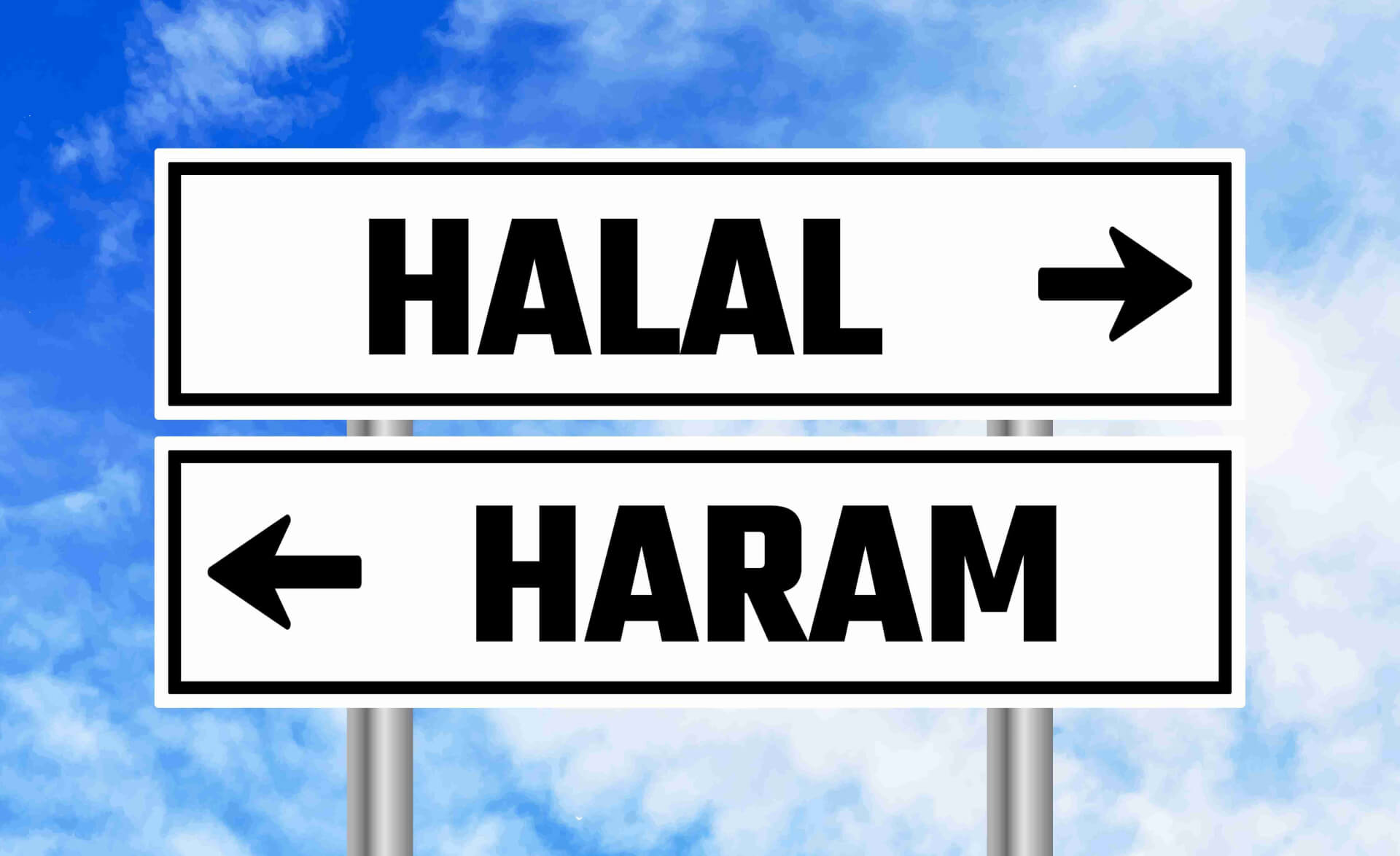
In order to ascertain and evaluate if investment banking is halal or haram, we need to understand the Islamic (Sharia) concepts of halal and haram.In their very basic form, halal and haram mean the following:
- halal - permissible
- haram - impermissible/prohibited
When something is deemed to be halal in Islam, it means that it meets the very specific criteria Islam sets out. Often, the concept of halal is commonly associated with the consumption of food and drink, but in reality for Muslims the concept of halal and haram permeates their daily lives, behaviours, and actions.
For example, drinking alcohol is haram, but so is engaging in dishonest or interest-based financial activities.
WHY IS HALAL AND HARAM IMPORTANT IN ISLAM?
The concepts of halal and haram are important for Muslims as they influence their daily choices, behaviours, and practices.
Let's explore these concepts and understand why they matter to Muslims.
Halal encompasses actions, behaviours, and practices that are permitted and encouraged by Islamic law (Sharia). Halal extends to various aspects of life, including business transactions, financial dealings, accounting, personal conduct, and moral and ethical considerations.
The importance of halal lies in its connection to piety and the pursuit of righteousness. Muslims strive to lead a life in accordance with Allah's commands, and adhering to the concept of halal is a means to attaining spiritual purity and fulfilment.
By consuming halal food, engaging in halal financial transactions, and following halal practices, Muslims aim to align their actions with the principles of Islam and seek the blessings of Allah.
Haram, on the other hand, means "forbidden" or "prohibited." It refers to actions, behaviours, and practices that are explicitly prohibited by Islamic law. Haram activities are considered sinful and spiritually harmful to individuals who engage in them.
Muslims avoid haram practices to maintain their spiritual well-being and to fulfill their duty of obedience to Allah. By refraining from haram actions, Muslims seek to purify their souls, develop self-discipline, and safeguard their relationship with Allah.
The Importance of Halal and Haram for Muslims:
- Morality and ethics: for Muslims, the concepts of halal and haram provide a guide and framework within which to live their lives. This framework is centred on principles of morality and ethics.
- Spiritual Connection: Halal and haram act as guiding principles for Muslims, enabling them to establish a strong spiritual connection with Allah. By adhering to halal and avoiding haram, individuals aim to cultivate righteousness and seek closeness to Allah in their daily lives.
- Personal and self-discipline: Adhering to halal and avoiding haram helps Muslims in their personal development by fostering self-discipline, self-control, and mindfulness. Consciously following the halal path means individuals can enhance their character, strengthen their faith, and develop a sense of accountability.
- Social Cohesion: The concepts of halal and haram contribute to social cohesion within the Muslim community. Shared adherence to these principles promotes unity, mutual respect, and a sense of collective responsibility among Muslims.
Islamic Finance Principles
Islamic finance principles that relate to investment banking are in place to ensure that investment banking activities are Sharia compliant.
Some of the key Islamic finance principles that would govern investment banking trading and activities include the following:
- No riba - one of the main principles to adhere to when looking for halal investment banking is ensuring there is no element of interest involved in the transaction.
- uncertainty - similarly, there should be little to no uncertainty (ghahar) and speculation.
- ambiguity - there should be no ambiguity
- Profit and loss sharing - the parties should share in any profits and losses.
- ethical - the investment activities should be ethical
Principles Of Traditional Investment Banking
Traditional investment banking operates within the framework of conventional financial systems and practices.
These systems are often interest-based. In Islamic the concept of interest (riba) is strictly prohibited. So, investment banking which relies on interest based activities is haram.
Conventional investment banking involves activities such as capital raising, mergers and acquisitions, underwriting securities, and providing financial advisory services.
Traditional investment banks typically engage in interest-based transactions, speculative investments, and may invest in sectors that are considered unethical or haram according to Islamic principles, such as alcohol, gambling, or pork-related industries.
In traditional investment banking, interest (riba) plays a significant role, as it is often earned through loans, debt instruments, and interest-bearing investments and payment options.
Additionally, derivative products, short-selling, and leveraging strategies are commonly employed in traditional investment banking practices. These activities may conflict with Islamic principles that emphasize fairness, transparency, and the avoidance of uncertainty (gharar).
The level of uncertainty and speculation within traditional investment banking can be deemed to be haram.
Sharia Compliant Halal Investment Banking
Halal investment banking, also known as Islamic investment banking or Sharia-compliant investment banking, is a specialised form of financial services that aligns with Islamic principles and guidelines.
Islamic investment banking operates within the framework of Islamic finance. These principles seek to promote ethical and socially responsible financial practices. This means there is less scope for one-sided risk and high levels of speculation. Ultimately, this leads to greater equity and fairness in business dealings.
In halal investment banking, interest-based transactions (riba) are strictly avoided. Instead, Islamic banks and financial institutions offer products and services that are structured in a way that eliminates interest, and instead, focuses on profit-sharing arrangements or partnerships.
For example, instead of charging interest on loans, Islamic banks may engage in profit-sharing agreements, lease-based contracts (Ijarah), or partnership-based arrangements (Mudarabah). What this means for the parties is that there is more fairness.
Furthermore, halal investment banking adheres to ethical investment criteria, avoiding sectors or activities that are deemed haram, such as the porn or alcohol industry.
Investments are directed towards industries that comply with Islamic principles, such as halal food, healthcare, sustainability projects, renewable energy, and ethical real estate.
The concept of risk-sharing is also emphasized in halal investment banking. Islamic financial institutions aim to distribute risks and rewards equitably among parties involved in investment activities. This principle promotes fairness, accountability, and responsible investment practices.
Key Differences Between Traditional And Halal Investment Banking
Overall, the key difference between traditional investment banking and halal investment banking lies in their underlying principles and practices.
Halal investment banking adheres to Islamic guidelines, avoiding interest-based transactions, speculative investments, and unethical industries while emphasizing risk-sharing, profit sharing, ethical investment, and fairness.
By aligning financial activities with Islamic principles, halal investment banking seeks to cater to the specific needs and values of Muslim investors.
Muslims And Investment Banking
Islamic investment banking is a growing industry. In the United Kingdom, there are many banks and financial institutions that offer halal investment banking opportunities, products and services.
For students who are currently studying economics and finance subjects, there are opportunities to seek employment and a career in Islamic investment banking firms.
However, it is important to make sure that you work with investment bankers who are familiar with the concepts of Islamic finance and halal and haram. They will guide you to investment banking services and options that are deemed to be halal under Islamic finance rules.
Qardus Limited does not give financial or investment advice.

The investment term for this offer has been successfully concluded
As the investment term for this facility has been successfully concluded we wanted to present some highlights of this offer to investors:
The problem: Dara 77 Ltd, a dental practice, was seeking funds for working capital, to purchase dentistry equipment, and refinance an expensive mycashloan of c.£30,500 at c.50% APR.
The solution: In order to refinance the expensive loan at the earliest possible time and meet their working capital requirements, the company needed a timely injection of business finance. Dara 77 Ltd hence sought to raise a total of up to £60,000 of Sharia-compliant finance on the Qardus platform.
The outcome: The company had a two-year unsecured amortizing finance facility with Qardus, giving it the capital required to support their next phase and pay-off the expensive loan. The funds were drawn down on January 28, 2021.
Final settlement: Dara 77 Ltd made a voluntary early prepayment for the full outstanding balance of the financing facility on May 12, 2022. The Director used the extra cash proceeds from the sale of her home to pay off all her debts.
Payments to investors:Over the term of the facility, investors received their scheduled profit and principal payments each month.
Returns to investors: Investors made a return of 16.2% per year over the term of the facility. An investment in this offer made a return on investment (ROI) of 20.88%andXIRR of 25.31%upon successful conclusion of the investment term. The XIRR function calculates the Internal Rate of Return (IRR) by assigning specific dates to each individual cash flow.
“Excellent service from start to finish, comprehensive and friendly staff that make the full process feel easy. I was seeking growth finance and contacted Qardus and within 5 business days, I had an offer and funds in the bank. Highly recommend, thank you again Qardus”Director, Dental Practice
“This business is a prime example of a UK SME which has strong social impact credentials and that our investors are keen to support. This was also the first female owned business on our platform that got funded in 6 hours! In addition to providing working capital headroom, the funding will also be used by the business to refinance an expensive loan at c.50% APR. With this financing facility, we look forward to watching this business grow”Hassan Daher, CEO & Founder, Qardus Limited
Please remember that when investing in the offers available on the Qardus platform your capital is at risk and returns are not guaranteed. Past performance is not indicative of future results.
A timely injection of business finance
The problem: Bradford-based pharmacy business Biomed Care Services was facing high demand for their medicine management solution. Strong growth meant that in order to continue delivering a high quality of service their stock control systems had to be improved.
The company, founded in 2015, had developed a strong presence in the north of England and become a key supplier to the NHS, servicing around 200 care homes and residential homes, along with private hospitals.
The solution: To maintain its growth, the company sought to raise £50,000 of additional working capital through Sharia-compliant finance.
Biomed Care Services had previous positive experience of raising over £36,000 of working capital with Qardus. This provided the confidence that the new working capital target could be achieved in the necessary timeframe.
The outcome: The company now has a two-year unsecured amortising finance facility with Qardus, giving it the capital required to support their next phase.
“It was great working with Qardus for a second time to raise this working capital facility. The additional funding will help support stock control to service the high demand we are currently experiencing. Thank you for making the process from end to end seamless and straightforward, we highly appreciate it.”Shahid Khan, Director, Biomed Care Services
“Qardus is the first ethical and Sharia-compliant crowdfunding platform that offers businesses such as Biomed Care Services an opportunity to access fast and affordable financing that adhere to Islamic finance principles and has been certified by Sharia advisors. We are very happy that we were able to meet our target within a few weeks.”Hassan Daher, CEO & Founder, Qardus Limited
Please remember that when investing in the offers available on the Qardus platform your capital is at risk and returns are not guaranteed. Past performance is not indicative of future results.
Stay informed on finance
Subscribe to our newsletter for the latest insights on ethical financing