
Ethical Investing: What is it and how does it work?
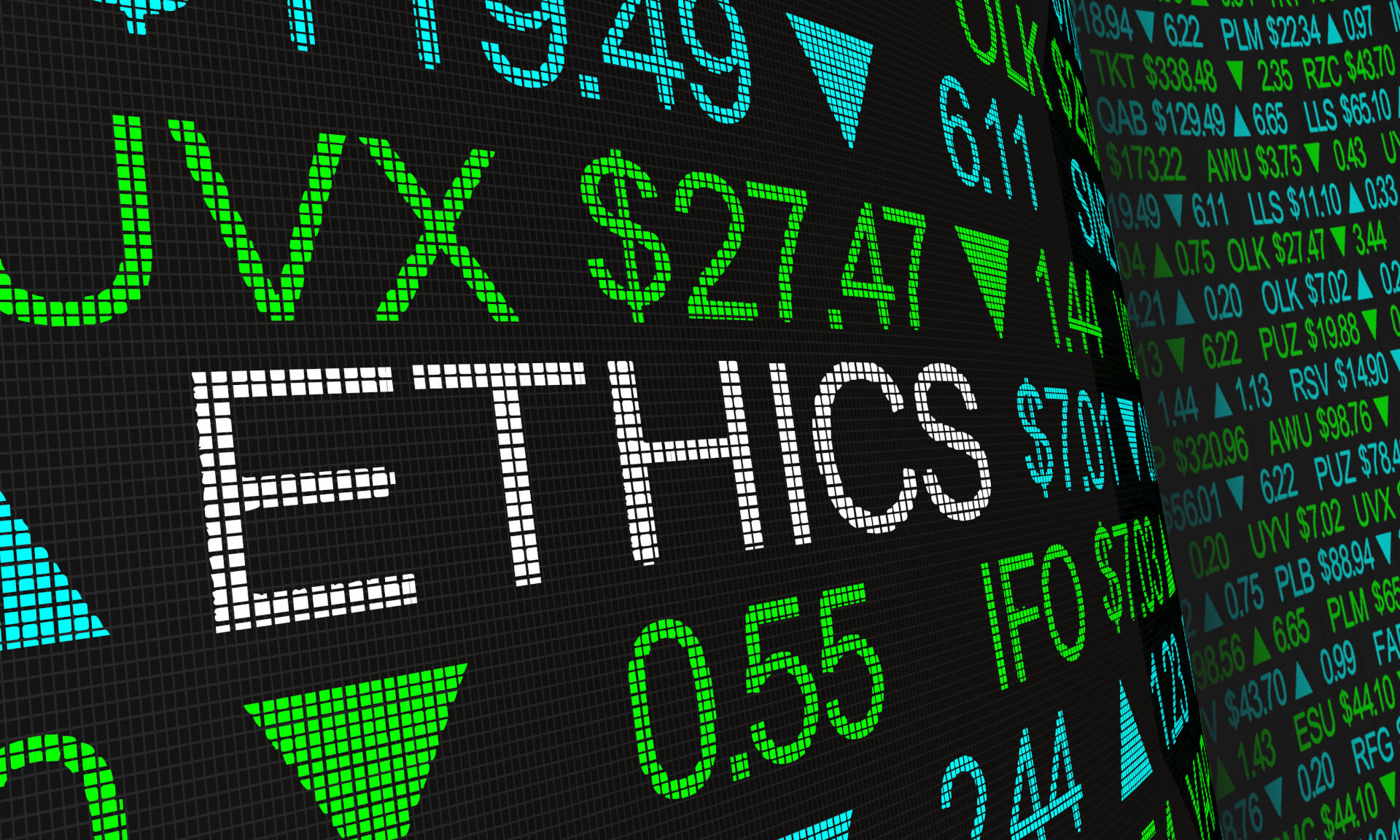
When it comes to investment strategies, ethical investing (also known as impact investing) is gaining traction. Some commentators have credited the likes of Greta Thunberg for the increase in demand for impact investment products, but this type of investing has been around for centuries in religious communities and societies.
Impact and ethical investments concentrate on approaches and strategies that facilitate inclusion and integration. As a result, the transaction has a positive impact on the social and economic environment. The investment itself is deemed to be one which benefits the investor and the wider community.
For investors looking to align their ethics and values with their financial output, they want to be sure that their portfolio grows in a sustainable way that supports their role as an ethical consumer and investor. Many mainstream funds do not offer ethical products and services, but the tide is changing fast and there are more companies offering bespoke ethical funds for discerningly ethical investors.The main benefits of ethical/ impact investing include the following:
- The values of companies and investors can be aligned
- Companies committed to social causes can be supported
- There is a feel good factor associated with ethical investments
- For religious communities, ethical investments are compliant with religious rules relating to investing (Sharia rules for Muslims)
- Ethical funds are a real catalyst for change
- The financial outlay does what it says on the label - ethical investment
Socially Responsible Investments
Socially responsible investing is a term associated closely with ethical investing. Socially responsible investment has a social conscience and does not negatively impact society. There are many companies on the market that offer investors the opportunity to invest in funds that provide positive social change and impact.
Of course, for Muslim investors socially responsible ventures have always been on the agenda, even when the opportunities to invest responsibly were not widely available on various platforms. Islamic finance dictates that Muslims should not invest in any project that could be detrimental to individuals or society as a whole. This is part of a much broader Islamic value-based social system. Muslims are instructed to safeguard society, the environment and make ethical choices that do not negatively impact society.
Ethical Investments
The definition of ethical investing is centered on the core concept that it is possible to align your financial goals with your moral and ethical values. Ethical ventures are focused on ensuring that the primary filter when selecting opportunities relating to money is based on ethical principles and considerations. There is a demand for increased transparency when it comes to shares, trusts, stocks, bonds and returns.
Used interchangeably with socially responsible and impact investing, ethical investments require due diligence before the capital is actually spent. Assessing whether a fund is ethical is based on using certain environmental, social, and governance criteria which can help you decide whether your investment is, indeed, ethical and socially responsible.
What ethical investment facilitates is the ability for individuals to allocate their capital with companies and funds that align with their own personal beliefs. One example of this is investors who want to avoid industries deemed to be unethical such as gambling, porn, weapons, and alcohol.
For Muslims, ethical ventures go further and also seek to ensure that the investments are compliant with the principles of Islamic finance and Sharia law.
Islamic Finance And Ethical Investments
Whilst ethical transactions may appear to be a relatively new concept in the West, Islamically, ethical investments have been a central principal of Islamic finance for centuries.
Historically, religion and ethical investing have been aligned. Islamic finance prohibits any financing of industries deemed to be haram.
Socially responsible investing and Islamic finance have seen rapid growth in recent decades, and it is no coincidence that the two go hand in hand. Islamic finance centres on principles of social responsibility and impact. This is achieved through principles of sustainability, positive impact, and strong governance.
More and more investors are joining Muslim investors in looking for ethical funds, and funds that offer green funds, or those that support the environment positively.
In recent years, the growth of ethical investing has been fuelled by religion AND social views. Social trends that have begun to lean towards ethics, environmental impact, and transparency have meant that ethical investments have become more mainstream.
In the 90s there was a move away from funds and ventures in the fuel and coal industries, and industries using animal testing, as these were seen as being harmful to the environment and society as a whole. Moving away from environmentally damaging industries was seen as a way of problem-solving some of the damage caused by the operations of these industries.
Sharia Compliant Investments
Investments that are Sharia compliant focus on socially responsible investing, and are focused on the main Islamic finance principles that prohibit:
- Riba (interest)
- Gharar (speculation)
- Financial transactions in industries deemed to be haram such as the tobacco, alcohol and gambling industries
Environmental, Social, And Governance Considerations
In order to assess whether your portfolio is indeed socially responsible and ethical ,there are certain criteria that you can use. The criteria can broadly be divided under three main categories - environmental, social, and governance.
Investors need to review a broad variety of behaviors to understand if the investment is indeed sustainable, responsible, and socially impactful.
ENVIRONMENTAL
Environmental factors to look out when investing include assessing the impact of the investment on the following:
- Climate
- Pollution
- Waste
- Water stress
- Energy use
- Renewable energy
- Conservation
- Carbon footprint and ecological footprint
- Local economic policies
Environmental criteria will assist investors and companies to ascertain the impact of their ventures on the wider environment. Ethical companies should be aware of the environmental impact of their investments by using the criteria above to ensure that the risks are being identified, assessed, mitigated, and managed.
For example, investing in land development may seem like an ethical project, but what if the development adversely impacts local populations, natural resources, and contamination?
GOVERNANCE
In similar vein, anyone investing with a company will want to ensure that the company they use has a very transparent and accurate governance structure in place. Without strong governance, there is less accountability when it comes to ensuring that the investments you make are socially responsible.
The financial reporting and accounting methods, shareholders involvement, accountability, and financial management must have clarity and be transparent. For Muslims, they will also want to ensure that the investment company does engage in any investment behaviours deemed to be haram under Sharia law and Islamic finance rules, and ensure that haram industries are avoided.
When examining the practices of companies and businesses claiming to have ethical investment services and products, the following criteria should be carefully examined:
- The ethical and moral stance and values of the company
- The diversity within the company, shareholders, and board members
- The voting rights of shareholders and profit sharing arrangements
- Previous governance records
- Tax treatment and financial transparency
- What anti-competition practices are in place
- How the company manages financial and ethical conflicts of interest
- Asset management strategies and choices
- How the company treats its customers and investors
SOCIAL
Social criteria focuses on the business relationships of the investment company/ investment and the social impact.
Socially responsible investing focuses on social values, the environment and good governance. Does the investment company you want to invest in hold similar values to you? How committed are they to ethical values? Do they uphold Islamic finance principles? Does the company donate to charities that align with your charitable focus?
When considering the social criteria, you need to look out for investment and financial impacts on the following:
- Supply chain labour
- Ethical sourcing
- Data and privacy
- Protocols relating to health and safety
- Impact and bonds with local communities and links with them
- Previous investment history and sectors invested in
- How the investment portfolio is socially responsible
Ethical Investing
In order to ensure that the investment you make is ethical, you need to ensure that you do your research and analyze the historical, present, and predicted performance and standards of the investment you are interested in. Of course, there are many companies that offer ethical investment products, but that does not mean investors are absolved of their own personal responsibility to undertake research and ask their own questions.
Investors should:
- Review the mission statement of the investment company
- Check their track record of investments
- Review their ethical values and see if they align with your own
- Check if the company complies with laws and statutes
- Understand how ethical investments and funds operate
Is Ethical Investing Profitable
Ethical investing does not guarantee a profit. However, when it comes to the performance of ethical funds as compared to traditional investment funds, there does not appear any significant difference. In fact, ethical investments can sometimes outperform traditional investment funds.
The whole point of ethical investing is that you can invest your money in a way that yields positive results on society and also makes a profit. According to an article in the Guardian (December, 2021), in the United Kingdom alone, the annual spending on ethical services and products has exceeded £100 billion [1]. With the onset of the global pandemic and climate change, people are looking for ethical investments and industries far more than ever before.
The Future Of Investing
We have entered an era when socially responsible investing is increasingly in demand. The increase does not only relate to ethics and morals, but is also centered on principles of sustainability, investor goal-setting, values, protection of the natural environment, whilst still making money.
Gone are the days when investing in the stock market was solely for the purpose of generating income, with no thought for the impact of the investment. Modern ethical investors are keen to ensure their investments are transparent, socially responsible and with solid governance structures in place. Sustainable long term results are seen as aligning with the much broader objectives and principles within Islamic finance and the wider society.
For too long, investments have focused on profit margins over values. Ethical investing means that profits can still be prioritized, but they ranked alongside ethics and values and do not lead to the social exclusion of marginalized groups or countries.
Tips To Invest Ethically
Investing ethically is about more than making sure your investment appears to be ethical. It is focused on investors learning about what it is they are investing in, the social and environmental impact, and holding investment companies to account.
The following tips will help you avoid investments that do not align with your personal values and goals:
- Assess and identify your values and principles
- Learn about ethical investments and how they operate
- Build your investment portfolio carefully with sustainability and social responsibility in mind
- If you have ISAs or pensions review where they are invested
- Check your investment strategy - do you want to focus on start-ups or existing ethical investment companies?
- Make sure you diversify your portfolio across regions and sectors
- Planning your investment in advance
Sources Used In This Report
[1] UK annual spending on ethical products surpasses £100bn for first time [The Guardian, Dec. 2021] [https://www.theguardian.com/money/2021/dec/31/uk-annual-spending-on-ethical-products-surpasses-100bn...]
Explore more news
Islamic finance has historically played a significant role in financial inclusion in countries where Islam is a major religion, but it has not been accessible to Muslims in the West until very recently. The growth of Islamic finance has catapulted financial inclusion in previously overlooked groups and has ensured that businesses operating under Islamic principles have opportunities to access funding options and scale their growth.
The foundations of Islamic finance that rest on the principles of anti-usury and no interest have traditionally seemed to be at odds with the concept of successful business and entrepreneurship. After all, usury - leveraging interest rates – is a key component of traditional business growth. However, when it comes to Islamic finance one of the central foundations is that money should not make money, hence receiving or paying interest is not permissible.
In recent years the financial sector has realised the potential of Muslim entrepreneurship and investment, and has offered more inclusive Sharia-compliant financial services. The Islamic finance sector is growing up to 25%[1] each year, and this shows the demand is there for Sharia-compliant finance and banking.
Islamic Finance Principles
What are the main Islamic finance principles that impact on businesses? Islamic finance includes certain prohibitions, rules, and restrictions:
- Gambling (maisir): any form of gambling or speculation is prohibited.
- Contractual ambiguity (gharar): contracts with too many uncertainties or risks are considered gharar.
- Payment and receipt of interest (riba) is not permissible.
- Endowment (Waqf): this refers to a philanthropic actions where the benefit serves specific beneficiaries.
- Interest free loan (qard) where there is no interest payable by the borrower on the loan.
- Insurance (takafuI) refers to a common pool or fund where monies are redistributed to members as and when the need arises.
Combined with the principle of charity (zakah) these Islamic finance principles are centred on inclusion and social solidarity. Promoting socio-economic inclusion, benevolence, and growth via the redistribution of wealth is one of the central concepts of any Islamic finance system.
Islamic Financing Arrangements
Examining the Islamic finance principles above, it is easy to wonder how financial institutions that offer finance based on Islamic Sharia principles actually make money. The answer is that the different types of financial vehicles enable financiers to make money through various financing arrangements. These arrangements facilitate profit sharing and risk management [2].The most common Islamic Financing arrangements include:
- Murabaha: this refers to an arrangement based on profit and loss sharing where both financier and businesses share in the profits and losses. This principle is applied in mortgage transactions where the bank would typically buy the property and resell it to the customer for a price that includes a profit margin.
- Musharakah: this is a joint venture arrangement where both parties contribute capital and agree on the share of profits.
- Ijarah relates to leasehold arrangements whereby the lessor leases the property to a lessee in return for rental payments.
Financial organisations that offer risk-sharing financial solutions, and interest-free banking help to achieve financial inclusion. As you can see from the principles mentioned above, the structure of the arrangement means the bank can make their money by charging rent, sharing profits, or agreeing on a price above market value.
What is Financial Inclusion?
Financial inclusion is defined by The World Bank as a concept that ensures that people and businesses ‘have access to useful and affordable financial products and services’.
When it comes to Islamic finance, one of the key principles that facilitates financial inclusion is ensuring that there is access to savings and credit that is compliant with Sharia law. Research has found that in Muslim-majority countries up to 13% of people do not use conventional banks due to religious reasons [3]. The figures relating to financial inclusion in non-Muslim countries are likely to be much higher.
The United Nations and G-20 have both stated that financial inclusion is high on the agenda if globally we are to achieve sustainable development goals. Financial inclusion, therefore, goes beyond finances and relates to social and economic inclusion.
Why Is Financial Inclusion Important?
Financial inclusion is imperative because access to financial services is a driver of development, growth and opportunity. For Muslims, conventional financial services that are not compliant with Sharia law can result in a period of self-exclusion [4]. What Islamic finance facilitates and promotes is the inclusion of those who have been excluded on the grounds of religion. There cannot be equality of opportunity, access and sustainability without financial inclusion.
Financial services that are affected by self-exclusion:
- Lending and financing
- Insurance
- Savings
- Credit history
Evidence from countries such as Malaysia and Saudi Arabia has shown that Islamic finance not only improves outcomes for businesses but also helps the economy and presents opportunities for investors. Financial inclusion is an enabler of growth that is inclusive, compliant, and sustainable.
How does Islamic Finance Promote Financial Inclusion?
A system of well-designed financial services based on Islamic principles will not only enable Muslims to build financial resilience but ensure that they become active economic participants in the countries they live in.
Digital finance and mobile technologies mean Islamic finance is more widely accessible. The World Bank survey (2017) found that Muslims can often exclude themselves from using the formal financial institutions in place due to religious reasons [5].
Islamic finance is against the concept of asymmetric risk where one party has to lose if another gains. Instead, Islamic finance promotes risk-sharing that is not rooted in interest rates and speculative deals [6]. Certainly, in terms of micro-finance, Islamic finance is an emerging and fast-growing niche that aims to redress the current global imbalance when it comes to micro-finance and enabling marginalised groups to access financing options that work for them.
Islamic finance promotes financial inclusion, and by default creates significant financial migration. It provides an avenue for people with religious boundaries and principles to access financial services that were previously inaccessible to them. Islamic finance is not only about financial inclusion for businesses and individuals, it also attracts Islamic investors. This results in positive impacts at a local, community and global level.
Islamic finance is one of the fastest-growing industries in the finance sector. Governments and organisations including the World Bank and United Nations have all recognised that financial inclusion is imperative if global economic and sustainability goals are to be met. Also, if governments (particularly in the West) want political participation and empowerment for Muslims then financial inclusion is key to achieving that inclusion.
It is also important to remember that Shariah-compliant services are based on principles of equality and social justice. Therefore, financial inclusion and Islamic finance really do have the same end goal in mind – social equity.
References
1. https://corporatefinanceinstitute.com/resources/knowledge/finance/islamic-finance/2. https://www.theguardian.com/money/2013/oct/29/islamic-finance-sharia-compliant-money-interest3. https://www.brookings.edu/blog/future-development/2017/06/08/can-islamic-finance-boost-financial-inc...4. https://www.emerald.com/insight/content/doi/10.1108/IJIF-07-2018-0074/full/html5. https://globalfindex.worldbank.org/sites/globalfindex/files/2018-04/2017%20Findex%20full%20report_0....6. https://developingeconomics.org/2019/04/05/islamic-finance-and-financial-inclusion-who-includes-whom...

Wills
A will is a legal document that sets out the wishes of a person with regard to the distribution of their wealth, income, and assets once they pass away. An Islamic will is a will that documents how your wealth, property, and gifts will be distributed when you die and is prepared in accordance with Islam and Sharia law. The last will and testament specifies exactly what happens to your assets and wealth when you die. What you leave behind is known as your estate, and this inheritance will be passed down to those mentioned in the will upon your death.Islamic wills are also known as wasiyyah, and are one of the many important elements of Islamic financial planning.This article will discuss Islamic wills, why they are important, and how to ensure you have one prepared.
Wills In Muslim And Non-Muslim Countries
Islamic wills are used by Muslims who want to ensure that their finances and responsibilities are dealt with in a Sharia compliant way once they have passed. In Muslim countries, the rules of the country dictate the laws of intestacy, which is the law that will apply on the death of a person.
However, in non-Muslim and western societies (such as the United Kingdom) where Sharia law does not apply, Muslims look to having an Islamic will in place before their death to ensure that it complies with their Islamic obligations and the rules stipulated in Islam when it comes to inheritance.
Why Islamic Wills Are Important
For Muslims, it is critical that they have an Islamic will in place before they pass away. Not only is the importance of having an Islamic will highlighted in the Quran it is also mentioned in the hadith.
If a Muslim does not have an Islamic will, this means that their property and wealth will not be distributed in accordance with Islamic Sharia rules and regulations.
Islam places great emphasis on making sure you live your life in an orderly manner, and this duty for orderliness and preparedness also applies to leaving this world.
If a Muslim dies without having made an Islamic will then they should expect their wealth to be distributed by the rules of intestacy of the country they live in. In the UK and the United States, the rules of intestacy are not in line with Sharia rules and are therefore not Sharia compliant.
Importance Of Having An Islamic Will
It is especially important to have an Islamic will for those with dependants, a spouse, children, or other beneficiaries. Not only will an Islamic will deal with the distribution of your assets, it will also ensure that any charitable donations you wish to make are dealt with, but your family is provided for adequately, and your funeral is managed in line with your wishes.
It is always best to make your Islamic will as early as possible, and whilst you are of sound mind.
The incentive in doing this is that once you sort your will it can remain in place until you die unless of course you decide to make any changes in which case your Islamic will can be updated.
Dying Intestate
If you die without a will in a non-Muslim country then the intestacy rules of that country will apply. For example, in England, if you have no surviving relatives then your estate will automatically pass to the Crown.
Dying intestate not only means that your assets will be distributed without your instructions, but it also makes dealing with your estate long-winded and difficult. It can also take months and sometimes years to unravel the estate and distribute the assets.
Usually, a close member of the family such as a spouse or parent has the legal right to distribute and manage the estate and the real property within it.
Islamic Wills Explained
An Islamic will is a legal document that will outline how a Muslim's assets will be distributed on their death. What sets the Islamic will apart from the traditional will is that the Islamic will is drafted based on the guidance and rules set down by Islam and Sharia law.
The Islamic will not only deals with the distribution of your assets but should also cover what happens to your debts and monies you owe to third parties.
Islamic wills should always comply with Islamic laws of inheritance, this is why you need to use the services of a solicitor who understand Sharia law and compliance.
Islamic Laws Of Inheritance
Islamic laws relating to inheritance are set out in the Quran and the teaching of Prophet Muhammad (peace be upon him).Some of the main principles of Islamic inheritance laws are as follows:
- Equality - a key component relates to equality between female and male heirs. Sharia rules state that male and female heirs should receive equal shares in the estate of the deceased
- Differentiating between debt and assets - debts and assets should always be separated and any debt should be settled before any assets are distributed to heirs and beneficiaries
- Shares - Islamic rules and guidance states that there are certain heirs (such as husband / wife/ children) who are entitled to what is considered to be a mandatory share of the estate
- Beneficiaries and heirs - for those writing and preparing wills, they should be mindful of the determination of heirs. That is those heirs who are specifically entitled to a share in the deceased estate (this includes spouses, children, parents, and grandparents)
Requirements Of Islamic Wills
When it comes to Islamic wills there are some key principles you need to be aware of:
- Compliance with Sharia law - make sure you know and understand the intestacy rules of the country you live in. Do not just assume that Sharia rules apply, do your due diligence and make any relevant inquiries
- Finding the right professional - when it comes to writing the will you should always seek the services of an Islamic lawyer who understands Sharia rules and the Islamic distribution of assets. The cost and expense will likely be the same as appointing a non-Muslim probate solicitor.
- Writing the will - the wording in the Islamic will should be clear and concise with no room for ambiguity or uncertainty
- Signing the Will - make sure your signature is applied in the right place and witnessed by two credible, Muslim witnesses. The last thing you want is for your will to be challenged in the future.
- Review - once your Islamic will has been prepared and signed you should review it periodically to make sure it still meets with your requirements and wishes.
Why Islam Recommends Having An Islamic Will In Place
There is a huge emphasis in Islam for Muslims to have an Islamic will. Ensuring that our assets and property are distributed in accordance with Sharia principles is the last legacy for Muslims before they exit this world and enter the next.Every Muslim will want to leave this world and leave their estate in a way that pleases Allah.
Benefits Of Islamic Wills
For Muslims, the main benefit of an Islamic will is that it ensures the estate is distributed in accordance with Sharia rules.Let's have a look at the main benefits of having an Islamic will prepared:
- Islamic estate planning - as mentioned above, there is peace of mind knowing your estate will be managed as per your wishes
- Islamic compliance - Islamic wills are Sharia compliant
- Avoids disputes - having the Islamic will prepared means that disputes about the distribution of your assets in the future are minimised
- Protection for heirs - of course, having the will ready means that your beneficiaries are protected and your assets, property, gifts, and money are shared in accordance with your wishes
- Burial - your Islamic will can outline plans for your funeral and burial and make sure it is all done in an Islamic way and in accordance with your belief and choice. This not only gives you reassurance but also makes the whole experience easier for those you leave behind.
In addition, Islamic wills can also address the importance and appointment of a legal guardian when minor children are left behind. Islamic law states that a legal guardian should be appointed in accordance with the best interest of the children.
Islamic wills can deal with such appointments, and this means that your son or daughter will be adequately supported by your nominated guardian.
ISLAMIC WILLS - WHAT IF THERE IS A DISPUTE?
If you find yourself in a situation where there is a dispute relating to an Islamic will then the first thing you should do is seek the services and advice of a professional Islamic wills lawyer.
Your lawyer will be best placed to advise you of your options, and many of them offer telephone call consultations and advice. If the dispute cannot be sorted via discussion and negotiation with the other parties involved, then you could seek a resolution through the Islamic Sharia court system.
Sharia courts are able to deal with disputes and help resolve disputes in accordance with Islamic principles.
What you should remember though, is that having a well-drafted, water-tight Islamic will means that it is less likely to be challenged or to lead to disputes in the future.
A good professional solicitor with knowledge of Sharia principles will help you prepare your Islamic will and ensure that it meets your requirements and remains Sharia compliant.
You should also make sure you speak to a financial expert who can advise you about tax planning making sure your property, assets and money are distributed in the most tax efficient way. Inheritance tax rules differ from one country to the next so it is always important to understand how they will impact you.
In addition to this, you should also consider having an executor you trust and who will abide by your wishes. The executor could be your solicitor, your child, or your parent, sibling, husband or wife.
Always be conscious of the fact that the rules about inheritance laws vary from one country to another, so always make sure you have the correct information you need. Seek the advice and opinion of a lawyer who specialises in Islamic Sharia law and Islamic wills.

Non Fungible Tokens
NFT stands for non-fungible token. Essentially, and explained very basically, NFTs are digital assets that can be traded online. Non-fungible tokens are not interchangeable with any other item and are therefore unique.
Currently, NFTs are taking the collectible and digital world by storm due to their popularity. NFTs enable creators to represent ownership of their very unique assets. The NFT itself is a token of ownership with clear and identifiable ownership trails. This means that there is an indisputable copyright status, and royalty protection.
The uniqueness of NFTs lies in the fact that they cannot be replicated. There can only be one owner at any time and the record of ownership cannot be fabricated as it is secured on the blockchain technology. NFTs have their own unique identifying code and this means they create their own digital scarcity.
As NFTs are unique digitally this means that no two NFTs will be the same and their uniqueness provides for a great financial investment opportunity.
Examples Of Nfts
Some examples of NFTs include the following:
- unique digital artwork
- trainers in a limited edition collection
- digital collectibles such as the Lebron James 'dunking against the Houston Rockets' moment
- internet domain names
- Internet GIFS such as the recent Taco Bell series of GIFS
- In-game items
- Ticketing for events
NFTs have exploded onto the mainstream because big brands and celebrities have started to realise how useful and lucrative they can be. High profile company Adidas recently launched a collaborative NFT partnership with Prada, and even McDonalds have added NFT to their marketing and advertising strategy.
These latest collaborations have made the news and brought NFTs firmly into the mainstream spotlight.
HOW DO NFTs WORK?
In its very simple form, NFTs work on the basis that they are not divisible, interchangeable, or assignable. The Ethereum blockchain technology enables the NFT to be fully traceable and trackable. Information about the NFT is stored securely on blockchain technology and this gives investors peace of mind and reassurance.Similar technology that is used for cryptocurrency investments is used for NFTs to guarantee the uniqueness of the NFT. The blockchain technology is the digital ledger that contains the proof of ownership. This means that it is impossible to create duplicates of frauds. This in turn means the price of NFTs can rise based on their features.
NFTs can include anything from digital files, photography, music, art, and videos. Recently, there have even been tweets from web content that have been made into NFTs.
Although NFTs have been around since 2014, 2021 was a bumper year for the NFT economy as NFT financial transactions and sales increased massively with investors building and diversifying their portfolios.
Difference Between Nft And Cryptocurrency
Although NFTs are built using similar technology to cryptocurrency, they are actually very different from cryptocurrency. NFTs are traded and generated using cryptocurrency.
However, unlike cryptocurrency, NFTs can't be exchanged because no two NFTs can ever be identical. What you are purchasing when you buy an NFT is a unique code that will manifest itself as a unique digital item.
For example, if you have multiple £10 notes in your wallet, these are interchangeable. You can use any one of them to make purchases. These notes are fungible - they are interchangeable. In contrast, consider the NFT sale of Jack Dorsey's first tweet that he sold for $2.9 million. This tweet is original and cannot be interchanged or replicated.
HOW TO MAKE MONEY WITH AN NFT
Many investors treat NFTs as they would a stocks and shares investment. They profit from buying and selling NFTs.
For collectors, NFTs are a great investment as they act as digital assets with proof of ownership that cannot be replicated. Each NFT has a digital signature that makes it impossible for it to be exchanged with like for like. Cryptocurrencies, in contrast, are considered to be fungible assets as they can be interchanged with each other.
For creators, they can create and sell their NFTs on various platforms and websites online that act in a similar way to Etsy or Amazon. These websites hold all the data relating to the NFT securely.
For investors, you can sell or trade NFTs. Of course, as with any investment you will need to know when the best time to sell is and factor in any kind of appreciation or depreciation of your NFT.
For many people, NFTs represent a fun but lucrative investment.
INVESTING IN NFTs - THE FUTURE
Although it is difficult to predict the future of NFTs, they are here to stay and experts predict that they will only increase in value and popularity. If wealthy investors continue to invest the NFT market will grow and move beyond gaming and art realms.
Investors looking for long-term investments that are likely to grow in popularity are drawn to NFTs as they have the potential to increase in value, quickly.For investors the main benefits are that NFTs provide the following:
- Proof of ownership
- Exclusive access
- Certifiable authenticity
- Marketplace efficiencies
- Safe blockchain technology
- Facilitate diversification
From a Sharia point of view, scholars understand that NFTs are still very much in their infancy. Any investor needs to ensure that no Sharia principles relating to assets and Islamic finance are breached. For example, investing in NFTs that operate within haram industries such as gambling, alcohol, or porn would be deemed impermissible under Sharia rules.

Stay informed on finance
Subscribe to our newsletter for the latest insights on ethical financing