
Cost of living and smart financial decisions

The current cost of living crisis in the United Kingdom is affecting everyone. For many households, this is the highest squeeze on their finances that they have experienced. Many people are being forced to take measures in order to stay afloat. The cost of food, goods, and utilities are continuing to rise at an alarming rate, and people are having to make smart financial decisions.
According to recent statistics, up to 18 million households could face fuel poverty by January 2023 due to the ongoing energy crisis. Many of these families will have to decide between heating and eating. Investment bank Citi estimates that the UK consumer price inflation could reach 18% by early 2023. This will not only affect the finances of couples, and families with children, but almost everyone in the country.
This is why it is vital that you make smart financial decisions that could help you ride out this current cost of living crisis.
Let's have a look at some of the ways in which you can make your money go further.
Plan And Budget
One of the best things you can do is prepare a spending and budgeting plan. This will help you identify if you are overspending and examine those areas where you can cut back and save costs.
For example, do you still need to have a full Sky TV package? Can you get a cheaper broadband deal? Do you have any subscriptions that you no longer need or use?
Go through each direct debit and see if you can reduce or remove it. Check what you are paying for your smartphone packages and see if these can be reduced in any way. Ring your providers and ask them if they have any better deals on offer that could lower your costs.
Track all of your expenses and payments. This is the only way that you can successfully budget. Information and knowledge are power so use them to your advantage. Create a spreadsheet or table that lists all your incomings and outgoings, and then have a close look at where your money is going.
Muslims will already be used to the concept of planning and budgeting as they have to reconcile their finances and accounts every year in order to calculate their zakat calculations.
However, it is a good idea to keep a more regular eye on your finances, and remember that any drop in your income and savings may also affect your zakat and sadaqa payments.
Live Within Your Means
This is really important. It sounds so simple, but many people in the UK live beyond their means and this means they will struggle during the recession.
Having debt is not so much of a problem when times are going well. However, if you fail to make your repayments things could go wrong very quickly.
There is a famous Arabic proverb that states 'cut your coat according to your cloth'. Essentially, this encourages us to live within our means and not overstretch ourselves financially.
Islam does not look favorably on those who spend excessively and keep increasing their debt. We should all be looking at how we make use of our resources and expressing empathy for those less fortunate. Managing our finances well is something everyone needs to do, and needs to learn to do better.
Pay Off Debts
It might sound obvious but it is vital that you pay off any debts that you are able to. There are many online debt advice helplines that offer you recommendations and a guideline to help you reduce your debts.
You should prioritize paying off any debt, especially if it is a debt that accrues interest. Interest is not only strictly prohibited in Islam, but is also detrimental on your finances as the interest rates are likely to continue to increase.
If you can, pay off your debts.
Do Not Accrue New Debt
If you are thinking of taking on a new loan or new debt then think twice. Especially if the debt will be accrued due to a purchase that you do not necessarily need.
The same applies to buying things using your credit card. Now is not the time to be accruing more debt that incurs interest.
Start Saving Now
If you can, start saving now. It is never too late to start saving. Good financial management not only means monitoring your spending habits, it also means looking at your savings strategies.
You may need to undertake an evaluation of all your incomings and outgoings to see if there is anything you have left to save. If you do, even if it is a small amount, it is never too late to start saving.
If you do not have an ISA now is a good time to find information about what savings products are out there. For Muslims, there are some halal savings accounts that do not pay interest.
These halal savings accounts offer the same banking services as conventional savings accounts without interest.
Set Savings Goals
Set savings goals for yourself. This could be as little as saving £10 a month, to saving much more.
If you are saving to buy your first home, then you will likely be impacted by the increase in interest rates.
Look for banks and lenders that offer halal mortgages based on Islamic finance principles. Halal mortgages tend not to be as dependent on standard interest rate fluctuations and offer more stable repayment options.
Invest
Many people are scared of investing during a recession or economic crisis, but there are some good investments out there that can generate revenue and income.
Do your research and have a look at what investment opportunities are out there for you.
Investing in the right funds, stocks and bonds can be inflation busting. If you do your research you could find investments that offer a good rate of return. For Muslim investors, there is a range of halal investment options on the market which tend to be more stable than the conventional stocks and shares.
If you want to minimise the risk when it comes to investing, then try not to be too exposed to a limited number of sectors or assets. Diversifying your portfolio via investment is a good way to spread your money with less risk.
Think About Side Hustles
Side hustles have become popular in recent years when it comes to generating additional monthly income. Some low cost side hustles that have been successful in recent years include the following:
- Amazon selling
- Etsy selling
- Selling digital art and services
- Creating a website
- Freelance graphic designing
- Freelance writing
- Blogging and vlogging
- Social media influencing
- Shopify
- Dropshipping
- Creating online courses and offering advice
- Affiliate marketing and advertising services
- Starting a podcast
- Using comparison and cash back websites
These are just some side hustles that require very little financial outlay at the start.
Undertake Due Diligence Before Making Big Financial Purchases And Decisions
If you are thinking of making a big purchase such as a home or a car then make sure you do all the necessary research. Use comparison websites to find the best prices for things like electrical goods and holidays.
When it comes to home purchases, remember the housing market is likely to undergo some change in the coming months.
It might be better to sit tight to see if there is a fall in house prices. You should also look at different funding options such as halal mortgages. These types of mortgages tend not to have fluctuating rates as they are not interest based loans.
Take Your Time - Don'T Be Hasty
This is important. Now is not the time to make rash decisions or rush into big purchases or commit to long-standing and expensive monthly subscriptions.
Whether it is a smartphone or a new streaming service, take your time in deciding whether you definitely want to commit some of your monthly income to it.
WHAT IF YOU ARE SELF-EMPLOYED?
For the self-employed there are some additional concerns during a recession. For a start, whilst you may already be accustomed to fluctuating monthly income, you may see a drop in overall income as your customers feel the pinch and cut back on their spending.
Rising inflation is likely to affect all businesses, irrespective of size and industry.
Now is a good time to look at your personal finances, and check to see that you can:
- meet your mortgage repayments or rental payments
- meet all your essential direct debit payments for things like utilities
- have enough money to cover food and groceries for at least 3 months
- have some savings to fall back on in case your monthly income drops
- cut back on any non-essential items of expenditure
Some Ways You Can Protect Your Money
The Bank of England recently raised the interest rates. When this happens, it is usually an indication that the Bank of England wants people to start saving more and spending less.
Some ways to future-proof your money and savings include the following:
- Pay off as much of your existing debt as you can
- Make changes to your living standards that would bring your costs down
- Check to see if you can consolidate any of your debts
- If you have investments, check up on them and see how they are performing
- Save for a rainy day - even a few pounds a month will soon add up
- Track your spending by separating your wants from your needs
- Limit spending on gifts
- See if you can fix your mortgage if you are currently on a variable rate, there are some deals to be had out there
Explore more news
WHAT IS INVESTMENT BANKING?
Investment banking refers to a form of banking that deals with large and complex financial transactions. These transactions include mergers, acquisitions, raising capital funds, and re-organisations of businesses.
Investment bankers work with clients within the world of investment and high finance. Investment banking often deals with raising funds and money for large companies and governments.
Investment banking also involves underwriting debts and securities and brokering trades for private and global investors.
As conventional investment banking includes many interest-based and speculative activities, this has raised the question about the permissibility of investment banking in Islam and if it is haram.
The Concepts Of Halal And Haram Explained
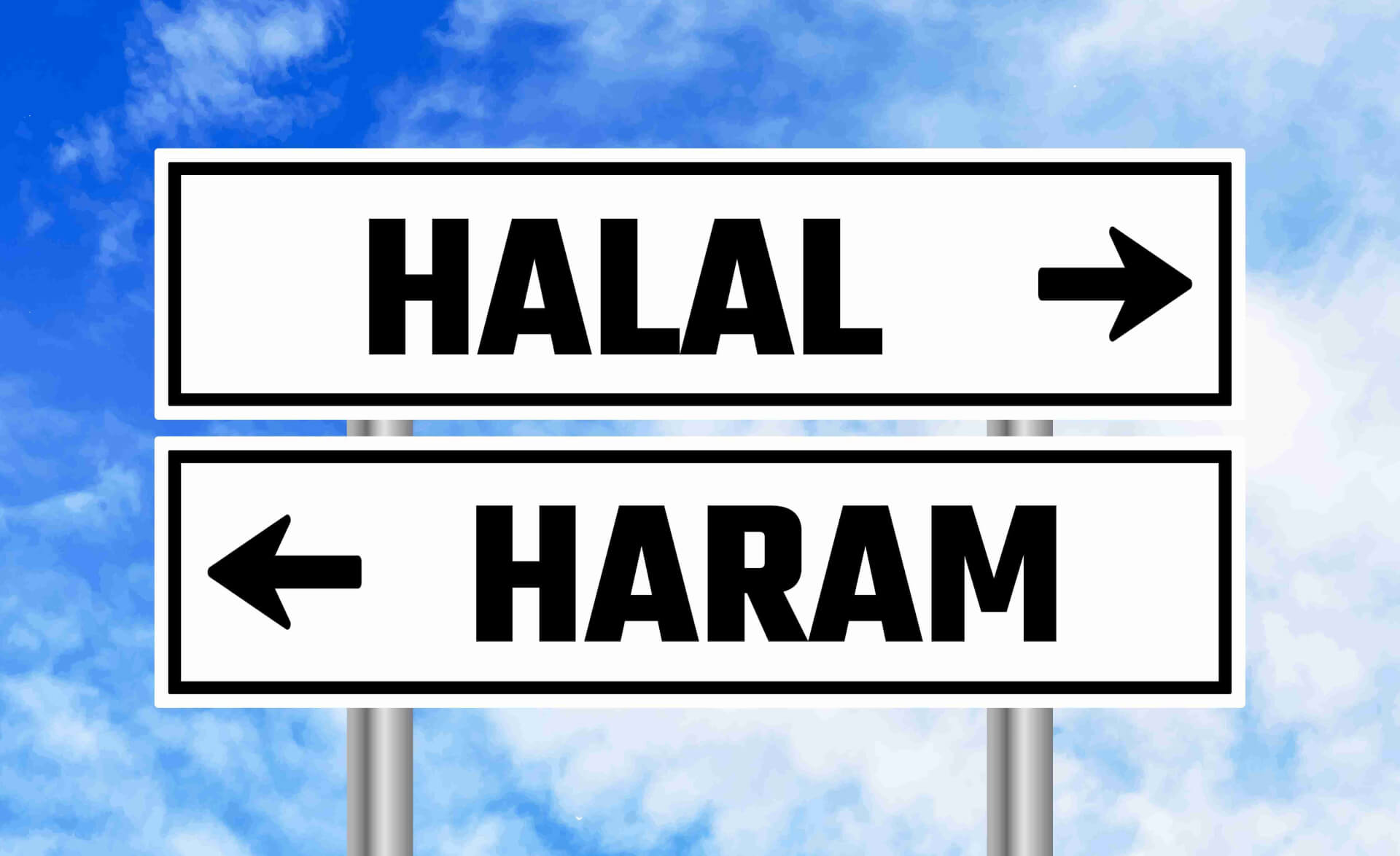
In order to ascertain and evaluate if investment banking is halal or haram, we need to understand the Islamic (Sharia) concepts of halal and haram.In their very basic form, halal and haram mean the following:
- halal - permissible
- haram - impermissible/prohibited
When something is deemed to be halal in Islam, it means that it meets the very specific criteria Islam sets out. Often, the concept of halal is commonly associated with the consumption of food and drink, but in reality for Muslims the concept of halal and haram permeates their daily lives, behaviours, and actions.
For example, drinking alcohol is haram, but so is engaging in dishonest or interest-based financial activities.
WHY IS HALAL AND HARAM IMPORTANT IN ISLAM?
The concepts of halal and haram are important for Muslims as they influence their daily choices, behaviours, and practices.
Let's explore these concepts and understand why they matter to Muslims.
Halal encompasses actions, behaviours, and practices that are permitted and encouraged by Islamic law (Sharia). Halal extends to various aspects of life, including business transactions, financial dealings, accounting, personal conduct, and moral and ethical considerations.
The importance of halal lies in its connection to piety and the pursuit of righteousness. Muslims strive to lead a life in accordance with Allah's commands, and adhering to the concept of halal is a means to attaining spiritual purity and fulfilment.
By consuming halal food, engaging in halal financial transactions, and following halal practices, Muslims aim to align their actions with the principles of Islam and seek the blessings of Allah.
Haram, on the other hand, means "forbidden" or "prohibited." It refers to actions, behaviours, and practices that are explicitly prohibited by Islamic law. Haram activities are considered sinful and spiritually harmful to individuals who engage in them.
Muslims avoid haram practices to maintain their spiritual well-being and to fulfill their duty of obedience to Allah. By refraining from haram actions, Muslims seek to purify their souls, develop self-discipline, and safeguard their relationship with Allah.
The Importance of Halal and Haram for Muslims:
- Morality and ethics: for Muslims, the concepts of halal and haram provide a guide and framework within which to live their lives. This framework is centred on principles of morality and ethics.
- Spiritual Connection: Halal and haram act as guiding principles for Muslims, enabling them to establish a strong spiritual connection with Allah. By adhering to halal and avoiding haram, individuals aim to cultivate righteousness and seek closeness to Allah in their daily lives.
- Personal and self-discipline: Adhering to halal and avoiding haram helps Muslims in their personal development by fostering self-discipline, self-control, and mindfulness. Consciously following the halal path means individuals can enhance their character, strengthen their faith, and develop a sense of accountability.
- Social Cohesion: The concepts of halal and haram contribute to social cohesion within the Muslim community. Shared adherence to these principles promotes unity, mutual respect, and a sense of collective responsibility among Muslims.
Islamic Finance Principles
Islamic finance principles that relate to investment banking are in place to ensure that investment banking activities are Sharia compliant.
Some of the key Islamic finance principles that would govern investment banking trading and activities include the following:
- No riba - one of the main principles to adhere to when looking for halal investment banking is ensuring there is no element of interest involved in the transaction.
- uncertainty - similarly, there should be little to no uncertainty (ghahar) and speculation.
- ambiguity - there should be no ambiguity
- Profit and loss sharing - the parties should share in any profits and losses.
- ethical - the investment activities should be ethical
Principles Of Traditional Investment Banking
Traditional investment banking operates within the framework of conventional financial systems and practices.
These systems are often interest-based. In Islamic the concept of interest (riba) is strictly prohibited. So, investment banking which relies on interest based activities is haram.
Conventional investment banking involves activities such as capital raising, mergers and acquisitions, underwriting securities, and providing financial advisory services.
Traditional investment banks typically engage in interest-based transactions, speculative investments, and may invest in sectors that are considered unethical or haram according to Islamic principles, such as alcohol, gambling, or pork-related industries.
In traditional investment banking, interest (riba) plays a significant role, as it is often earned through loans, debt instruments, and interest-bearing investments and payment options.
Additionally, derivative products, short-selling, and leveraging strategies are commonly employed in traditional investment banking practices. These activities may conflict with Islamic principles that emphasize fairness, transparency, and the avoidance of uncertainty (gharar).
The level of uncertainty and speculation within traditional investment banking can be deemed to be haram.
Sharia Compliant Halal Investment Banking
Halal investment banking, also known as Islamic investment banking or Sharia-compliant investment banking, is a specialised form of financial services that aligns with Islamic principles and guidelines.
Islamic investment banking operates within the framework of Islamic finance. These principles seek to promote ethical and socially responsible financial practices. This means there is less scope for one-sided risk and high levels of speculation. Ultimately, this leads to greater equity and fairness in business dealings.
In halal investment banking, interest-based transactions (riba) are strictly avoided. Instead, Islamic banks and financial institutions offer products and services that are structured in a way that eliminates interest, and instead, focuses on profit-sharing arrangements or partnerships.
For example, instead of charging interest on loans, Islamic banks may engage in profit-sharing agreements, lease-based contracts (Ijarah), or partnership-based arrangements (Mudarabah). What this means for the parties is that there is more fairness.
Furthermore, halal investment banking adheres to ethical investment criteria, avoiding sectors or activities that are deemed haram, such as the porn or alcohol industry.
Investments are directed towards industries that comply with Islamic principles, such as halal food, healthcare, sustainability projects, renewable energy, and ethical real estate.
The concept of risk-sharing is also emphasized in halal investment banking. Islamic financial institutions aim to distribute risks and rewards equitably among parties involved in investment activities. This principle promotes fairness, accountability, and responsible investment practices.
Key Differences Between Traditional And Halal Investment Banking
Overall, the key difference between traditional investment banking and halal investment banking lies in their underlying principles and practices.
Halal investment banking adheres to Islamic guidelines, avoiding interest-based transactions, speculative investments, and unethical industries while emphasizing risk-sharing, profit sharing, ethical investment, and fairness.
By aligning financial activities with Islamic principles, halal investment banking seeks to cater to the specific needs and values of Muslim investors.
Muslims And Investment Banking
Islamic investment banking is a growing industry. In the United Kingdom, there are many banks and financial institutions that offer halal investment banking opportunities, products and services.
For students who are currently studying economics and finance subjects, there are opportunities to seek employment and a career in Islamic investment banking firms.
However, it is important to make sure that you work with investment bankers who are familiar with the concepts of Islamic finance and halal and haram. They will guide you to investment banking services and options that are deemed to be halal under Islamic finance rules.
Qardus Limited does not give financial or investment advice.

For Muslims living in the UK, they are bound by the rules and laws relating to inheritance tax and wills. These rules are not based on Sharia law or Islam but are the rules of the country in which you reside. Whilst Sharia rules include provisions relating to managing the estate on the death of someone, the rules in the UK are more stringent and need to be understood.
Islamic Sharia law states that Muslims need to ensure that their assets are distributed according to Islamic rules on their death. Sharia rules outline how assets should be divided amongst surviving relatives.
For Muslims living in Muslim countries, the laws relating to inheritance and intestacy are based on Sharia rules so this makes things easier when it comes to the division of assets. However, for Muslims living in non-Muslim countries such as the UK, if they die without a will then their assets will be distributed in accordance with the domestic laws and not Sharia law.
WHAT IS INHERITANCE TAX?
Inheritance tax is essentially a tax applied on the estate of someone who dies. This tax is paid on the property and assets of the deceased above the inheritance tax threshold.
The aim of inheritance tax is to generate revenue for the government and to implement broader policies. For those wanting specific information about their tax liability they should speak to professionals who are experts in the field of tax and estate planning/ decision making.
HOW MUCH IS TAX FREE ON INHERITANCE?
Currently, in the UK inheritance tax is charged on 40% on all assets that exceed what is known as the nil rate band of £325,000.
No inheritance tax is payable on the first £325,000 of the estate. Above that, 40% inheritance tax is charged. This amount is lower if leaving your home to direct descendants.
ARE MUSLIMS EXEMPT FROM INHERITANCE TAX?
Muslims in the UK are not exempt from paying inheritance tax. However, there are some rules in the UK tax regime that can accommodate cultural or religious practices. These include:
- Charitable donations: zakat and sadqa payments and charitable bequests in wills made to qualifying charities can benefit from exemptions.
- Spouse exemptions: Normally, the transfer of assets between spousal beneficiaries is exempt from inheritance tax.
- Business relief: there are also some exemptions and reliefs that apply to businesses and agricultural assets.
DO MUSLIMS IN THE UK PAY INHERITANCE TAX?
Yes, Muslims in the UK are subject to the laws and rules relating to inheritance tax.
Inheritance tax in the UK is not based on religion but on the actual value of the estate and the rules of the country you live in.
HOW TO LEGALLY AVOID PAYING INHERITANCE TAX?
There are some strategies you can use legally to reduce your inheritance tax bill.
- Create a tax efficient Islamic will
- Effectively utilise the nil rate band
- Speak to professionals and experts for advice on managing your assets
- Use the spouse exemption
- Invest in business or agricultural property
- Set up tax efficient trusts
- Make use of charitable donations
- Gift your assets in a tax efficient way
Always speak to Sharia tax experts when planning your will and estate distribution.
WHO IS EXEMPT FROM PAYING INHERITANCE TAX IN THE UK?
There are some people and assets that are exempt from inheritance tax including spouses and direct dependents. The general rule is that if your estate exceeds the £325,000 threshold you need to start thinking about estate planning.
Exemptions under the tax rules are subject to conditions and criteria, so always speak to experts before making any decision.
WHAT ARE THE RULES ABOUT INHERITANCE IN ISLAM?
Islam sets out some clear provisions when it comes to inheritance and death. The first step is to ensure you have a legally valid will in place.Islam sets out the order or priority when it comes to the distribution of funds. The order of payments is as follows:
- funeral costs and expenses
- Outstanding debts
- Bequests to be honoured (but not where the value exceeds one third of the value of the estate/remaining assets
- distribution of remaining assets to family
Whilst Islam predetermines how our estate is divided on our death, it is still important to ensure we have a will in place.
WHAT HAPPENS IF YOU HAVE MORE THAN ONE WIFE?
In the UK as the inheritance tax rules are not based on religion, this means that if Islamically you have more than one wife the tax rules will be applied as per UK laws.
Only the legal marriage (as per UK rules) will be recognised for the purposes of determining inheritance tax responsibilities and liabilities.
CAN HALF-BROTHERS INHERIT IN ISLAM?
The rights of the half brothers inheritance depends on many factors including the presence of other heirs in the family, and the proportion of shares (see above) and order or priority.
Half brothers and sisters can inherit if there are no full brothers and sisters.
RIGHTS OF DAUGHTERS IN ISLAM?
Islam focuses on the equality of gender when it comes to inheritance rights. Daughters are entitled to inherit from parents who are deceased alongside other relatives.
Islam states that daughters are allocated a share in accordance with the principles outlined below.
As primary heirs, daughters will take priority over distant relatives.
The Division Of Jewellery In Islam
When it comes to jewellery, Islam provides guidelines for the distribution of the estate of the deceased and these guidelines include jewellery. Those distributing the estate should be mindful of the fixed shares for the different categories of heirs as stipulated by Islamic rules.
Jewellery is considered part of the estate of the deceased and is subject to Islamic rules of asset division. Of course, the deceased can leave specific bequests in their will when it comes to jewellery and it is expected that the other heirs honour the wishes of the deceased and consent to the bequests.
Islamic Rules Relating To Wills And And Payment To Heirs
Sharia law states that you can distribute up to one third of your estate however you want to on your death. This applies as long as the third share is passed on to someone that is not already entitled to a fixed share of the estate.How is the remaining inheritance divided in Islam?The remaining two thirds of the estate on death should be distributed as follows:
- the surviving wife is entitled to receive one eighth of the husband's estate. If there are no children from the marriage then the wife receives one quarter of the estate.
- the surviving husband will be entitled to a quarter of his deceased wife's estate. If there are no children of the marriage then the husband received one half.
- depending on what the entitlement of the surviving spouse is, the mother of the deceased is entitled to one sixth of the estate. This figure is one third in the event that the deceased had no children.
- If the deceased's father is alive, then the mother is entitled to one quarter of the estate (where there are no children).
- If the deceased does not have a spouse, children or father, then the mother will inherit one half of the estate.
- If the deceased leaves behind no children, the father of the deceased will receive the surplus after distribution.
- If the deceased leaves behind one (or more) son, then the father is entitled to one sixth of the estate (but no entitlement to any surplus).
- If the deceased is survived by a spouse and daughters, then the father of the deceased will receive one sixth of the estate. In addition, the father will receive one sixth of any remaining surplus once the division of the estate has completed.
- surviving children are entitled to the surplus of the estate once the remaining spouse and parents have received their share.
- male grandchildren and children are entitled to over 50% of the estate when compared to the female children and grandchildren.
- If there are two plus surviving daughters then they will share two thirds of the estate equally between themselves (as long as there are no other surviving relatives).
CAN YOU REFUSE INHERITANCE IN ISLAM?
The simple answer to this is yes, you can refuse inheritance. However, any voluntary refusal should be made after careful consideration.
WHICH COUNTRIES HAVE NO INHERITANCE TAX?
There are many countries across the globe that do not have inheritance tax regimes. These include:
- UAE
- Saudi Arabia
- Qatar
- Oman
- Bahrain
- Monaco
- Brunei
- Slovakia

WHAT IS BANKING?
When we talk about banking, we are discussing the products and services offered by the financial industry including lending money, facilitating payments, and managing accounts. Banking services are available to individuals, companies, and governments. There are some key differences between commercial banking and Islamic banking.
Banks and financial institutions play an important role in the economy. Not only do they facilitate financial transactions, but they also act as intermediaries between businesses, between borrowers and savers, and between lenders and businesses.
Banks facilitate transactions and manage credit and debit accounts. The role in the economy goes beyond managing money. They are also responsible for ensuring the financial systems remain stable, and they are therefore subject to regulation and oversight by central banks.
The regulation of banks ensures that there is ongoing prudent financial management, and risk mitigation in addition to compliance with legal standards.
COMMERCIAL BANKING - HOW DOES IT WORK?
Commercial banking is a traditional form of banking used across the globe, especially in Western economies. In its very basic form, commercial banking relates to the services and activities that banks can provide to individuals, entrepreneurs, businesses and governmental organisations.
Commercial banks undertake various activities, including:
- Payments: commercial banks facilitate incoming and outgoing payments, transfers, cheques.
- Debit and credit cards: commercial banks provide customers with debit and credit cards
- Trading: banks also facilitate national and international trade by enabling international payments and foreign exchange transactions.
- Investment services: commercial banks offer brokerage services and accounts, advisory services, and information about investment options.
- Corporate banking: commercial banks offer the corporate world specialised corporate services to encourage and facilitate corporate trade and transactions.
Main Principles Of Commercial Banking
One of the main underlying principles of commercial banking is the payment and receipt of interest. A commercial bank makes money by earning interest on loans and financial instruments that it provides to businesses, individuals, and large corporations.
Commercial banks also make money from the fees they charge for their products. For example, when offering loans and mortgages, the bank will usually charge a fee for this service.
Commercial banking rests on the following main principles:
- Profitability - as with any commercial business, the banks main focus is on profitability.
- Liquidity - liquidity refers to the ability of assets to be quickly converted into cash/ money.
- Solvency - commercial banks need to be solvent at all times. What this means is that they have financial sufficiency and capability. This level of solvency enables banks to remain in competitive markets with enough capital.
ISLAMIC BANKING - HOW DOES IT WORK?
Islamic banking is very different to traditional commercial banking. Islamic banking is based on Islamic finance principles and guidelines. These guidelines follow Islamic Sharia law. Sharia law prohibits the receipt or payment of interest, as this is considered to be deeply unethical and exploitative.
Sharia compliant banking, underpinned by Islamic finance principles, does not charge or pay any form of interest. This does raise the question of how do Islamic banks make a profit if they do not charge interest to the customer.
The answer to this lies in the structure and the practices within Islamic finance institutions. Instead of making profit through interest, Islamic banks profit through equity sharing and partnership arrangements. These arrangements ensure that the profits and losses are shared between the parties.
Let's have a look at the way Islamic banks operate and how they make a profit:
- Profit and loss sharing - Islamic banks rely on Sharia concepts such as musharaka (cost-plus financing) and mudaraba (partnership based financing). The former requires both the customer and the bank to contribute capital and share in any profits arising from the investment. Mudaraba is a slightly different arrangement where the bank provides the capital and the individual manages the running of the business. Both these arrangements facilitate profit sharing in an equitable way.
- Asset-backed finance - Islamic banks rely on asset-based finance arrangements. Often, this means that the bank or financial institution will purchase an asset at the request of the customer and then sell it back to them. The sale back is at a higher price which is usually paid back in instalments.
- Investments - Islamic banks are permitted to engage in investment activities. However, the difference between Islamic banks and conventional banks is that Islamic banks retain control over the industries they invest in. They do not invest in industries that are deemed to be impermissible in Islam (ie, gambling, porn, alcohol). Additionally, any investment activity is not interest based and is not speculative or uncertain. This means the level of risk is often lower than the investment activities of commercial banks.
Key Principles Of Islamic Banking
As already mentioned above, the main principles relating to Islamic banking are derived from Sharia law. Sharia law guides Islamic finance and differentiates it from conventional commercial banking.
The key principles of Islamic banking are:
- No interest - there is a strict prohibition on interest (riba). This means that any deposit or payment does not accrue or attract interest in any form.
- Profits and losses - Islamic finance centres on the notion of equitable relationships and non-exploitative relationships. This means that there has to be equitable sharing of profits and losses between the parties.
- No uncertainty - excessive uncertainty is not permissible in Islamic banking. This means that any investor, entrepreneur, business, or leader looking to engage in activities needs to ensure that the trade or investment is not uncertain or ambiguous. Financial transactions should be transparent and solution based.
- Ethical and social responsibility - Islamic finance is underpinned by the key concepts of ethical behaviour and social responsibility. There is an onus on those with control to ensure that the parties engage in activity that does not adversely affect others and that benefits society as a whole.
- No speculation - it is important for Islamic banking to ensure that financial activities are based on real economic transactions, not hypothetical or speculative activities.
- No excessive debt - again, to ensure there is equity and transparency, Islamic finance requires that excessive debt is avoided. Islam promotes responsible borrowing and lending practices.
Commercial Banking Services Vs Islamic Banking Services
The main difference between commercial banking and Islamic banking are the main principles which guide the banking activities. As already discussed, Islamic banking does not rely on interest payments or interest based activities.
Whilst commercial banks rely on interest as a fundamental component when it comes to lending and borrowing, Islamic banks are more focused on a profit-loss sharing arrangement.
Whilst both commercial and Islamic banks offer a variety of financial products and services, Islamic banks have to ensure they are compliant with Sharia rules about financial activities. Islamic banks provide similar services to commercial banks (loans, mortgages, savings accounts etc) but the key difference is that they offer Sharia compliant alternatives to their clients.
Islamic banks actively avoid financial deals and transactions that are deemed to be risky and speculative such as derivatives and trading securities. The ethical and social responsibility element of finance is not something that features as heavily in commercial banking as it does in Islamic banking.
Commercial banks aim to generate and maximise profits through interest that is earned on lending and other banking services. For Islamic banks, interest is prohibited, so they look to Sharia compliant ways of generating profits.
It is important to remember that both Islamic and commercial banking aim to offer financial services to meet their clients needs. Islamic banking is favoured by Muslims because the principles of Islamic finance mean they remain compliant with their religious obligations. However, Islamic finance has a much wider appeal to customers across the Muslim and non-Muslim world.
The Regulatory Framework For Banking In The Uk
In the United Kingdom, the regulatory framework is managed by the Financial Conduct Authority.
As part of its supervisory and regulatory role, the Financial Conduct Authority aims to protect the customers of financial institutions that offer any form of financial product or service. The Financial Conduct Authority also ensures that it promotes healthy competition between financial service providers.
Risk Management In Commercial Banking
Risk management and mitigation are essential tasks for banks. Not only does risk management ensure that banks have a risk management strategy in place, but it also ensures banks remain compliant with the relevant regulatory regime in place.
Commercial banks assess risks on an ongoing basis to ensure that they can maintain their financial stability. Risk management also prevents unexpected losses that could occur and help the bank prepare for long-term viability and market fluctuations. Ultimately, commercial banking is arguably more volatile that Islamic banking as it places itself in a more fluctuating, interest and economy based market.
Islamic banking mitigates risk by avoiding interest based transactions, and discouraging speculative behaviour. The risk and reward is shared between the parties, this leads to shared responsibilities when it comes to risk.
Risk Management Is Islamic Banking
Risk management in Islamic banking is different from the risk management in conventional commercial banks.
Islamic finance promotes the forecasting of financial risks and ensures the necessary risk mitigation strategies are in place from the outset. Under Sharia rules and guidelines, Islamic banks manage risk via practices which actively mitigate risk. These practices include ensuring that is an equitable profit and loss sharing arrangements. Islamic finance also requires that parties to a transaction share the risk, so one party is not left dealing with huge losses.
Through intense screening and due diligence, Islamic banks assess feasibility in a more rigorous way than commercial banks. This helps them identify potential issues before they arise and mitigate risks early on.
Islamic banks will usually have Sharia compliant scholars and boards working with the bank and ensuring it is compliant and regulated. These boards provide Islamic guidance on complex transactions and reduce the risk exposure. Many Islamic banks will also ensure they have contingency funds and reserves to deal with unexpected events and losses.

Stay informed on finance
Subscribe to our newsletter for the latest insights on ethical financing